The human race is getting bigger, stronger and taller. But
in rugby, the halfback seems to be getting smaller and
shorter. Rugby writer Steve Hepburn looks at the evolution of
the No 9 through the years.
In the beginning
Rugby at an international level in the early stages was
low-scoring and involved a lot of dribbling. The wing forward
made life tough for the halfbacks. The Invincibles had East
Coast-bred Jimmy Mill. He was just 1.70m and 70kg, and ran
often. Despite having the likes of George Nepia and Bert
Cooke outside him, he loved to take the ball up himself.
The doctor arrives
In 1937, Danie Craven arrived in New Zealand, and his
halfback play for the Springboks revolutionised the way the
game was played.
He brought the dive pass to this country and could zip around
the field and find his outsides with speed and accuracy. He
made a massive contribution to a Springbok series victory,
and at 80kg was relatively big for a halfback in those days.
After the war
Kaitangata boy Jimmy Haig was picked for the All Blacks. A
nuggety player, it looked as though he was going to have a
long career but he defected to league.
Haig weighed in at only 70kg.
But that was a monster compared to Ponty Reid, who helped
beat the Springboks in 1956. Reid was just 1.6m tall and
weighed less than 63kg. But he stood up to the Boks, and was
made captain of the national side the following year.
The swinging '60s
Chris Laidlaw. Photo ODT files.
Straight out of King's High School was the colossal
passer, Chris Laidlaw. He could heave the ball almost the
length of the backline and came in at about 75kg.
Across the ditch, Ken Catchpole was the captain of his
country in his first test and helped the Wallabies become a
force.
Then, from the backblocks of North Auckland came Sid Going
and he was in some ways the first of a new breed.
Going's first instinct was not to pass. It was to look for a
break, and more than often it would come off. He was of a
stocky build, and after Laidlaw retired he became the No 1
choice for the All Blacks.
The Welsh wizards
As Going was emerging, so was Gareth Edwards over in Wales.
Edwards is often said to be the finest player to don the red
jersey. He could do it all and was a great runner. Is there
anyone in the world who has not seen his 1973 Barbarians try
against the All Blacks?
After Edwards retired along came Terry Holmes, who at more
than 1.80m and near on 90kg was a torrid player. He loved the
rough and tumble rather than the pass and occasional kick.
Back home, the likes of Mark Donaldson and Dave Loveridge
could pass but had handy running games.
Getting bigger
Australian Nick Farr-Jones was the top halfback of the late
1980s and early 1990s but he could have played in the
midfield, such was his size and skill.
Back in New Zealand, Graeme Bachop was in and out of the
black jersey but at the 1995 World Cup was the clear No 1. He
had a lightning pass and that is all he did. With the likes
of Lomu, Bunce and Wilson in the backline few could argue
against that. Left for Japan when he was only 28 and went on
to play for that country.
Another loosie
As the game went professional, players got bigger and
stronger.
Halfbacks were no exception.
They became another forward in many teams and the ability to
pass the ball almost became an afterthought.
Junior Tonu'u weighed in at 94kg and could mix it with the
biggest of forwards.
Justin Marshall left the Mataura freezing works and proceeded
to play 81 tests and bulked up to 94kg. The entire forest of
the central North Island would have to be replanted to
recover the amount of paper used to debate the merits of
Marshall's passing ability.
In behind him was Byron Kelleher, who had a fine pass but was
more of a runner. He weighed in at 95kg and was a livewire
with ball in hand.
In South Africa, Joost van der Westhuizen stood 1.85m and
never turned a blind eye to a confrontation. George Gregan
played 139 times for Australia and although he weighed in at
just 76kg, he was a ball of muscle who ran the ball often.
Jimmy and friends
Jimmy Cowan was a great defensive halfback. He was good in
the tackle, had not a bad pass and loved the tough stuff. At
95kg, he could look after himself. Often it was about
confront, rather than elude.
Welshman Mike Phillips was another one who loved the physical
stuff. And he was bigger than Cowan.
Andy Gomarsall was a big, rugged halfback for England, while
Fourie du Preez was a solid 90kg and at 1.8m tall never
backed down to anyone.
Piri Weepu was one of the stars of the show for the All
Blacks in 2011 but his pass was not his strongest asset.
The new boys
Will Genia. Photo Reuters.
So, we now reach the end of 2012, and as the game gets
even quicker the passer appears to be back in vogue.
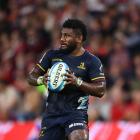
Aaron Smith has made every post a winner this year and is
clearly the nation's top No 9 at present. His strength is his
speed of pass and ability to free up his backline.
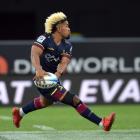
He will be backed up in the Highlanders by Japanese pocket
rocket Fumiaki Tanaka.
Tanaka may have the same sized feet as a school kid but he
has a sweet pass and always finds his man. Size really means
nothing to this duo. Other New Zealand halfbacks of this
mould include TJ Perenara, August Pulu and Jamieson
Gibson-Park.
Will Genia is in the same mould - small, quick and dangerous.
Throw in the likes of Mike Blair, Conor Murray and Ben
Youngs, and it seems the small man with the bullet pass is
back in vogue.
stephen.hepburn@odt.co.nz
A name, residential address, and (preferably residential) telephone number is required from readers who comment on ODT Online. These details will not be visible to site visitors.