New Zealand Fish and Game Councils chief executive Bryce Johnson, who gave evidence during a hearing into whether the conservation order on the Nevis River should be changed said the majority of such orders had been sought by fish and game councils.
The Department of Conservation was charged with preserving indigenous fisheries and protecting recreational freshwater fisheries and habitats, so it was disappointing that Doc had only ever made one application for a water conservation order, he said.
Fish and Game was responsible for funding its own programmes, rather than being dependent on other agencies, Mr Johnson said.
This meant his organisation was not bothered by the constraints faced by Doc such as collective Cabinet decision-making.
Counsel for the New Zealand and Otago fish and game councils, Maree Baker, said it was interesting that Doc had taken a neutral stance on this application.
"It has not acted to protect any of the values identified by Fish and Game in evidence," Ms Baker said.
Mr Johnson said the strength of water conservation orders was threefold.
It gave priority to in-stream ecological and amenity values, it was heard by a national tribunal with higher standing than regional councils driven by regional politics and the order stood until it was repealed.
People who sought to use water for industrial purposes did not appear to recognise it was a finite resource.
"Just because a company wishes to expand its operations and generate a small amount of electricity, it does not follow that the rest of the community should have to bear the higher ecological and diminished recreational consequences of their wishes."
While nine South Island rivers were protected by water conservation orders, only three North Island ones were, he said.
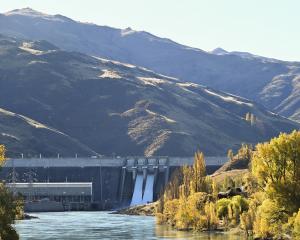
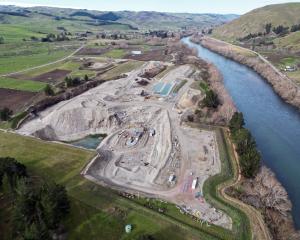
Hydro development is the biggest risk to the outstanding characteristics of the Nevis river, a special tribunal in Cromwell heard yesterday.
Chief executive of the Otago Fish and Game Council, Niall Watson, said a hydro development would make a modest contribution to the country's power supply but have a major impact on the river.
"While hydro power has been described as a renewable energy source in recent government policy, rivers are a non-renewable resource and very many river reaches have already been lost to hydro development in New Zealand," Mr Watson said.
Rivers were not a renewable resource and in Central Otago alone 146km of free-flowing river had been lost, either through inundation or dewatering during summer.
Many more had been degraded by fluctuating flows.
Mr Watson said in 17 years since the conservation order hearings, much more information had been collected on the fishery values of the Nevis.
The river produced very large trout.
Last season, almost 19,000 fishing licences were sold in Otago.
Mr Watson said most fish caught in the Nevis were released rather than kept and the river was the last example of a free-flowing river in Central Otago.
Day one of the hearing
• Evidence was given about why the New Zealand Fish and Game Council and the Otago Fish and Game Council had applied to change the existing water conservation order.
• Landscape values, the angling value and the hydrology of the Nevis River were also canvassed.
• The matter is being heard by a special tribunal appointed by the Minister for the Environment.
• The tribunal comprises Richard Fowler, Carolyn Burns and Rauru Kirikiri, and the hearing is expected to take about four weeks.
• The application attracted 248 submissions, most opposing any damming of the river.
• New Zealand Fish and Game and Otago Fish and Game councils opened their case yesterday.
Who gave evidence?
Counsel for the Fish and Game councils, Maree Baker; Otago Fish and Game Council chief executive Niall Watson; New Zealand Fish and Game Council chief executive Bryce Johnson; civil engineer Tom Heller; landscape architect Alan Petrie; Otago Fish and Game officer Morgan Trotter.