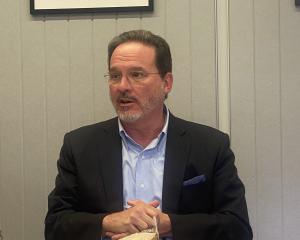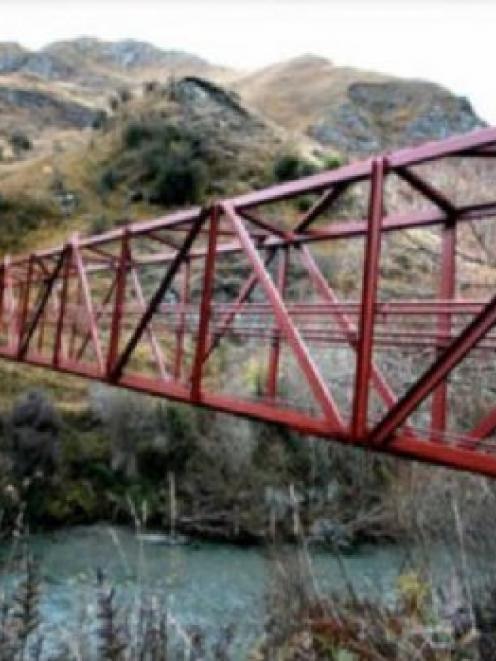
After 13 years of voluntary input, huge amounts of community support from the Arrowtown Village Association and an estimated input of $345,000, comprised of $105,000 in cash, an estimated $230,000 in community service and time donated, and $35,000 of his own money, Mr Mowatt has just one more river to cross to complete the all-weather track from Arrowtown to Macetown.
He has installed four bridges on the route up the Arrow River, is working on another for the Soho Creek and has just one more bridge to make it possible to walk the track without getting wet feet.
The last creek to cross is the 1m-2m-wide, ankle-deep Coronet Creek, also known as Eight Mile Creek.
Mr Mowatt was inspired to reinstate the all-weather track to Macetown after hearing about the gold-miners who were stranded there in a bad winter in the 1800s and left without food supplies for three months, "which is why they made the all-weather track".
"Everyone I speak to is adamant they want an all-weather track to Macetown," Mr Mowatt said.
But in a move he described as "bureaucracy gone mad", Doc says otherwise.
Having supported his track work so far, providing the services of the conservancy archaeologist and bridge design by its engineer, Doc has now said it will not allow Mr Mowatt to build a bridge over Coronet Creek, citing its track policy.
It says the creek, which crosses land it administers, is too small to warrant a bridge and people should have the experience of getting their feet wet, even on a day walk.
Doc Wakatipu area manager Greg Lind first wrote to Mr Mowatt in May last year, outlining the department's track policy, explaining that such streams did not need to be bridged in order to meet Doc standards for tracks of the Arrowtown to Macetown category.
Doc refusal to allow bridge `bureaucracy gone mad'> From Page 1It was classified as a walking track for day visitor use and, as such, expressed in the department's standards, was "not required to have bridges in the locations described", Mr Lind said.
Furthermore, the Arrowtown-Macetown track linked to the Motatapu Track, classified as a "tramping track" catering to "back-country adventure" users and, as such, had even less requirement for bridging, Mr Lind said.
Doc's standards applied to conditions of "normal flow" in creeks such as Coronet Creek for "normal" visitor groups and a bridge was not required to maintain the experience.
Adding unnecessary bridges to the department's considerable asset base of about 400 structures in the Wakatipu was also a consideration, he said.
Undaunted, Mr Mowatt has continued to seek the department's approval to bridge the small Coronet Creek, saying it would ensure the dry-weather-walk experience, but recently received another letter from Doc area programme manager community relations John Roberts confirming the department's earlier stance.
Mr Roberts said the track and road from Arrowtown to Macetown did not belong to Doc but was formed over various pieces of private and publicly owned land.
Doc valued Mr Mowatt's work, but it had to be consistent with implementing its policies.
The Motatapu Track to Wanaka started at Macetown, Mr Roberts said.
Doc did not have a track to Macetown because there was an existing road.
While Doc did not have ownership of most of the track, it did administer the marginal strip, sometimes referred to as the Queen's chain, that Eight Mile, or Coronet, Creek, flowed through, and therefore could apply its track standards to that section.
"We've looked at it and found it doesn't fit with our standards.
The whole route in doesn't have one standard, but for us to look at it we would classify the marginal strip where it [the Arrowtown to Macetown track] crosses the Eight Mile as being in the day visitor category."
People were encouraged to have the experience of getting their feet wet, he added.
"We don't want to be bridging every single little bit of water in the country."
However, removing bridges over streams so small they did not comply with Doc's bridging policy was something considered on a "case-by-case" basis.
Mr Roberts conceded that if the creek was bridged people could still choose to walk through the water and experience wet feet, but it was the department's view they would take the easy way and walk over the bridge.
"It changes the experience for people."
Richard Newman, chairman of the Arrowtown Village Association, which has supported Mr Mowatt's work with funding and gaining resource consents, said while the association did not want to continue funding more bridges because of other priorities, it still supported Mr Mowatt.
Mr Newman saw no reason not to bridge the small Coronet Creek.
"Why not? It's hardly a bridge, it's just a plank, but it makes a big difference to people who don't want to get their feet wet."