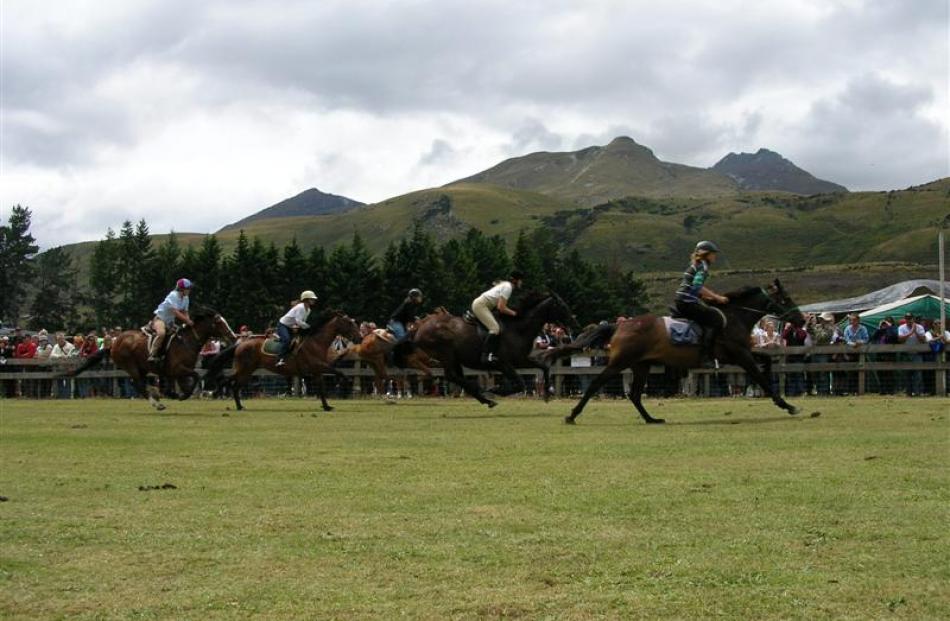

On Saturday,the Glenorchy Races will mark its 50th anniversary, commemorating an event which began as a humble sports day and has grown to become one of the New Year highlights. Tracey Roxburgh reflects on the event's success and contribution to the community.
One day a year, a tiny town at the head of Lake Wakatipu is bursting at the seams, welcoming visitors from far and wide for a race day unlike any other.
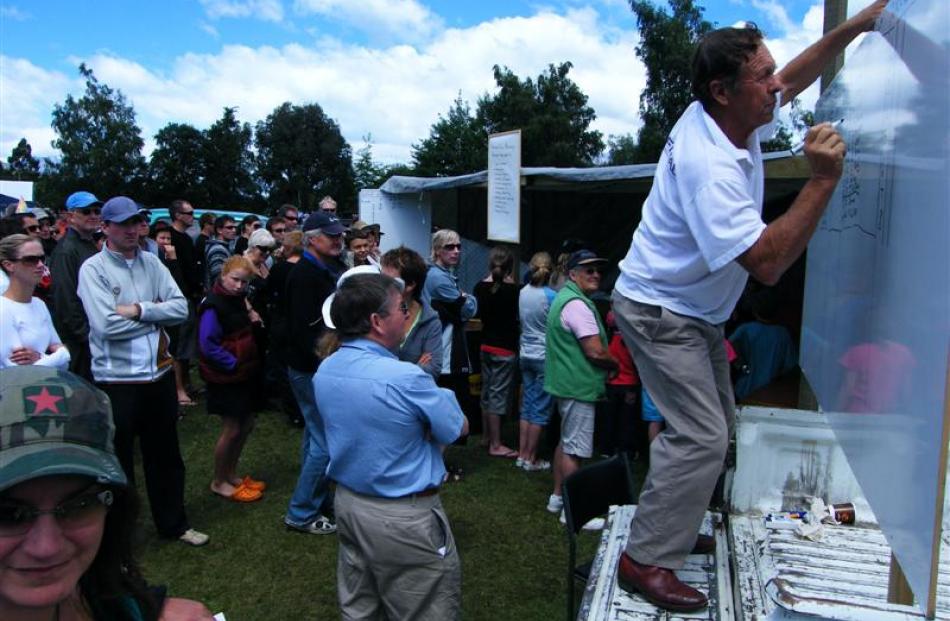
The Glenorchy Races marks its 50th anniversary on Saturday and Glenorchy resident and tote operator Meryn Douglas has missed just one race day - that was in 1978 when she was overseas.
The event originated after the Lakeside Rugby Club was established, in 1961, when the local community decided to hold a "sports day".
However, it wasn't long before a couple of the residents decided to have a horse race. The rest, Mrs Douglas said, was history.
"The horse part became more and the other part [sports] became less.""We still have the running race at lunch time and that's really why, because it's always been a part of the day."
Initially targeted at the "locals", the event has grown to become one of the New Year highlights for the generation which has grown to love the "GY Races" - and a new generation which has been raised with it.
Mrs Douglas said its popularity boiled down to the "simplicity" of the event.
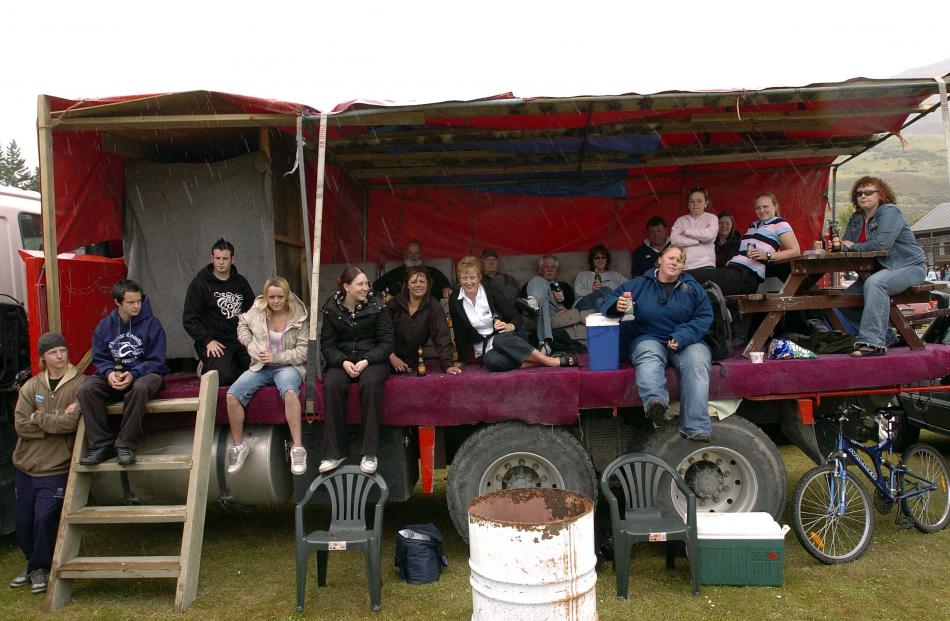
While the race day itself had remained largely unchanged, there had been some concessions as more and more people made the journey around Lake Wakatipu, camping at Glenorchy in tents, horse floats, purpose-built trucks complete with decks and couches and the odd race-goer sleeping in their car at the race ground.
"We do now have portaloos and all of those things that we didn't used to have, because of the number of people [now].
"We've had to increase the food because of the numbers - not necessarily for money-making purposes, just to cater for what we need to."
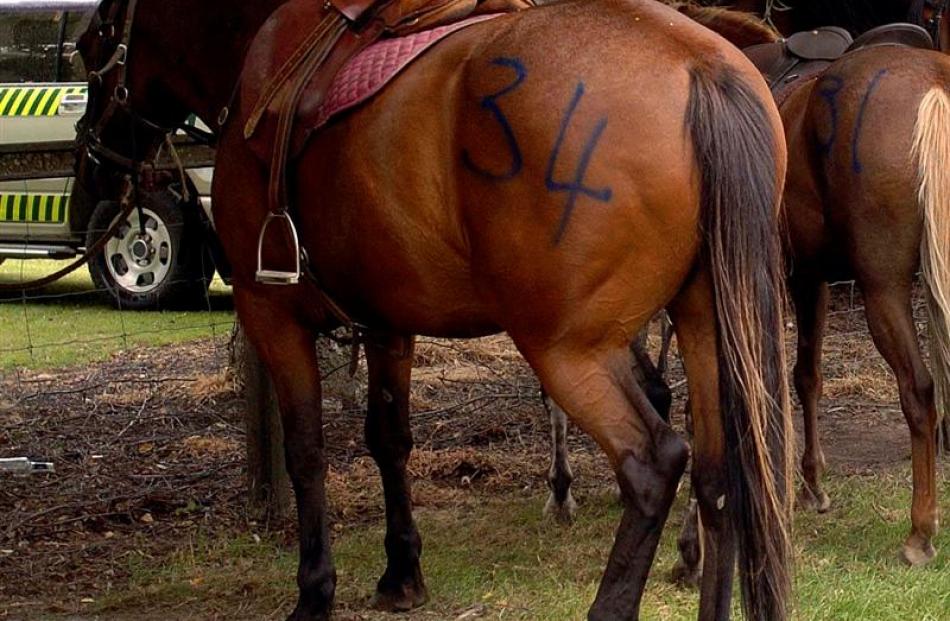
And while there is plenty of entertainment on offer at the races, with the infamous Clydesdale Drum Major a constant presence - and often last place-getter - bareback riders, numbers spray painted on horses rather than using saddlecloths and the ever-popular double-banking race - the day provides financial assistance for the tiny settlement, which will mark its 150th anniversary in 2012.
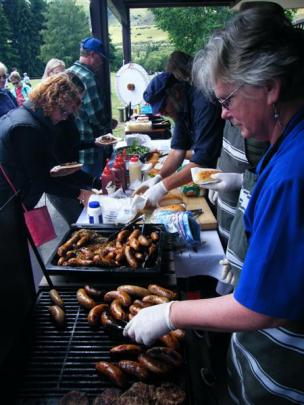
Glenorchy School uses the event as a fundraiser, being given the responsibility for the race day barbecue, while the rest of the money raised goes into facilities for the community.
"To get money from a charitable trust or anything, you need X amount of money yourself. We help them start off.""Most of the money goes to buildings, for example, the fire station.
"Over the years we've given money to the museum, library and medical centre building, the church, the fire station, we gave First Response a defibrillator once.
"We built the building in the Rec Ground from races money over several years. It started off with the downstairs ... later on we built the club rooms on top." "Way back at the beginning we gave money for a tennis court ... and then more money to have it re-sealed.
"For a small town, that's a lot of building."
However, members of the community also benefited, with "specific categories" for applicants.
For example, children who were representing their province in any sport could apply for Glenorchy Races funding.
However, one article published in a Queenstown newspaper several years ago "really buggered things up", when a Queenstown reporter published a story about betting at the races.
"The story goes [the reporter] tried to get into the races without paying, because he was media.
"They said `everybody pays', that's the way it is. Everybody pays.
"He didn't want to pay.
"He jumped the fence and went in and saw what was going on with our tote."
After word got out a story was destined to go to print, Mrs Douglas' husband, Bruce, called and asked for it to be stopped.
The article was, however, written and published and resulted in a phone call from Racing New Zealand.
"The whole thing is, the races were initially called Sports Day, then it was Gymkhana and then people started calling it "the races".
"It's nothing like the races ... but once the name changed, people in the industry got upset because how can we make money, when they struggle with the big race meetings?
"When it came down to it, the guy from Racing New Zealand asked who the riders were and who the horses were ... he said it was [ridiculous] but it had gone to them ... they had to stop us doing it."
The story - and journalist - had since been immortalised, and the equalisator is now named after him.
The tote, however, had always been a well-known "secret".
Mrs Douglas recalled one Queenstown police officer from whom the tote had to be hidden.
"We used to have to close it down when the police came in.
"There was a cop, [Senior Sergeant] Warwick Moloney ... everyone was scared of him.
"He would come out to the races and walk around.
"We'd see him coming and close the tote down, then once he'd left, we'd reopen it.
"He would go to the pub and send someone up to put a bet on for him.
"We didn't talk about it, because if we did, he "officially knew" it was happening."
In the past few years the tote, the primary money-maker, had changed slightly, with $1 bets coming into force - Mrs Douglas said this year the committee had been forced to increase it to $2 to help cover costs.
It was things like that which made the Glenorchy Race day attractive for families and young people, she said.
"It's basic, simple stuff.
"They like to be able to go there and not have to spend a lot of money.
"It's a picnic day out. It's relaxed and it's easy."
The 50th anniversary would be marked in a typical, laid-back, GY fashion, with special commemorative blankets given to participants in each race.
"We'll just draw out of the hat one of the riders ... if they've already won one, it will go to someone else."
Mrs Douglas is also writing a book on the history of the races, which is due out next year.
"I thought it would be quite simple ... but the story has become more of a story [all the] time.
"Hopefully, it will be out prior to the 150th Head of the Lake celebrations."
She said the size of the book would depend entirely on the number of photographs - and while there were plenty available from the event's more recent history, very few images had surfaced from the early years.
"We didn't take a lot of photos [back then]. The people that did were the people coming to visit.
"People early on may have taken photos with the tote on the back of the truck."
• Anyone with photographs of the early Glenorchy Races - or sports days, or gymkhanas - can email Mrs Douglas at meryndouglas@hotmail.com.