Council representatives will meet Otago Regional Council staff to discuss the next move in the planned disposal of the 8170cu m of stockpiled biosolids, Wanaka Community Board members have been told.
Council Wanaka project manager Rob Darby told the board the tests showed the biosolids were similar in quality and nitrogen richness to a high-quality agricultural fertiliser.
"Essentially, [the biosolids] are a very good source of nitrogen."
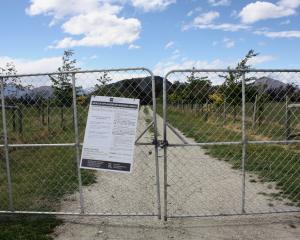
The material is the remnant of wastewater and sewage sludge from the drained oxidation ponds at the decommissioned Ballantyne Rd site - Wanaka's former wastewater facility before Project Pure became operational.
Mr Darby said the solids had been stockpiled in large mounds, covered with tarpaulins, and had sat "maturing" for more than 12 months at the Ballantyne Rd site.
The council wanted to carry out a "one-off" disposal of the biosolids by dispersing the product on a 100ha farm also on Ballantyne Rd. However, the council needed to find out whether the dispersal would need an ORC resource consent or be subject to conditions, he said.
Disposing of the biosolids from the decommissioned oxidation ponds was not "in any way related" to the council's Project Pure sludge-testing, Mr Darby said.
He rejected a suggestion the Ballantyne Rd project was a potential trial run of disposing biosolids to land, such as the council had indicated it wanted to do with sludge produced at the $21.5 million Project Pure plant.
The alternative way of disposing of the more than 8000cu m - the equivalent of about 267 shipping containers - was to landfill, he said.
"That is not really a viable option because it is so incredibly expensive. Essentially, we have a fantastic agricultural resource here... it is a fairly common practice to dispose of it [to land]," Mr Darby said.