
PHOTO
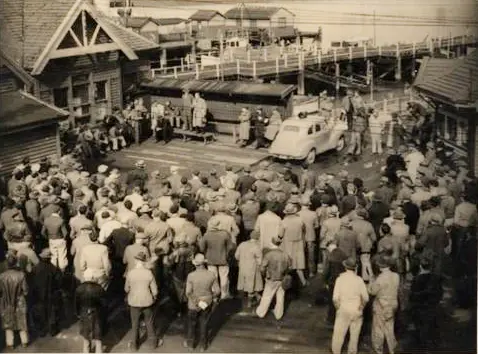
When wharfies arrived for work at Lyttelton on February 15, 1951, they found the entrances locked.
The national Waterside Workers’ Union was demanding an end to overtime and better pay increases.
When union members refused to work overtime, they were fired and locked out of workplaces across the country.
Perhaps the most draconian legislation in New Zealand’s history was used during the 151-day dispute, including media censorship and a ban on providing material assistance to the locked-out workers’ families.
It is an important anniversary for Maritime Union Lyttelton branch president Gerard Loader, who says it reminds him that although the “battlefield” has changed, the fight for workers continues.
“In 1913 they came with the army. In 1951, it was the cops. In 2026, it’s the lawyers,” he said.
Commemorations of the lockout started on Sunday with a community day at The Loons in Lyttelton, featuring speeches, raffles and a BBQ.
It marked the start of a series of events to remember the lockout, which ran for the full 151 days until July 15.
The Maritime Union has commissioned an album about the lockout from Lyttelton-based folk singer-songwriter Adam McGrath, who will perform the first single and then the full album in May.
The Loons’ entrance hallway will be decorated with memorabilia from the lockout throughout the 151-day period, and other events are still in the early planning stages.
On May 1, the national Maritime Union will host a remembrance day in Lyttelton.
Whether the dispute was a lockout or a strike depended on whether you asked union members, or the employers and Government.
The National Government, under Prime Minister Sidney Holland, declared a state of emergency on February 21, 1951, arguing that vital export trade was under threat.
Emergency regulations were broad and authoritarian.
Media commentary supporting the union was censored, police were granted wide powers of search and arrest, and providing financial or material assistance to locked-out workers and their families was made illegal.
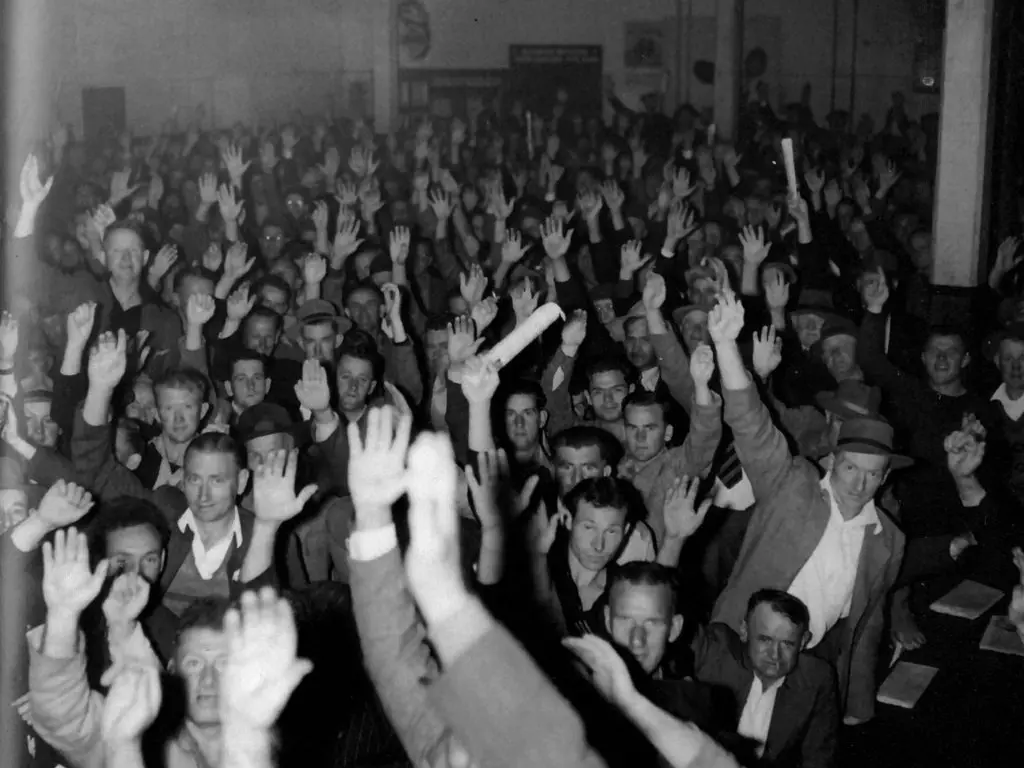
People could only assist their neighbours with food or other goods in secret, making the financial situation for wharfie families even more dire.
Sympathy strikes erupted in Christchurch and across the country, with seamen, coal miners, freezing works workers, drivers, and railway workers walking off the job in support of the wharfies.
The Waterside Workers’ Union branch in Lyttelton tried to preserve its funds by transferring assets before the government could seize union bank accounts. It was a successful tactic which helped sustain union families better than in many other cities.
The Lyttelton Waterside Workers Social Club, also known as The Loons, was sold by union members to a trust for £1 to prevent government seizure. The Loons then acted as a soup kitchen to feed locked-out watersiders and their families.
After 1951, the premises became the Lyttelton Working Men’s Club and later home to The Loons Theatre Company.
The building suffered major damage in the 2011 earthquake.
The Loons Club president Neville Walker said it was a “full-circle” moment when the Maritime Union donated $500,000 to assist in the post-quake renovation.
The building reopened in 2021 as a live music venue.
“Some of the funding we got, was because of the history of the building in the lockout. It was a place for the union to meet every day and distribute food, even though it was illegal,” Walker said.
Unlike in Auckland and Wellington, open street violence was largely absent in Lyttelton, but the social and economic impact on the tight-knit port community was significant.
With their husbands out of work, many women entered the labour market for the first time at Christchurch businesses such as the Lichfield Shirt Factory.
One of the lasting social impacts of the lockout was the hostility between ‘loyal’ union members who refused to go back to work, and the ‘scab’ workers who accepted overtime requirements and the offered pay levels.
Arthur Beckett, 89, president of the Lyttelton Waterfront Workers’ Union in the late 1980s, remembers the tension lasting for decades.
“They sat at separate tables at the cafeteria and there was a lot of distrust.
“It affected families, too, with some relationships getting ruined because of it.”
Rather than negotiate with the watersiders, the government elected to pursue a strategy of attrition.

The union was legally deregistered, and new, compliant unions were set up at each port, which scab workers joined.
Many workers returned to work over time during the lockout, weakening the wharfies’ leverage and morale.
After 151 days, the union conceded defeat on July 15.
A combination of legal restrictions, financial hardship, and dwindling support made it impossible to continue.
The defeat was a major blow to the power and influence of unions in New Zealand and a victory for the conservative Government.
Many Lyttelton wharfies were blacklisted and struggled to find work elsewhere, with some households financially indebted for years.
One lasting legacy of the dispute is the loyalty card certificates given to workers who stood with the union for the duration of the lockout. They became cherished tokens of remembrance for many affected families.
Katy Gosset of RNZ interviewed the late Baden Norris in December 2017 about his experience as a wharfie and father during the 1951 port lockout. Norris died aged 81 in August 2018 and was a well-known historian focusing on Antarctica and Lyttelton.
It was long 151 days and some men who lived through it will never forget it – Baden Norris is one of them.
“It was my blackest period of my life because I had no money, or very little. I had a daughter who was in hospital with melanoma. You couldn’t get another job. You’d be pretty unpopular if you did,” Norris said.
So how did it all begin?
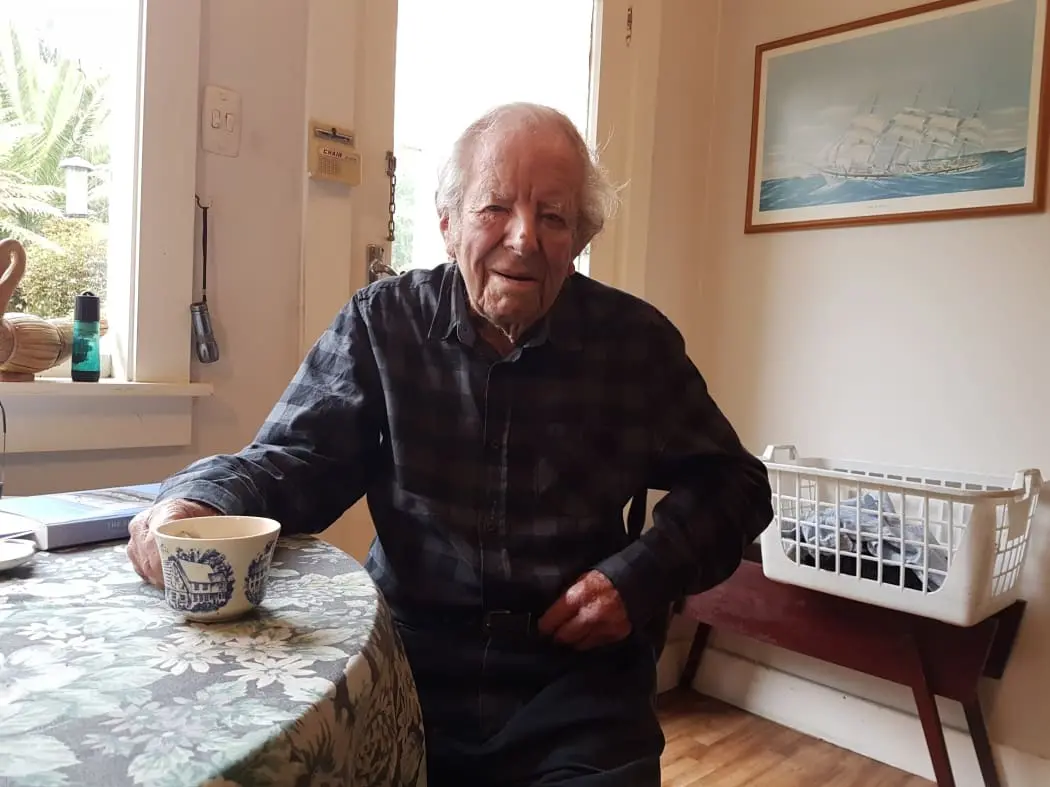
Norris describes himself as ‘Lyttelton material’, born and bred in the little port town like his father, his grandfather and great-grandfather before him.
“It was the centre of the universe when I was a child. I never wanted to be anywhere else.”
He worked in a factory at 13, went to sea at 15 and then, in his 20s, being “Lyttelton material” led him to work on the wharves.
Being a watersider wasn’t an aspiration, but, by then Norris was married, with a child, and money had become important.
On the waterfront, a man could make good money, not because the job paid well, but because there was plenty of overtime. However, trouble was brewing.
Strike or Lockout?
The union movement had become divided. By 1951 the waterfront workers supported the Trade Union Congress, a group that had splintered away from the main union, the Federation of Labour.
New Zealand was emerging from World War 2 and the Government offered a wage increase to workers, except it wasn’t across the board.
Norris said wharfies had to apply to a separate tribunal for the pay hike and it was turned down on the basis they were already well paid.
But he said this was only because they worked so much overtime.
“So (the workers) said ‘we will refuse overtime until we get some satisfaction,’ and, of course, that’s how it all started.”
But their employers said if the men would not work overtime, they couldn’t work at all.
The ship owners, and later the Government, called the dispute a strike but, to the workers, it was a lockout.
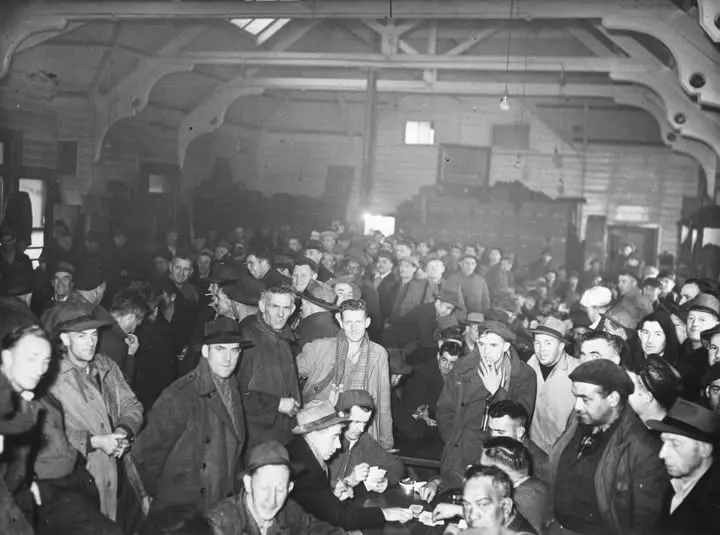
On February 22, 1951, the Prime Minister, Sidney Holland, announced a state of emergency.
He told the nation: “A small group of men possessing great power in our industrial system declared war on the people by calling a strike in one of our principal key industries.”
With the state of emergency came new and stringent regulations and, over time, Norris and his colleagues found these were beginning to take a toll.
“It was illegal, for instance, for a mother to feed her (striking) son. One would think that would be impossible but it wasn’t. The law stated that you weren’t allowed to,” Norris said.
The police also had wide powers to stop and search people. Norris recalled on one occasion a man was jailed for several weeks after he objected to having his belongings searched.
But the most challenging regulation for the Norris family was an inability to travel while their daughter lay sick in hospital.
“We weren't allowed to leave the port – that was the darkest moment, when you couldn't even do what any child should expect, her parents coming in as visitors.”
Fortunately, an aunt gave them money to take the train to visit their daughter and she made a full recovery.
‘Tough times’
Still, day-to-day living was hard. The family kept fowls and luckily they laid every day.
“I also had a good crop of potatoes so we largely survived on eggs and chips,” Norris said.
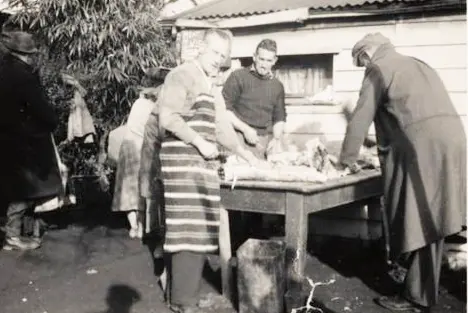
Meanwhile, the watersiders still met regularly to organise food distribution. Some farmers offered them crops in return for unpaid work in their paddocks.
The workers also had teams of slaughtermen who distributed meat to affected families.
About 8000 watersiders were out of work around the country but 4000 more were miners, freezing workers, drivers and other workers who had gone out in sympathy with them.
Norris said any spare food was taken over to the West Coast in the “dead of night” to share with the miners. The watersiders then brought back coal for elderly members of their community.
A town divided
And yet the hardest part was being cut off from their own communities.
The dispute meant goods weren’t being unloaded from the ports as quickly, leading to shortages for both shops and households.
The emergency regulations imposed by the Government had also effectively gagged the media so the waterfront workers' side of the story wasn’t being told.
“Nothing was to be printed that supported the watersiders at all and the newspapers took it like a lamb,” Norris said.
“One might have thought they would object to the fact that their media’s being interfered with, but they didn’t.”
Norris said the impact of this one-sided reporting split the town “right down the middle”.
And he believes that rancour lingers on in the township.
“It’s still there in Lyttelton. You hear a lot of people talking about someone and they’ll say ‘oh, yeah, but his father scabbed.”
A return to work
In the end, in mid-July, worn down, the men gave in and returned to work on the Government’s terms.
But Norris says many workers, in particular, the many returned servicemen on the waterfront, struggled to move on.
“A lot of men thought that they’ve done their duty but they were branded by the Government as enemies of the state. That’s what saddened me.”
Norris admits he has also struggled to get over it.
“A lot of people say ‘Get a life, forget all about that’, but I can’t forget it. I’d like to be able to but, deep in my head, I’m still bitter.”
But, as he looks back, he has put the experience in some context.
“It’s a bit like war. It’s the most exciting period of your life if you happen to be unfortunate enough to participate in it but I’d never recommend it to anyone.”