PHOTO
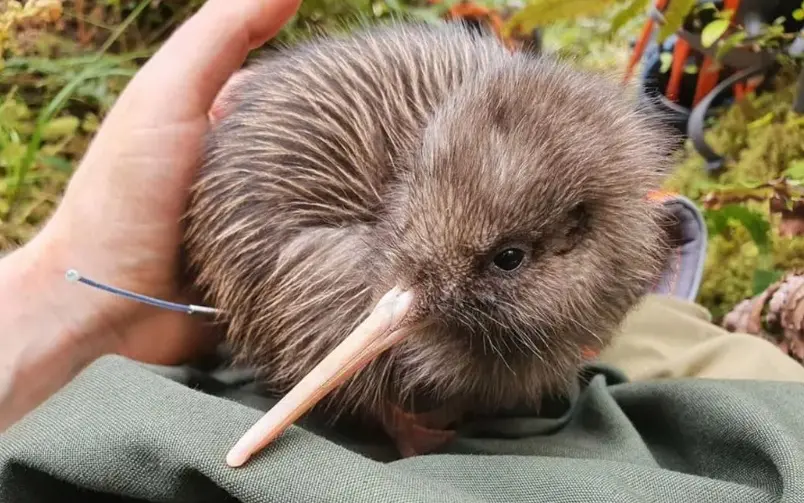
Seventy Okarito rowi kiwi have been brought home after rearing on a predator-free island off the North Island.
At a West Coast Tai Poutini Conservation Board meeting last week, Department of Conservation South Westland operations manager Wayne Costello provided an update on various species of kiwi, including a DOC team travelling to Mana Island, off the Wellington coast, in early March to retrieve the rowi.
Most were released in Omoeroa forest near Franz Josef Glacier, and a couple of smaller birds were released in North Okarito forest.
"That was quite a success and pretty good productivity," Costello said.
He also told the board it has been challenging to protect the Haast tokoeka subspecies, but he hoped predator protection efforts would help.
"In the tokoeka space, things are a little harder ... but with the predator operation that had occurred earlier in the year, that hopefully provides some protection to tokoeka roaming around in the Omoeroa and Haast ranges."
Tokoeka eggs had also been collected by DOC staff, with some kept on the West Coast for hatching and others sent to the Willowbank Wildlife Centre in Christchurch.
"We have brought some eggs out of the wild ... eight or nine and three or four of those have gone to West Coast Wildlife Centre (at Franz Josef) and the rest have gone to Willowbank. Those chicks have been doing well."
Costello also confirmed two breeding pairs of the kiwi pukupuku (little spotted kiwi) have been discovered since the initial sighting in March last year, for the first time in 50 years.
The mainland rediscovery was of a small population of pukupuku in March 2025 in the Adams Wilderness Area between Hari Hari and Whataroa.
"We found two nests ... all of those eggs have hatched, and all chicks are doing really well."
The pukupuku chicks are smaller, which makes them vulnerable to stoats, Costello said. DOC had used 70 "acoustic recording devices" in South Westland to check for further pukupuku.
Costello said future protection of the birds was now being discussed, after DOC publicly announced the discovery in July 2025.
"The next steps for us is to have a discussion about ... options because there will be a range of options," he said.
"There's obviously high interest in these birds because of the genetic diversity they offer to the existing population."
Board member Robert Wilson asked Costello about the original population of pukupuku in the areas they were found.
Costello said the use of 1080, to address bovine Tb in the area, had also provided "much needed protection" for the birds.
- Vihan Dalal, Local Democracy reporter
LDR is local body journalism co-funded by RNZ and NZ On Air.