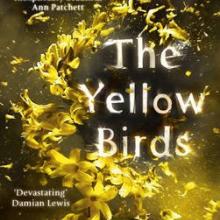
This experience can really only be conveyed from the perspective of the soldiers themselves (the documentary Armadillo is perhaps the most confronting piece of cinema I have ever seen), but very few are willing or able to do so. The fact that Kevin Powers is both a talented author and Iraq war veteran makes The Yellow Birds an important book for anybody who really wants to understand the reality of the current American/Arab conflict.
The narrator, John Bartle, is back in the States after his tour of duty and struggling to come to terms with his experiences. He is especially troubled by the fact his best friend, Murph, died in the field. His guilt is deepened by the promise he made to Murph's mother to keep him safe, and by his own complicity in her son's death.
The chapters alternate between the States, where he is now living as a hermit, attempting to find meaning in his experiences there (his eventual conclusion being that there is none), and his time training and fighting with Murph in Iraq. The former passages are reflective and philosophical, often in long, rambling discursions that capture the associations and random drift of thought, while the latter are more descriptive and narrative in nature, relating his experiences in the field and the slow revelation of the circumstances leading up to and following Murph's death.
These sections reveal the reality of life for those caught in the fight, a world of heat, thirst and fatigue, in which long periods of boredom and endless waiting are punctuated by moments of terror. It is the small details that stand out - a lark calling as they march past to retake a city that has been taken and lost again many times, the soft tinkle of Murph's grenades as they laugh together on the night watch - fragments of normality that jar against the world they now inhabit, one in which the moments before a fight are ''like a car accident ... the instant between knowing that it's going to happen and actually slamming into the other car. Feels pretty helpless ... it's there staring you in the face and you don't have the power to do shit about it. And know it. Death or whatever, it's either coming or it's not ... except here it can last for goddamn days.''
Reading this novel, I felt as close to the reality of war as I hope I ever get, and there is a truth to it that comes from the fact that the author is writing from experience, and shows us the true cost of the current conflict on all sides.
I leave the final judgement to Bartle: ''There isn't any making up for killing women or even watching women getting killed, or for that matter killing men and shooting them in the back and shooting them more times than necessary to actually kill them it [is] just like trying to kill everything you saw sometimes because it felt like acid was seeping down into your soul ... there is no making up for what you are doing.''
Dr McKinney is a Dunedin scientist.