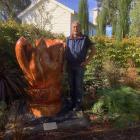
A turn-of-the-century wooden house overlooks Warrington and
Blueskin Bay.
The spectacular coastline north of Dunedin is full of
hidden gems and history. Charmian Smith does a reconnaisance
for The Taieri Rotary Club's Heritage Homes of the Coastline
tour on March 7.
When you reach the top of the motorway heading
north from Dunedin, the expanse of Blueskin Bay opens out
invitingly before you, but to enjoy the coastal delights and
history, you need to leave SH1 and head around the back
roads.
• Slideshow: Heritage homes of the coastline
Dotted along the coast are settlements near beaches that grew
up as holiday resorts from the 1890s - Doctors Point Rd and
Warrington at Blueskin Bay, and Karitane at the Waikouaiti
River estuary.
They were popular picnic destinations as well, serviced by
passenger and excursion trains from Dunedin.
At Warrington, two early-20th-century houses, both with
wooden panelling, spectacular views over the coast, and
relaxing gardens, will be open for people on the Heritage
Homes of the Coastline tour.
Also at Warrington is the little Anglican church of St
Barnabas, tucked away behind a lych gate in a peaceful
graveyard that holds the remains of whalers and local
residents.
It's worth a visit to see the jewel-like stained-glass
windows in the west wall.
These, the story goes, were made at studios in Munich,
Germany, and shipped out to Melbourne for a Catholic church
in 1918.
However, watersiders there refused to unload them because
they came from Germany, which at the time was at war with
Britain and its empire, so they stayed on the ship and were
unloaded at Dunedin, where they remained in storage for many
years.
In 1935, Bishop Samuel Neville, who is buried in the
graveyard, had them installed in the little church.
Further up the coast, past the site of the baronial Seacliff
Lunatic Asylum, now Sir Truby King Reserve, is Puketeraki
lookout, where you can admire the view of Karitane, the
jagged Huriawa Peninsula and the towering yellow Cornish Head
at the north end of Waikouaiti Bay.
At Karitane, Kingscliff, built in 1901 as a holiday home by
Sir Truby King, who was the innovative medical superintendent
at Seacliff asylum, will be open.
King, perhaps better known as the founder of the Plunket
Society, used this house as a hospital for ailing babies -
the first of the Karitane hospitals.
In 1925, King sold the house to the Lawson family, who still
own it.
They made changes, including building an indoor panelled
staircase and opening out the rooms that were once babies'
nurseries.
However, King's original wood-panelled fireside alcove sits
snugly in the middle of the house. Kingscliff's spacious
gardens overlook the Waikouaiti River estuary where fishing
boats bob on the tide, but from the back garden, sheltered by
pine trees, you can hear the roar of the breakers beating on
the rocks of the Huriawa Peninsula, site of Ngai Tahu chief
Te Wera's pa.
About 250 years ago, it was beseiged by Te Wera's nephew
Taoka, who camped on the sandspit opposite and treacherously
stole a sacred image by creeping up the blowhole on the other
side of the peninsula.
The image is said to have flown miraculously back to its home
when Hatu the tohunga worked a magic spell.
High on Cornish Head across the bay sits Matanaka, Johnny
Jones' house built in 1843-44, which, along with the
remaining farm buildings, is probably the oldest building in
Otago.
Jones was one of the largest landowners and most influential
men in mid-19th century Otago.
A name, residential address, and (preferably residential) telephone number is required from readers who comment on ODT Online. These details will not be visible to site visitors.