The difference, of course, is that many letters survive, and when they are written by notable people, they are of great interest to later generations.
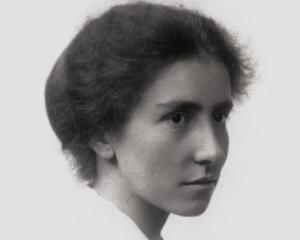
A taste of an epistolary conversation between Janet Frame (1924-2004) and Charles Brasch (1909-1973), two literary giants of the mid-20th century with Dunedin connections, is being hand-printed by Holloway Press in a fine-press edition of 150 copies.
The idea arose as a tribute from the Janet Frame Literary Trust to celebrate the 100th birthday last year of her friend Charles Brasch, according to Frame's niece and literary executor Pamela Gordon.
"We'd been reading through her various letters and discovered after Charles died she wrote to her dear friend in the States, Bill Brown, and over a series of letters she poured out her view of Charles and her memory of him.

Gordon and her partner Denis Harold conceived a performance of extracts from letters that were like a conversation between the two, and with the permission of Brasch's literary executor Alan Roddick, they selected and edited portions of their letters to each other. These were read at the 2009 Auckland Writers and Readers Festival, and are now being published as Dear Charles Dear Janet.
The first letters between them were those of a writer submitting her work to an editor and his replies. Brasch founded and edited Landfall, a literary journal, which published her story "Alison Hendry" in June 1947 under the pseudonym Jan Godfrey. Her first adult story, "University Entrance", had been published in the Listener the previous year.
"He didn't initially recognise, I think, how good her work was but he came to, and he was a firm advocate for it," Gordon said.
However, their initial meeting in Dunedin in 1947 was inauspicious.
It was engineered by John Money, Frame's psychotherapist who took an interest in her writing and sent one of her stories to Brasch, who published it.
Money was about to leave for New York and Frame had come from Oamaru to say farewell, not expecting to find another person at their last meeting. As she did when Money had tried to introduce her to James K. Baxter in the same way, she refused to talk.
"Charles being himself of a nervy and shy disposition, was the one who fled after an awkward half an hour," says Gordon.
According to Michael King's biography of Frame. Wrestling with the Angel, Frame wrote to Money later "by way of part-explanation, part-apology: 'I am a moron when people talk to me. My mind freezes'."
Gordon explains Frame's reticence in the presence of strangers: "She took exception to being treated like a child or like someone who had no agency for herself. So she came in to meet [Money] and here was this other person. Throughout her whole life she had to put up with this, especially as she became very famous.
"People wanted to meet her and sometimes someone else would set up an ambush meeting and she would take exception to this and would refuse to speak to the person."
Later and under her own terms, Frame approached Charles Brasch and some years later they became close friends, she said.
"So John Money was right that they would hit it off, but she didn't want to be told what to do. At their first meeting she was reticent, I suppose, but I've heard some very insulting versions of that meeting - she didn't run away."
Because Frame spent several years in psychiatric hospitals, particularly Seacliff, she felt people "looked for the madness" when they met her, Gordon said.
"That was always what Janet was on the warpath about - people taking her agency away, calling her a mad genius whose work flowed in from nowhere. It's kind of patronising because it took away the fact it was conscious art that she worked at," Gordon said.
"Concerning the hospital years, let me be clear that there is unwavering evidence that Janet Frame never had the `illness' that she is popularly assumed to have had. Frame and King are very clear about the events that led to a tragic misdiagnosis and the lasting effect this mistake had," Gordon emphasises.
She sees it as her job to defend her aunt's personal and literary reputations, as well as the copyright of her work.
"I object to the myth of her being a recluse and some sort of disordered person, which is so unfair and so untrue. She had an active social life. She was a world traveller from 30.
"Everything people see, they see in relation to the myth. They think if she went overseas she must have changed. She was freer outside New Zealand but that was because people outside New Zealand didn't judge her the way New Zealanders do.
"Everyone whispered about her before they met her. A lot of people at that time were told what to think about her before they met her. Frank Sargeson used to do this, and John Money did this too - 'be careful what you say or you'll upset her'."
Frame's first letter to Brasch in 1949 accompanied a story. At the bottom he noted he did not reply, but passed the story on to Denis Glover of the Caxton Press who had accepted The Lagoon and other stories in 1947.
Money had collected the stories and passed them on to Glover who finally released the book in 1952. It won the Hubert Church Memorial Award, the country's premier literary prize, that year.
Brasch first wrote to Janet Frame in March 1954 requesting a poem that Denis Glover had shown him, but after a short exchange of letters she refused to let him print it.
By this time she was a well-known, prizewinning author with several stories and poems published in the Listener and read on radio, and was gaining the attention of the literary scene (which is why Frank Sargeson deliberately sought her out a year later when she went to live in Auckland, and invited her to stay with him), according to Gordon.
In 1954 Frame sent Brasch a story, "Gorse is not people", about a dwarf girl trapped in a mental hospital who dreams of leaving, getting married and living a normal life when she turns 21. Brasch replied that the story seemed too painful to print.
Once a story was rejected, Frame seldom offered it to anyone else, according to Gordon, and this story remained unpublished until a couple of years ago when it was published in The New Yorker, where it can still be read online.
In 1954 when she was working as a waitress at the Grand Hotel (now Southern Cross) in Dunedin, Frame met Brasch again in Modern Books, a shop in Moray Pl which stocked the latest literary works from New Zealand and around the world. He invited her to tea, but they did not really become friends until she returned to live in Dunedin as Burns Fellow in 1965.
Brasch and Frame shared a love of classical music and would go to concerts and films together, Ms Gordon says.
Included in Dear Charles Dear Janet are facsimiles of two letters they wrote to each other after they had seen Midnight Cowboy in 1970, although only short, conversational excerpts are included in the text.
"They overcame her initial reticence to speak to him and his initial squeamishness at the power of her work and the subject matter. She was willing to look into suffering and injustice - in the '50s you didn't criticise the hospital system, you didn't criticise the State, but by the '60s they had in common that they were both against the Vietnam War, so he didn't mind criticising injustice himself," Gordon said.
"This is a portrait of a warm, friendly relationship that had lots of aspects to it. It was a delicate friendship. Charles Brasch was rather a reserved man. Janet Frame found him rather constraining company because she was rather lively and raucous and he was a real gentleman, but I think they had a deep appreciation for each other."
Besides editing Landfall, Brasch was a patron of the arts and often, although usually anonymously, helped individual artists financially, including Frame, Colin McCahon, Frank Sargeson and James K. Baxter. He was one of the instigators and funders of the arts fellowships at the University of Otago.
The extracts in Dear Charles Dear Janet are all the public is likely to see of Frame's letters for some time.
"She made it clear she was very much against the early exploitation of her personal life and she preferred her estate to focus on her published and unpublished literary work. `It's all about the work,' she would often say.
"In this case we were confident she would have approved this. Her firm instructions were 'leave the letters as long as you can', but we've had a lot of pressure and quite aggressive pressure to publish letters," Gordon said.
"Everyone's interested in Janet Frame's life, but it's her work that I've been given this role to nurture and foster and guard, and I've had to be a bit of a guardian this year because academics especially have a sense of entitlement that everything should be theirs the minute they want it."
Gordon says myths about Janet Frame continue to proliferate, probably because they are not publishing her letters.
"People, for various motives and not always good motives, are dusting off the old myths that everyone thought had been laid to rest, about her being crazy, [...] but she had wonderful life-giving friendships like the one with Charles Brasch," she said.
"One of the very important points about Dear Charles Dear Janet is that it is a record of a friendship between two very private people in their own words, without the imposition of any of the influential external interpretations that have dogged Frame's career."
Brasch's letters have not been published previously as the archive was under embargo until 2003, and although Michael King quoted from Frame's letters in Wrestling with the Angel, they also are unlikely to be published for some time as Frame requested.
Gordon admits people will be frustrated they are only printing 150 copies of Dear Charles Dear Janet, at $250 each, but says if there is continued interest the trust would publish a cheaper edition.
"In a way it's a specialist piece. It's not going to be of wide interest. I suppose it's more of interest to the people interested in literary history."
The trust's next project is a volume of Frame's collected non-fiction, which Gordon hopes will dispel some more myths about Frame.
It will include essays, reviews, speeches from conferences and festivals and various launches, letters to editors, and excerpts from about 50 interviews, she says.
Dear Charles Dear Janet - an extract
c/o W. Gordon
61 Gladstone Road
Northcote
Auckland
6 December 1970
[JF to Bill Brown]
[...] The flight from Dunedin was pleasant. I found that Charles Brasch was also on the plane and we sat together I think the first time in my life that I've had company on a flight. I warned him that I would be likely to grab his arm if the plane were being buffeted and he whom I'm sure has remained ungrabbed all his life, suppressed a slight alarm and gallantly said he did not mind.
The flight was calm, though, and we were chased by a wind. [...]
~~~
c/o 61 Gladstone Road
Northcote
Auckland
Sunday
[January 1971]
Dear Charles, Before I left Dunedin I promised Ted Middleton I'd send him an article on a visit to North Vietnam written by a woman of Russian birth who was at Yaddo with me and who is one of the organisers of The Movement in U. S. A.: Grace Paley. Here's the article. Will you kindly pass it on to him? [...]
The plane trip from Dunedin to Wellington is far away now. I enjoyed your company so much. [...]
~~~
36a Heriot Row
Dunedin
1 February 1971
Dear Janet, I passed the article on to Ted. [...]
I've had a letter from the Minister of Internal Affairs, cool about my proposal for some equivalent to the British Civil List, but asking if I'd like him to take up your case with his colleagues - asking, God help us, six years after I asked him. So I replied, Yes, please, at once. [...]
I loved having your company to Wellington, and hope you may have found someone agreeable to cross the Pacific with.
I had a month of hot sunny weather on Coromandel and Northland and on Takapuna Beach; then came home to a fortnight of equally lovely weather here, and managed a few outings. On Pipikariti beach one day we found a seal, a penguin, and a tiny hedgehog who was exploring all on his own - he kept rubbing his snout along the sand as if trying to slide, or feeling its softness and warmth; when at length we attracted his attention, deliberately, he gave the tiniest little squeaks of fright and froze, poking up his quills, and stayed motionless till we'd moved far away. We also climbed Harbour Cone - which I'd last done in thick still mist. The harbour was wonderfully beautiful in such weather; it's hardly changed in twenty years - but will it stay so?
I am just going to stay for a few days between Cromwell and Wanaka, hoping for hot sun again.
I hope you're having a happy time in California.
Charles
• THE BOOK
Copies of Dear Charles Dear Janet are available from www.hollowaypress.auckland.ac.nz or by writing to The Holloway Press, c/-English Dept., University of Auckland, Private Bag 92109, Auckland, New Zealand.