Walk in to any Indian restaurant anywhere in New Zealand and the chefs will almost always be from one small region near the Himalayas. And it is not just in this country. Bruce Munro uncovers the surprising story of how Garhwali chefs are conquering the curry-and-naan-loving world.
Kedar Anthwal's mind flicks to a scene more than 12,000km away.
In a Dunedin commercial kitchen smaller than most New Zealanders' home kitchens, the 30-year-old Indian chef is busy preparing half a dozen lunchtime meals.
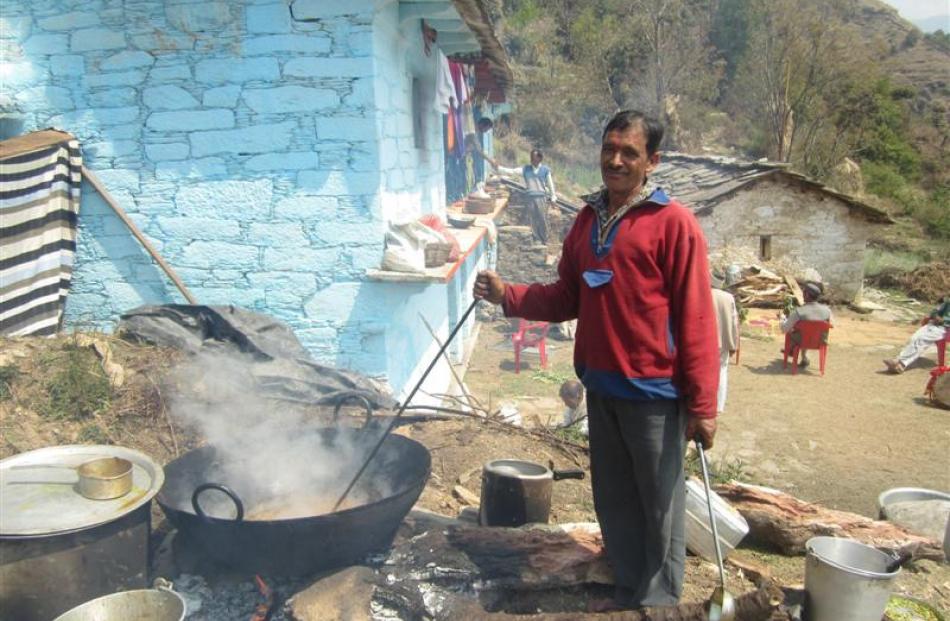
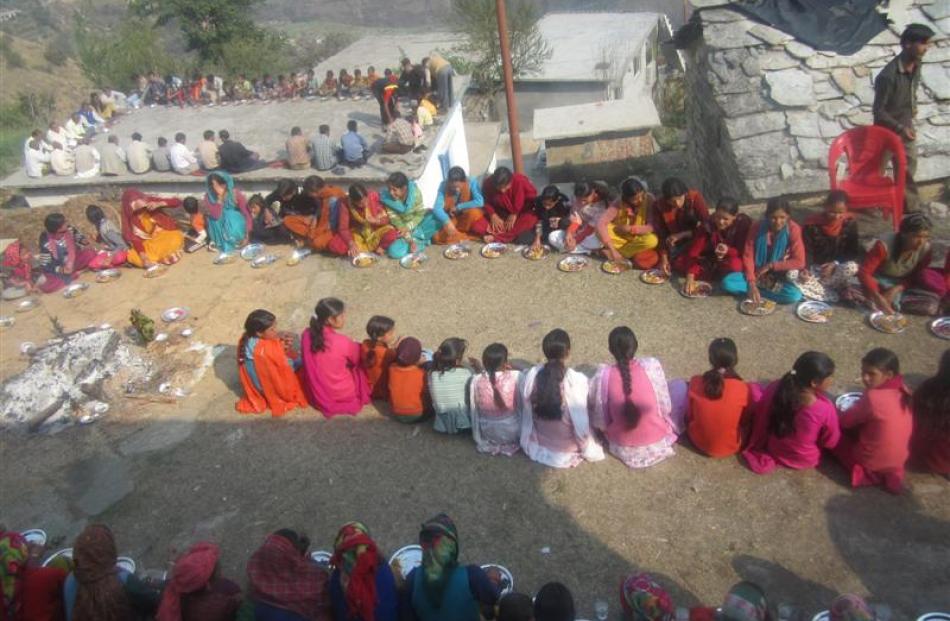
The roar of gas-fired flames and clackety-clack of metal ladles on metal pans are infused with smells of barbecuing meat, bubbling pots of aromatic curries and the sight of richly coloured and textured spices to form a heady multisensory feast. But for a moment Kedar is transported to a small remote village perched high in the mountains of Uttarakhand state near India's border with Chinese-controlled Tibet. Atop the smouldering logs of an outside fire sits an enormous iron karahi (cooking vessel) tended by a village elder preparing a vegetable curry for a Hindu festival. Behind him women in bright saris sit preparing bread, their chatter carried on the wind out across the deep, forested valley towards distant, towering Himalayan peaks.
Such scenes are being played out in thousands of imaginations in restaurant kitchens throughout New Zealand every day. The sights, sounds and smells of Garhwal, of home.
In the past three decades it is estimated more than 3000 chefs and restaurant workers from the Garhwal division of Uttarakhand in northern India have emigrated to New Zealand, many of them from a group of villages within a 30km radius. It is believed Garhwali men now make up 75% to 90% of all chefs in New Zealand's hundreds of Indian restaurants. And, increasingly, they are becoming restaurant owners as well.
But the dishes they serve - Indian restaurant staples such as chicken tikka masala, biryani, tandoori lamb and rogan josh - are not part of their traditional cuisine nor representative of the dishes of more than just a portion of that populous and diverse subcontinent.
And it is not just a New Zealand phenomenon. There are as many or more Garhwali chefs and restaurant owners in each of the United Kingdom, Japan and Germany. It is an intriguing story of British colonial racial stereotyping, a backward-looking prince, ambitions for a better life, and a web of family and friendship connections spanning the globe. Although, in New Zealand at least, it is a trend that appears to have flown under the official radar.
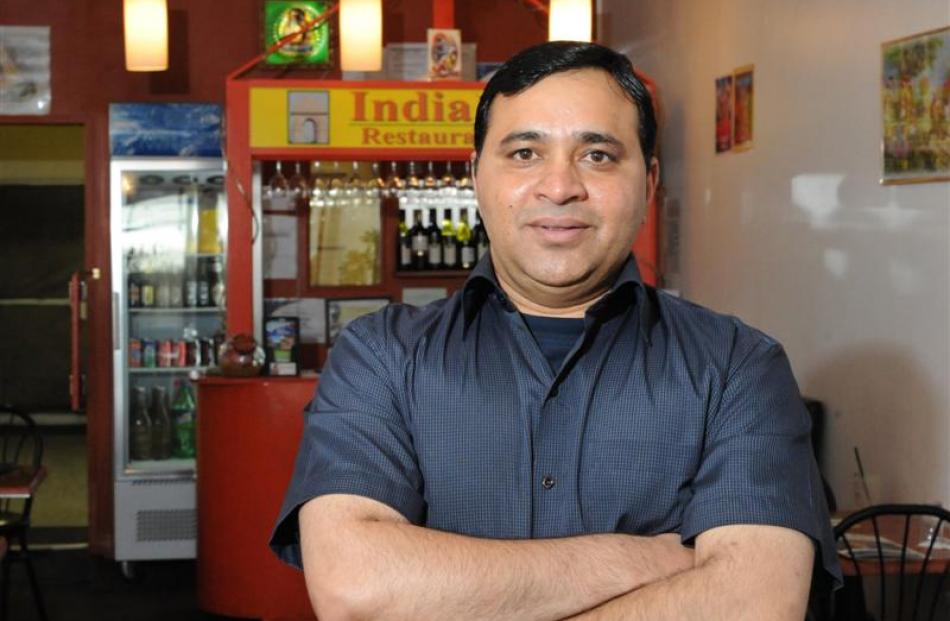
Kedar's older brother Suryamani Anthwal (44), who owns India Gate and Indian Spice restaurants in Dunedin, says it is no surprise so many Garhwali are chefs.
''They have a distinct taste in their hands,'' he says of his people's reputation in the culinary arts.
''And they have stamina because of their solid build ... Putting your hand in the tandoor when it is 400 degrees - a weak person can't do that.''
In the time of the British Raj their physique and bravery had the Garhwali listed among the ''martial races''. According to this later-debunked theory developed in the wake of the 1857 Indian Mutiny, certain races were better suited to being warriors, and so were actively recruited to the British Army.
Garhwali and their neighbours - Gurkhas, Kumaonis and Dogras - made up a disproportionately high percentage of the Indian soldiers serving in the armed forces of the British Empire.
And this continued after India won its independence in 1947, in large part because the army offered the best employment prospects in the mountainous region where industry was scarce.
Helping ensure Garhwali enlisted in large numbers was the prince of Tehri Garhwal (a British-endorsed principality in the east of the region) who declared his subjects could only receive a primary education.
Although his reign ended in 1949, it has taken more than a generation to overcome the legacy of poor education and underdevelopment, Suryamani says.
Kedar and Suryamani's family name is taken from that of their village, Anthwal, a village to which there was no road access until a decade ago and no electricity until five years ago. A village where food is still cooked on a wood-fired stove, and where, in time-honoured fashion, it is the men who come together to cook for weddings, births, religious festivals and funerals.
This is where Garhwali men get their ''hand'' for cooking, Suryamani says.
''From the age of 10, boys start cooking with the men ... If there is any occasion, we have to feed the whole village. You come and help at mine and then I will help at yours.''
And it is from this poorer area of Garhwal that many of the chefs come.
An article in India Today earlier this year reported ''scores of youths from Pangriyana, Bagar, Badyar and Sarpoli villages are today working as chefs in Japan''.
''Anthwal village is next to Sarpoli and Badyar,'' Suryamani says.
Aware of a wider world, and with a culinary aptitude but still-limited options, they are now flocking, not to the army, but to the restaurants of the world.
The dishes they serve are another historical accident.
What Western restaurant-goers call Indian food is in fact mostly Punjabi and Mughlai cuisine, the dominant fare of northern India. This was where some of the key centres of power in British India were based.
The British expatriates, when they returned home, took with them their taste for curry, as well as some of the servants who prepared it.
''The Punjabi were their servants,'' Suryamani said.
''And when they set up Indian restaurants they hired Garhwali.
''Punjabi were considered good businessmen and Garhwali were considered good chefs.''
It is a pattern being repeated in several countries throughout the world.
Sukhi Gill came to New Zealand from Punjab via the United Kingdom. When he opened his first Little India restaurant in Dunedin 32 years ago he hired Garhwali chefs. The Little India franchise now has 18 restaurants throughout New Zealand, and 95% of its chefs are still from Punjab's neighbour Garhwal.
It all works on family networks and word-of-mouth recommendations, Christchurch-based Mr Gill says.
Prospective employees turn up at his parents' home in Chandigarh, the capital of Punjab state, having heard from relatives they might find work. His father checks their references, while his mother tests their culinary expertise and assesses their suitability.
Two or three times a year, Mr Gill flies over to make the final hiring decisions.
That his employees share the same language and are often related to each other is an advantage, he says.
''India to New Zealand is a long way,'' Mr Gill says.
''Having someone you know and can talk to makes the transition easier.''
He is pleased almost three-quarters of his chefs now have residency and many are bringing their families to New Zealand.
Two of the Little India restaurants are now run by Garhwali chefs-turned-owners.
Another Garhwali restaurant owner, in fact one who is the owner of eight Indian Aroma restaurants, is Hamilton-based Ravindra Lakhera.
Mr Lakhera came to New Zealand in 1997 and opened his first restaurant in Mairangi Bay, Auckland, 10 years ago.
He has included a few Garhwali dishes on his menus and says they are well received.
''Garhwali dishes have mixed vegetables and meats, and guests enjoy it more than standard chicken curry,'' Mr Lakhera said. He is concerned the Garhwali diaspora, as well as ''Western and Bollywood influences'' are threatening the Garhwali culture. An estimated 2.2 million people worldwide speak Garhwali. But Unesco says the language is under threat.
''It is true that people are losing their culture and language. It makes me very sad,'' Mr Lakhera said.
To combat it, he has set up a company in India which promotes Garhwali music. He also plans to start a Garhwali association in New Zealand.
IT is well known that Indians are the fastest-growing ethnic Asian community in New Zealand and the second largest after the Chinese. Statistics New Zealand figures show 106,000 Indians were resident in this country in 2006. And in the decade to 2011, more than 51,000 long-term or permanent Indian migrants arrived here, two thirds of them male. But the Garhwali part of the picture is almost a complete mystery among researchers.
Associate Professor Jacqui Leckie, who is head of the anthropology and archaeology department at the University of Otago, has written a history of Indian settlement in New Zealand. It spans 90 years from the first settlers - Punjabi brothers Bir and Phuman Gill, who arrived in about 1890 - to 1980, shortly before the first Garhwali probably arrived.
The suggestion most Garhwali came to New Zealand from a small area in their homeland fitted well with typical Indian migration patterns, Prof Leckie said.
The majority of the Indian settlers in New Zealand during most of the 20th century came from groups of villages in Punjab and Gujarat, she said.
Todd Nachowitz, a PhD student from the University of Waikato, has been surveying the Indian community in New Zealand as part of research on the effectiveness of this country's multicultural policies. Only a handful of Garhwali speakers filled out the survey, which had 1110 participants throughout New Zealand.
Professor Sekar Bandyopadhyay is the director of the newly formed New Zealand India Research Institute, a Wellington-based multidisciplinary partnership between five New Zealand universities and two Indian universities. The institute will focus on research in five areas - society and culture, migration, economics and business, environmental sustainability and politics and security.
It is planning to hold two conferences in New Zealand next year for academics from New Zealand and India as well as a joint Indo-New Zealand conference in India.
There has been no research on New Zealand's growing Garhwali community, but it is hoped that would change, Prof Bandyopadhyay said.
''The Indian diaspora will certainly be one aspect of the first conference,'' he said.