Saving and supporting jobs during the recession appeared top of the list for Finance Minister Bill English when he released his first Budget of the new National-led administration yesterday.
With unemployment set to peak at close to 8%, the Government was taking steps to cushion New Zealanders from the sharpest edges of recession, he said.
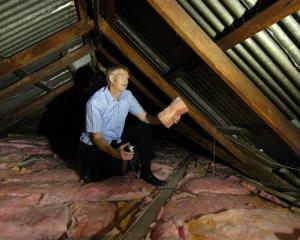
Projects announced in the Budget included $7.5 billion of planned infrastructure investment over the next five years, a $323.3 million campaign to insulate and heat up to 180,000 homes, and $50 million towards a national cycleway.
"The Government's Jobs and Growth plan will keep as many people in work as possible during the recession, while creating a springboard for strong future economic growth and the jobs it will bring with it."
Building better roads, more state houses, modern schools and faster broadband would support thousands of new jobs.
Many more would be created by insulating homes up and down the country, Mr English said.
Labour Party list MP David Parker, of Dunedin, said Mr English was just spouting rhetoric.
The South had missed out on the first round of infrastructure spending and it had missed out again in yesterday's Budget.
At the same time, the Government had increased South Island petrol tax by $50 million.
"Giving $12 million for the Forsyth Barr stadium just doesn't cut it. They are selling state houses in Dunedin and not building one. The Government says there are areas of greater need. Well, there is no greater need than Queenstown, and not one is being built there, despite serious lay-offs in the construction industry."
The Government could have done more to support the construction sector in Dunedin and Queenstown but the region had been left to fend for itself, which was not fair, Mr Parker said.
Council of Trade Unions secretary Peter Conway said the Budget had not done enough to stimulate the jobs market and invest in skills.
"This was always going to be a tough Budget, requiring difficult choices. But the Government could have done more in the short run to boost employment, and has actually reduced planned funding on industry training."
The CTU welcomed the home insulation programme, which would create jobs, assist with health housing and reduce heating costs and energy consumption.
However, it could have been scaled up, and combined with other job creation schemes, to assist the growing numbers of unemployed, he said.
With unemployment set to rise to 8%, or 179,000, many more households and communities would be affected by unemployment as well as creating added cost to the Government, he said.