Finance Minister Bill English yesterday delivered a Budget for the times, one that struck a balance between delivering support to the economy and being responsible about long-term expenses and debt.
It was never going to be a Budget that shocked or surprised.
The main themes were supporting jobs and people, productivity and keeping a lid on debt.
All that could be hoped for was that it would be conservative and appeal to rating agencies and investors alike. It fitted that bill.
Any perceived conflict between Prime Minister John Key and Mr English about what the Budget aimed to achieve was put aside.
The catchphrase for this Budget was "road to recovery", with both the Prime Minister and his Finance Minister peppering their speeches with what they hope will become a national headline.
Mr Key said the Budget's three main aims were to improve public services and help New Zealanders through the recession, lift productivity and raise the country's international competitiveness and take steps to keep government debt under control.
"A strong focus of Budget 2009 is on maintaining existing entitlements such as National Superannuation, Working for Families and welfare benefits - despite the difficult economic circumstances we face.
"I have always said I'm ambitious for New Zealand and, despite the serious economic challenges we face, I continue to be ambitious and positive for this country's future."
Mr English said the Budget started the process of changing government spending priorities.
The first step was to carefully scrutinise existing expenditure.
Initial reviews of department spending freed up considerable extra funding by reducing low-priority spending.
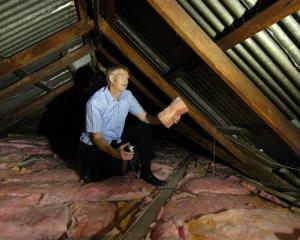
Despite the focus on reducing debt, government expenditure and maintaining the country's Standard and Poor's credit rating, Mr English found some cash to splash on the health system, education, upgrading home insulation, police and justice and infrastructure spending.
The main spending was:Health - $245 million of capital spending to address demographic pressures.
Broadband - $250 million capital and $56 million operating funding for telecommunications infrastructure.
Education - $325.6 million capital and an additional $197.7 million operating funding for new schools and to upgrade and maintain existing ones.
Housing - $124.5 million previously announced for the construction of 69 state houses.
Transport - $142.4 million to fast-track several roading projects.
The expected superannuation fund contributions and future tax cuts were deferred.
Net debt will peak at 36% by 2017 and steadily decline from there.
Mr English said no increase in public debt was satisfactory.
"In this case, the world has moved very quickly from the best of times to the worst of times.
It is appropriate that public finances be smoothed through these long-term cycles."
Criticism was moderate, even from the Labour Opposition.
Labour leader Phil Goff said the Budget failed to set out a coherent plan to keep New Zealanders in work, broke a promise on tax cuts and sounded the death knell for superannuation.