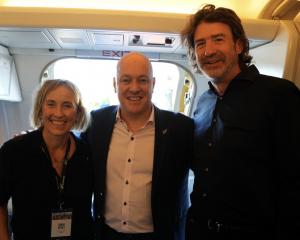
The New Zealand Stock Exchange expects to launch its first dairy futures market in June, initially offering whole milk powder contracts but eventually extending it to other dairy products.
Exchange derivatives manager Katherine Jaggard said interest had been high, both locally and internationally, which was an indication the dairy sector lacked such risk management tools compared to other traded commodities, like grain and coffee.
"Certainly, everybody we have spoken to offshore is keen to see the market take off in dairy."
The contracts operated independently of the buying and selling on the physical market and Miss Jaggard said NZX had been in contact with New Zealand and Australian dairy processors, who were positive about the venture.
"They were all positive and keen to know more and understand how they can use the product."
New Zealand will this year account for about half the world trade in whole milk powder, so she said it was appropriate the NZX operated a futures market for the product.
Given the dairy industry's importance to the economy, Miss Jaggard said a futures market allowed processors, buyers, brokers and farmers to hedge prices against any movement.
Futures would be electronically traded and cleared by the NZX clearing house.
Settlement would be by cash and linked to Fonterra's monthly globalDairyTrade.
Futures' contracts, or hedging, was an agreement to buy or sell a set quantity and quality of goods at a given date in the future, at an agreed price.
The contract hedged against price increases or decreases.
Typically, with contracts for other well established products, futures were traded between two and eight times before settlement, but Miss Jaggard thought it would take several years for that to happen with dairy products.
Farmers were interested in hedging their income against price fluctuations, but initial activity was expected from others in the industry, such as processors, buyers and traders.
She said New Zealand farmers were already regularly viewing the Chicago Mercantile Exchange milk futures to get a steer on where dairy prices were headed.
But this market traded in United States raw milk, which was influenced by political decisions such as subsidies and state support.
Eventually, she would like dairy farmers to view the NZX dairy futures market on a daily basis, as they did now with the exchange rate.
"We see the exchange rate every day. It would be great to see the whole milk powder price every day.
"The data would be helpful to farmers. It would give them an idea where demand levels are," she said.
Final regulatory approval was being completed, but Miss Jaggard said NZX planned to extend it to other dairy products.
She declined to elaborate or provide a time line.
"We are looking at dairy derivatives - it won't just be whole milk powder. New Zealand is in a very strong position for physically traded whole milk powder and New Zealand is the logical hub for derivative trades in dairy futures."