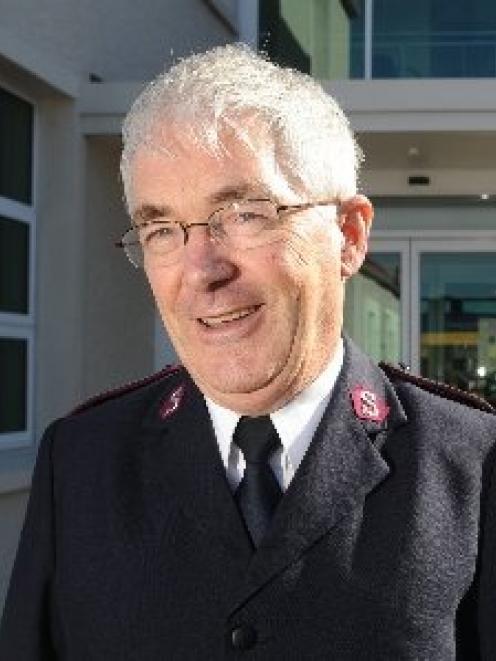
Born in Queenstown, and a former Dunedin resident, Major Roberts is the creator and national director of the Salvation Army's Wellington-based social policy and parliamentary unit.
He was back in Dunedin this week to take part in the latest of a series of "public conversations", hosted by the University of Otago's Centre for Theology and Public Issues.
New Zealand had a beautiful environment and a wealth of natural resources, he said.
But it was a "very much a black mark" against the nation that, even in the midst of plenty, about 200,000 young people remained in poverty.
"New Zealand does not take seriously enough the issue of poverty," he said.
Sufficiently comprehensive action had not been taken to eliminate it.
"We need to have solutions which are long term and which permanently get people out of poverty."
Asked how he maintained a sense of hope, given persistent poverty problems during his long career with the Salvation Army, he remained inspired by the courageous way some people responded to adverse circumstances.
The country's "faith communities", including Salvation Army members, could contribute to offering vulnerable New Zealanders a better life, but the poor needed "present hope" and not just hopes for the distant future.
Asked about recently announced Government plans to reduce the number of long-term beneficiaries by 30%, from 78,000 to 55,000, by 2017, Major Roberts said sometimes policymakers set goals which were "too narrow", such as removing people from certain lists.
"If we're going to do things to take 30% of people out of poverty that would be really meaningful," he said.
Comprehensive and holistic solutions were needed to counter poverty issues, and this required co-ordinated action involving education, health, employment and housing policies, he said.
Maj Roberts is part of an expert group, established by the Children's Commissioner, which is seeking solutions to child poverty.