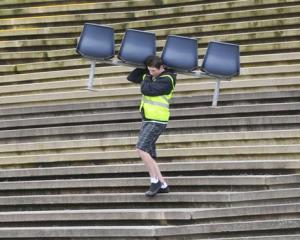
More payments by the Dunedin City Council totalling more than $300,000 have been linked to the sale of Carisbrook as costs from the deal continue to rise.
The revelations came as Dunedin Mayor Dave Cull yesterday moved to dampen speculation over the sale by confirming building company Calder Stewart had offered to buy the old stadium for $3.3 million, excluding GST.
The conditional offer was still to be confirmed, but Mr Cull sought Calder Stewart's permission yesterday to release the extra details after days of media questions and headlines.
However, the Otago Daily Times has also learnt the council faced extra costs associated with the deal, totalling about $310,000.
The council had been forced to find about $250,000 to pay for the removal of contaminated material from the car park at 24 Burns St, one of the neighbouring properties the council acquired with Carisbrook in 2009.
And, it emerged yesterday, the council had also agreed to make a one-off $60,000 payment to the company that bought half the car park in March last year, immediately after it was sold by the council to the company.
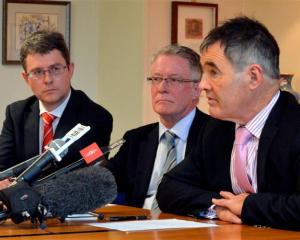
Council city property manager Robert Clark did not return calls yesterday, and council acting chief executive Tony Avery insisted he knew nothing about the payment and could not explain it.
Mayor Dave Cull, bristling at questions about it, also refused to comment, and neither man would say if the payment would be investigated.
Instead, Mr Cull released new figures showing the council had received only $408,000 from the sale of half the car park, not the $727,000 previously stated.
The difference reflected the cost of cleaning up the contamination, which made up the vast bulk of the reduced figure, he said.
The contamination prompted the council to grant itself a non-notified resource consent in July last year, a copy of which confirmed 808cu m of ''potentially contaminated soil'' was to be removed.
The ODT understands the cleanup has not yet occurred, but that the council paid the new owner to cover the cost of the work.
The site had been bought by Auto Court Ltd, but owner Neil Cottle declined to comment.
The council had also earned slightly more than previously thought from selling eight houses in Burns St, also bought with Carisbrook, with figures yesterday showing they had been resold for $740,000, Mr Cull said.
The revised figure included sales commission and was up slightly from the $692,000 previously reported by the council.
However, it was still only an average of $92,500 per house, which Mr Cull said reflected the poor state of the homes and the fact two were on leasehold land.
Together with the conditional Calder Stewart offer, the sums meant the council stood to receive $4.448 million back after borrowing $7 million to buy the stadium, homes and car park - a gap of $2.552 million.
That could improve when the second half of the car park was sold, Mr Cull said, although an overall loss was still expected.
However, the figures did not account for the $2 million loan from the council to the ORFU in 1997, which had been repaid to the council by the ORFU, but only by using the union's proceeds from the sale of Carisbrook to the council - money the council had borrowed in the first place.
If the sums are added together, the council could be more than $4 million out of pocket, but Mr Cull would not predict the final size of the loss yesterday.
Neither did the figures include four years of council costs accrued while owning the stadium, ranging from loan interest costs to electricity and rates, and together totalling $860,000.
On top of that was the $480,000 in rent and other costs owed by the ORFU to the council and Dunedin Venues Management Ltd, but wiped as part of the union's bail-out last year. There could be more money involved, too, as the ODT was told the deal with Calder Stewart included council involvement in its redevelopment, for an unspecified industrial use.
Details could not be confirmed yesterday and Mr Cull would not comment, citing commercial sensitivity.
Mr Cull said he was trying to be as transparent as possible, while working within a still-conditional deal, but did acknowledge the result was ''disappointing''.
''It's disappointing whenever you get less for something than you paid for it, clearly, but the choices in front of council have been to take the best prices that were available.''
However, he would not question the valuation obtained by the council at the time, saying markets and buyers could change. He would not commit to reviewing the process either.
''Council made a decision at the time. It bought the property. There's no point in rehashing it if you can't change it.
''A valuation is not a promise.''