


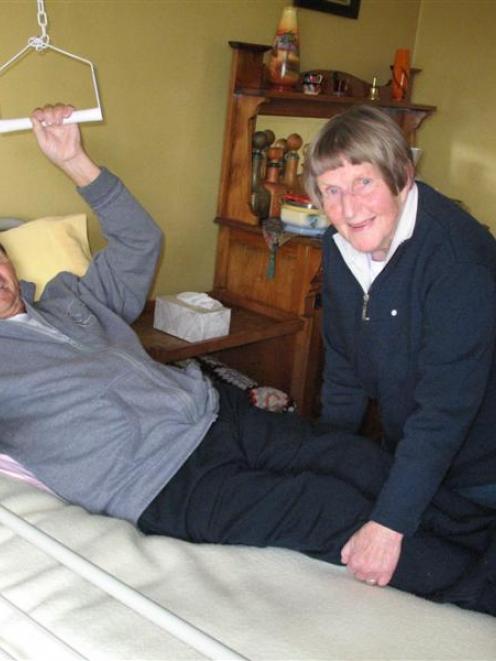
The tumour was successfully removed, but damage caused by the cancer left Mr Turner in a wheelchair with spastic tetraplegia.
Doctors told Heather Turner her husband was expected to live for only three months and recommended putting him into long-stay residential care. However, Mrs Turner said she felt strongly home was the best place for him.
"He was not improving and spiralling downwards."
Five years later, Mr Turner's health was vastly improved and health professionals "never fail to be surprised at how well he looks", she said.
The Palmerston couple say their love is stronger than ever, but the past five years have not been easy.
While Mr Turner has no cognitive damage, he is unable to stand or balance and if he falls over he cannot move.
He cannot be left alone and needs help getting out of bed, showering and dressing, and even making a cup of tea.
Mrs Turner said becoming a 24-hour carer was tiring and mentally draining, but she had no regrets.
"The joys outweigh the down side of being a 24-hour carer, but it is hard, lonely and gutting at times, as people tend to decide they know better than the doctors and the needs assessor. The fact we are happy together and love each other has made it work."
One of her biggest frustrations was the discrepancy between publicly funded help for people who were injured or disabled through an accident and people who "through no fault of their own" were disabled through ill health, such as stroke, cancer or multiple sclerosis.
Entitlements from ACC which covered people injured by an accident far outweighed the care and support provided by the Ministry of Health, Mrs Turner said.
"If my husband had been boozed out of his brain and banged into something, ACC would pay for everything, but in our situation you pay yourself. It is unfair."
The Turners have a carer come in five days a week for one and a-half hours to help with things such as showering and dressing, and they get three hours of home help each week to assist with housework.
During weekends, Mr Turner goes to Maniototo Hospital for respite care - time Mrs Turner said she used to catch up on sleep.
The couple said they had spent at least $50,000 as they coped with Mr Turner's disability, such as doing modifications in their house, buying a wheelchair-friendly vehicle and fitting dentures after Mr Turner lost his teeth due to steroid damage.
They had received some help with bathroom modifications and installing a wheelchair lift at the back door.
They now had an electric bed and wheelchair, but had to manage with an old hospital bed with bars along the side and an old wheelchair for several months.
Mrs Turner said she was lucky a minister living across the road was so supportive and would come over on Sundays when she had no carer to help lift Mr Turner in and out of bed.
Holidays were an impossibility unless Mr Turner went into care, and she was lucky if she had five days off a year at Easter and Christmas, Mrs Turner said.


