A Dunedin-based company is joining forces with two
international partners in a $3 million deal to help fight the
spreading "epidemic" of autism.
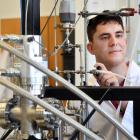
Innovative Learning, headed by chief executive and
psychologist Dr Mike Reid, of Dunedin, will launch two new
certificate programmes later this year.
The certificates are the result of a partnership between his
company and Antioch University Santa Barbara, a private
institution based in the United States, and will also be
distributed in the United Kingdom by Ludlow Street
Healthcare.
The programmes aimed to improve the care given to those
diagnosed with a range of autism spectrum disorders (ASD) by
upskilling those who came into contact with them - from
teachers and carers to GPs and other health professionals, Dr
Reid said.
The certificates offered a combination of online learning and
practical community-based exercises, and would be available
worldwide, although primarily aimed at the US and UK markets
initially, he said.
The first programme would be rolled out in May, and the
company hoped to attract 1000-1500 students in the first
year, doubling in two to three years, Dr Reid said.
Fees were yet to be finalised, but the programme was expected
to earn the company about $3 million in the first year,
rising as the number of enrolments did, Dr Reid said.
Innovative Learning was founded in 2006 and is one of 16
companies to receive support from Dunedin's Upstart Business
Incubator programme.
The company employed two staff in Dunedin and nine in Santa
Ynez, California, while Dr Reid divided his time between the
United States and Dunedin.
Speaking to the Otago Daily Times in Dunedin yesterday, Dr
Reid said many professionals had no formal training to help
them diagnose or cope with people with autism disorders.
Those with autism disorders were "left detached from the
world around them", while teachers, for example, struggled to
educate them or cope with their sometimes challenging
classroom behaviour, he said.
That was despite estimates by the United States-based Centre
for Disease Control and Prevention (CDC) which put the number
of children born with autism disorders as high as one in 150
last year, up from about one case in 10,000 live births a
decade ago, Dr Reid said.
Research had yet to identify the reason for the dramatic
increase.
The same trend was present in New Zealand and across the
world, he said.
The cost to the US economy was up to $US100 billion ($NZ177
billion) last year, spent on a variety of autism-related
services, and CDC forecasts showed that could rise to as much
as $US400 billion by 2014, Dr Reid said.
"It's everywhere," he said.
"In most of the OECD countries it's the condition that's
attracting the most attention.
"It's huge."
chris.morris@odt.co.nz
Bookmark/Search this post with:
A name, residential address, and (preferably residential) telephone number is required from readers who comment on ODT Online. These details will not be visible to site visitors.