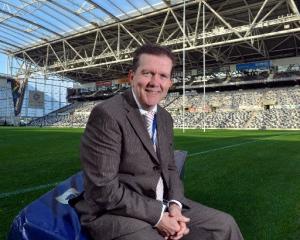
Justice Lester Chisholm gave a lengthy decision yesterday morning, with Dunedin Mayor Peter Chin and city council chief executive Jim Harland looking on from the council's side, Stop the Stadium president Bev Butler and her husband Peter Attwooll for opponents, and a considerable media contingent.
It was not obvious until the end of Justice Chisholm's speech what the outcome would be, but his last words were clear.
"The plaintiff has failed to get past first base" in an attempt to convince the court there were further direct and indirect costs to the council from changes in the financial structure of the project, he said.
"As a result, this application is dismissed."
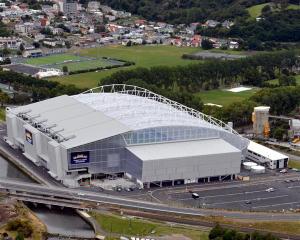
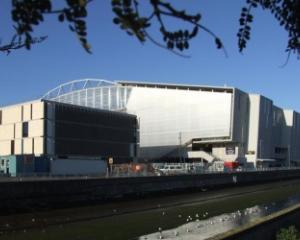
The case came down to whether the changes to the project since last year's council annual plan were different to a "significant" degree, to the point the council would have to again consult with the public, delaying the signing of a contract to build the stadium.
The meaning of the word "significant", in particular in relation to the Local Government Act, was discussed at length on Thursday.
Stop the Stadium counsel Len Andersen claimed the key points that had changed since the latest annual plan included the cost of $198 million, which previously was not to have exceeded $188 million; the $10 million expected from the Community Trust of Otago that had dropped to $7 million; and the requirement for bridging loans to cover private sector funding.
Mr Andersen calculated there was $13 million he said the public had not been told about, from the extra $10 million the project would cost, and the $3 million shortfall from the community trust.
He used a spread sheet to argue the council's figures did not add up.
The council, through its lawyer Frazer Barton, said the project was a "moving feast", and while there had been changes, the cost to the council and ratepayers had not changed.
Mr Barton also told the judge quite clearly the council had spent more than $52 million, and was keen to begin the project.
"This is about the legality of the project, not the wisdom or otherwise," Justice Chisholm said in his decision.
The primary issue was whether the changes would have a significant effect on the council.
He accepted the project's capital costs had increased, but that was offset by the Government's $15 million grant.
The overall costs were important, the rest "irrelevant".
Justice Chisholm said he had struggled with the evidence on the revenue aspect of the project.
Mr Andersen's attack had been on several fronts, with his arguments long-term debt had risen to $108 million, the $5 million ratepayers had to pay annually would not cover interest costs, bridging loans must cost the council, and the Government's $15 million had somehow been counted twice.
"I have to say I don't follow the submission and I don't accept it," Judge Chisolm said.
He said he was "very wary" of Mr Andersen's spread sheet.
The figures had been presented by Mr Andersen and in an affidavit from University of Otago accounting lecturer Nicola Holman, but there was no analysis to go with them.
"Clearly, I am faced with sharply competing allegations."
The financial arrangements were complex, and it was impossible for him to do an analysis himself.
The plaintiff had failed to show there was a direct or indirect cost to the council or ratepayers because of the cost increases, he said, dismissing the application.
Costs were reserved.
What they said
The Dunedin City Council will meet on Monday to hear a report on the case from Dunedin Mayor Peter Chin, and he will sign the contract on that day.
Here is what the two sides said outside the High Court in Christchurch following Justice Lester Chisholm's decision.
Dunedin Mayor Peter Chin
Mr Chin said the decision brought some finality to the issue.
"We're about to sign the contract, which is basically the last step."
The court's ruling allowed the council to go ahead with the project, after a "hugely stressful" week.
It cleared up a lot of criticism of the project, and showed the council had followed the correct procedure.
Stop the Stadium president Bev Butler
Ms Butler said she was "obviously very disappointed" with the decision.
She would be seeking further advice from her legal team, but intended to fight on against the stadium.
The group would not "go under" because of the cost of the hearing, she said.
"I'm confident the community will support us in our costs."