$66 a year 'demonstrably incorrect'

Click photo to enlarge
Len Anderson
Len Anderson
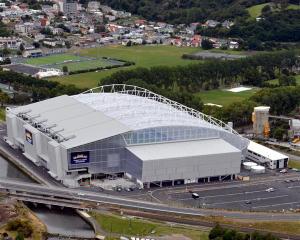
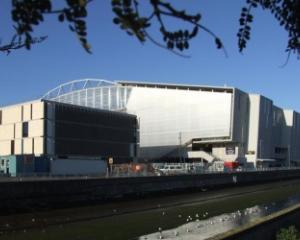
An assurance the Forsyth Barr Stadium will cost the average ratepayer no more than $66 a year cannot be true, when other costs for the project have increased, Stop the Stadium's counsel Len Anderson says.

The figure was "demonstrably incorrect", Mr Anderson said in his 21-page affidavit to the Court of Appeal in Wellington, and the resulting figure of $5 million a year raised was not enough to pay even the capital of the council's loans.

The likely contribution would be twice that amount, he said - at least $10 million.

This would mean ratepayers would have to pay double the amount that they had been told they would have to pay.

But Dunedin City Council finance and corporate support general manager Athol Stephens argued in his own affidavit the repayments would total $10 million a year, including the ratepayers' $5 million, $3 million from council-owned companies' cash flow, and a tax saving of $2 million, from having a company holding the stadium debt within the council's group of companies.

There were other changes, he said, that meant there had been no change to the $66 a year figure.

These and other aspects of the council's funding for the stadium formed the heart of the debate before the court this week.

The court's three judges reserved their decision, which awaits as the final possible action that could stop construction at the Awatea St site.

Mr Andersen listed the changes to the stadium he said had occurred since full council consultation on the project last occurred for the 2008-09 year.

The cost had increased from $188 million to $199 million, the Community Trust of Otago's contribution had fallen from $10 million to $7 million, and private-sector funding had changed to the point that 3% instead of 53% would be received before the stadium was completed.

The Government had provided $15 million, but the cost to the city council trading organisation had increased from $91.4 million to $108 million.

"The ratepayer contribution for the average value residential property must have increased significantly from $66 per annum despite assurances to the contrary from the council," he said.

The changes were significant, Mr Andersen said, and ratepayers should be consulted on the true cost.

Mr Stephen's affidavit said a drop in interest rates of 2% would reduce interest costs in year one by $2.1 million, and produce a saving over 20 years of $32.9 million.

The reduction in private-sector funding had been offset by the Government's $15 million grant.

Despite the cost of the stadium increasing and the reduction in funding sources, the debt servicing costs were not significantly different because of the reduction in interest rates.

"The cost to the average value residential property ratepayer is also unchanged."

DCC affadavits before the court now available

To those who want to be fully informed, the affidavits filed with the Court Of Appeal (and High Court) by DCC CEO Jim Harland and General Manager, Finance and Corporate Athol Stephens, are now available on the council website at: http://www.dunedin.govt.nz/__data/assets/pdf_file/0009/81828/Affidavits.pdf. Or go to the search line on the home page and type in 'Affidavit.

(Edit made 23/8/09 at 10.40 pm to insert new hperlink).

Glasnost and Perestroika

Thanks for the link to the affidavits Richard. I am hoping that this is the dawn of a new age of transparency and openness of DCC information and the beginning of fiscally responsible, common sense decision making, made in the interests of the people of our great city. There is still a long way to go, but every journey starts with a single step.

Maths fail

The numbers are apparently not easy to deal with. The $66 refers to a residential property with an average price. If you live in a cheap house, a person pays less, but the owner of a more expensive house or a non-residential property will pay more. Thus, the ratepayer's upfront rates contribution is $5 million. Then, the taxpayers of New Zealand contribute approximately $2 million a year in forgone tax revenue. You say $3.3 million, and yet the real answer is $7 million.
So exactly how did you cook up the $340 million dollar figure? Is it 50% out as well?

Numbers

$3.3m is an estimate - there are roughly 50,000 ratepayers in Dunedin - if each are paying $66/year on average then that will bring in $3.3m. You can do that sort of math with an average number - unlike say a median value. Sure some will pay a lot more (I will) and others less. Mind you the rate payers will have to pay GST on top of that $66 so they'll actually be paying a bit more.

The $340m number comes from information published in the ODT:
  • $165m fixed contract cost
  • $35.6 cost of land (from Harland's affidavit ODT 16/5/9)
  • $15.3m money paid to CST prior to the contract (from Harland's affidavit ODT 16/5/9)
  • $1.1m administration costs (from Harland's affidavit ODT 16/5/9)
  • $0.385m district plan change (from Harland's affidavit ODT 16/5/9)
  • $0.2m temporary road improvement (ODT 23/5/9)
  • $7m purchase of Carisbrook (ODT 18/6/9)
  • $109m interest (ODT 20/6/9)
  • $6.4m capital maintenance fund (ODT 20/6/9)

Total $339.985m - $340m is close enough - it doesn't yet include the upcoming cost or rerouting SH88 which will add many more millions. This number is down by $2m from last time I published it since it seems that's they true cost of the previously uncertain Carisbrook purchase.

The council's $199/198m number has always been a pretty made up sort of number, cherry picked to keep it small - it hasn't included financing costs, ongoing running costs or infrastructure costs like SH88.

silly estimate

$3.3 million is a silly estimate. A commercial property with the same GV as your house is paying 3 times as much for the stadium. Thus, estimating off the residential rate is going to see you undershoot by a mile. You clearly don't trust the council, but I'm sure you'd believe that they are quite good at setting rates increases, so I'm pretty comfortable when they say it's $5 million. You also seem stubbornly uninterested in tax savings, but anything you want to believe to massage that unaffordability higher right? I actually agree that the final cost tallied up from all sources is likely to be higher than $66 for the average residential property. However, if I correct for your estimate and trust the rest of your maths, and assume no further tax savings, it comes out as $158/year, a bit over half of your estimate. And those numbers of yours seem based on no private funding ever eventuating and the ORC contributing 30 and not 37.5 million.

Private funding

I don't believe you can count the bulk of the private funding as it consists of pre-selling seats - I think that that's a quite valid way to raise capital but it's not free money - it's not a grant like the money coming from the ORC or the government.
Pre-sold seats are in essence an interest free loan that must be paid back when the seats are used - the CST gets the money and gets to claim it as "privately raised money" but they must also quietly pass an equal amount of debt obligation to the DCC corporation that will be running the stadium - that corporation will retire the debt by letting people use 'for free' seats the corporation could otherwise charge for. Eventually that money will show up on the DCC's books as a lower operating profit (or higher loss) by the management corporation.

Nothing new here

We've known for a long time that $66/ratepayer/year was a made up number that couldn't be sustained. The numbers are pretty easy to deal with - $66/year over 50.000 rate players gives us $3.3m/year, over 20 years that's $66m. Add that to the $30m from the ORC, $15m from the govt, and $7m from the community trust (we can't count the 'private' monies raised by the CST because that money incurs an equal debt in the form of free or cheap tickets that must come out of future earnings over those 20 years) - so we have total money to be raised 66+15+30+7= $118m.

But the stadium's going to cost $340m all up including DCC's financing so $220m has to come from somewhere - that's $11m/year over the same 20 years ($220/ratepayer/year plus the original $66 makes $286).

The council tells us that that $11m/year will come out of the income from the council's companies - but that's $11m less income from the companies than the amount the council receives at the moment - that means that either they have to reduce services (street cleaning, the library, sports grounds, fixing potholes, etc etc) or they have to raise rates or charges. My guess is that they will need to do all these things - of course our rates will be raised, not for the stadium but because of something like "reduced income from council corporations".

ODT/directory - Local Businesses

CompanyLocationBusiness Type
Musselburgh Medical CentreDunedinMedical Centres
Bondor New Zealand (Cool Stores & Insulation)DunedinSpecialist Trades
Mclellan FreightBalcluthaTransport & Haulage
Traffic Design Group LtdQueenstownEngineers & Planners