Passengers aboard a Queenstown-to-Auckland flight on Sunday shared the plane with nine of one of New Zealand's rarest native birds - the takahe.
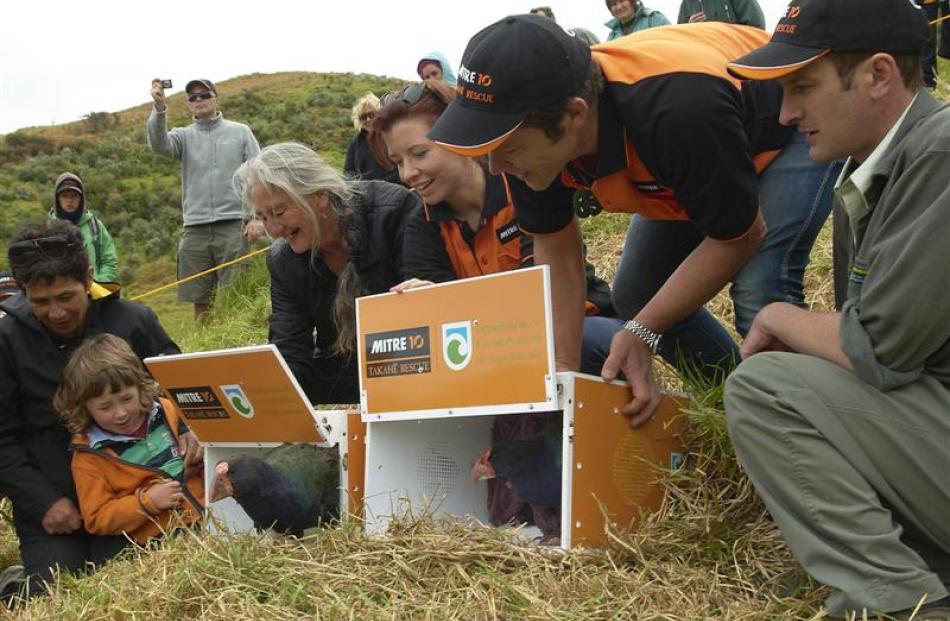
Only 260 of the native birds remain and on Sunday nine passed through Queenstown before their release on a pest-free island close to Auckland city.
The birds were taken by road in special transportation boxes from the Burwood Bush Takahe Rearing Unit near Te Anau to the Queenstown Airport where they boarded a flight to Auckland in the hope of creating the largest Takahe population outside Fiordland.
In Auckland the birds were driven to Devonport and carried aboard a Department of Conservation boat for their final journey to Motutapu Island, a half-hour ferry trip from central Auckland.
Doc, partnered by Mitre 10, is working to secure the survival of the bird and the latest release was hailed as a milestone.
Takahe were thought to be extinct until their rediscovery in the Fiordland National Park in 1948 by Dr Geoffrey Orbell.
The closest relative to the flightless bird is the pukeko.
Up to three eggs are laid by the takahe in a breeding season and are incubated by both parents.
Once the chicks hatch they remain with their parents for up to two years.
Outside of human-encouraged takahe populations, the bird is only found in the Murchison Mountains in Fiordland National Park, although they have also been released on Kapiti, Mana, Maud and Tiritiri Matangi - all pest-free islands.
Doc Takahe Recovery Programme manager Phil Tisch acknowledged the funding from Mitre 10, saying without the partnership it would not be possible to do the work.
"It's enabling us to take another big step forward in building a safe future for takahe by building a new population on Motutapu," Mr Tisch said