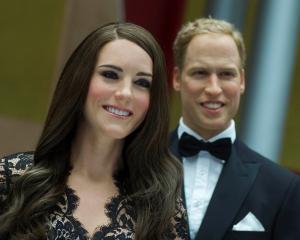
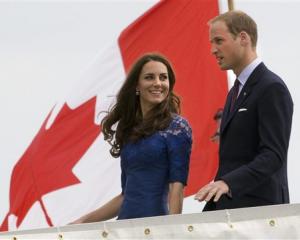
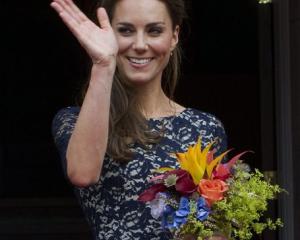
The wedding fervour, which saw a million Britons cram the streets of London on April 29, 2011 to catch a glimpse of the future king and queen, has inevitably faded with the memory of the fairytale dresses, uniforms and horse-drawn carriages.
But royal watchers and many members of the public believe the couple have boosted the monarchy's popularity and offer an escape for a nation beset by recession, unemployment and financial insecurity.
Even if, as naysayers argue, the duke and duchess are merely celebrities whose wealth and style are out of reach of all but a few, their popularity reaches far beyond Britain.
Media outlets in Britain, the United States, Canada and beyond remain enamoured with Catherine and second-in-line-to-the-throne Prince William.
"I think it's been a complete triumph for them," Claudia Joseph, a biographer of Catherine, said of their first year of married life.
Where the couple, and their PR team, have been particularly successful, commentators say, is in projecting the image of a relatively ordinary pair, albeit it one that has access to palaces, castles, glitzy red carpets and the odd butler or two.
While William has been working as a rescue helicopter pilot in north Wales, they have stayed in a rented home on the island of Anglesey, a move that has helped them build the "couple-next-door" idea.
"William drives himself to work, enjoys a pint in the local pub, Kate shops at the local supermarket, cooks for her husband, they go for walks, go to cinema, watch television," Joseph said.
MEDIA MESMERISED
Some newspapers have followed the royal couple with a commitment bordering on obsession.
Barely a day goes by when either the Daily Mail or Daily Telegraph -- as right-leaning publications natural allies to the monarchy -- do not splash images of them over their pages, usually accompanied with gushing prose.
On Friday, the Daily Mail featured photographs of the duke and duchess attending an official function on its front page and again on page 3 and 27.
The Telegraph devotes its main front page picture to Prince William holding a baby and page 4 to a story of how Queen Elizabeth and father-in-law Prince Charles get on well with Catherine.
Often stories are about official engagements, including visits to charities, trips abroad and movie premieres.
They also focus on fashion, with the duchess seen as a key arbiter of taste whose choice of clothes and accessories sends items flying off the high street shelves.
"Catherine's style spans the catwalk and the high street and she is a great champion of British brands, making her an excellent style ambassador," said Caroline Rush, chief executive of the British Fashion Council.
In one of the more bizarre examples, pictures of the duchess playing field hockey led to a surge in interest in the sport -- one online retailer saw sales of hockey sticks surge 238 percent in the days after she paid a visit to the British Olympic team.
Some articles have ventured into pure speculation.
"Kate Middleton's sexy underwear secret revealed!" ran a headline on the website of celebrity Now magazine, followed by an unsourced story based on conjecture.
If and when the couple have a baby is currently top of the "guessing games", followed by speculation over whether the duchess has an eating disorder -- a sensitive topic given that William's late mother Princess Diana, to whom Kate is inevitably compared, suffered from bulimia.
Coverage has extended to Kate's sister Pippa, who also shot to global fame as a result of her appearance as maid of honour at the royal wedding.
A recent trip to party in Paris may have caused royal blushes after Pippa was criticised for being photographed in a car with a man wielding what looked like a pistol at pursuing paparazzi.
Generally, however, the press has been overwhelmingly favourable, although anti-monarchist group Republic counters that support for the royals is weaker than headlines suggest.
It said this week that polls showed a fall in the number of people believing Britain would be worse off without the royals -- down to 51 percent from 63 percent this time last year.
Only 41 percent said they believed the monarchy was a unifying force, with 32 percent saying it made no difference.
"These polls put the lie to the claim that the monarchy is enjoying a resurgence of popularity," Republic's chief executive Graham Smith said. "No poll over the past 18 months has shown any increase in support for the monarchy."
FEEL-GOOD FACTOR
However, royal officials believe that austere economic times have added to the monarchy's allure.
"Continuity and stability has strength in its own rights while everything else is in a state of flux," one senior royal aide told Reuters on condition of anonymity, due to the palace's demands for discretion in dealing with the press.
"One of its roles in a way is to provide a sort of ballast to the nation, a solid foundation, and it probably comes to the fore more obviously in difficult times.
"You saw that with the royal wedding last year. People realised they could have a celebration. It was something that people turned to very naturally."
The queen may well be grateful to her grandchildren for casting the royals in a positive light, following a series of scandals including popular Diana's death in a Paris car crash aged 36.
The 86-year-old monarch is gearing up for a weekend of national celebrations in early June to mark her 60th year on the throne, a spectacular event expected to draw more huge crowds to London and media attention from around the world.
In sharp contrast to their very public wedding, the duke and duchess will be avoiding the limelight on their anniversary on Sunday at a long-planned event with friends at an undisclosed location in Britain, their spokesman said.