Alcohol abuse has been a fixture of New Zealand society since even before the days of organised settlement, its effects on the wider community have waxed and waned, it has been a political issue since parties were formed, the subject of triennial polls, and a significant negative influence on the health and wellbeing of individuals and families.
It has also been a welcome source of pleasure for many people, a vast source of revenues for successive governments, and its production has contributed substantially to the wealth of the nation.
No other beverage has been the subject of so much cynical promotion and no other legal drug so widely accepted in society: its real and potential dangers have been so long recognised in a country where social engineering has played such a large role that only in recent years has the term "liberalisation" been applied to the rules that govern alcohol's sale and distribution.
Caution has been the byword.
Our most recent experiment with liberalisation has proved to be a fatally attractive combination for our youth in the sale of wine and beer in supermarkets and the reduction of the minimum age of purchase to 18 years.
No doubt mature and sensible drinkers have welcomed both innovations - supermarket sales statistics would seem to bear out that presumption - and the State has certainly benefited from taxes on alcohol, for excise tax alone produced more than $900 million in 2008.
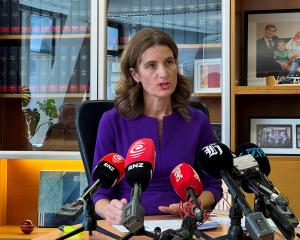
But a consequence of recent rounds of liberalisation has also led to the production and publication of the Law Commission's study, "Alcohol in Our Lives: Curbing the Harm", which resiles from the widespread inference when the changes were made that New Zealanders were by then sophisticated consumers of alcohol and not the nation of drunks of Kiwi mythology.
The report makes the bold claim of offering "a blueprint for reducing both the short- and long-term effects of alcohol misuse on society".
Its recommendations are not aimed at those whose use of alcohol is light and of low risk, but at the boozers for whom alcohol is an accessible prop for the psyche.
As such, the effects would be very wide were the recommendations to be adopted.
Prices would be raised through tax increases; "irresponsible" promotions curtailed; the minimum purchase age revert to 20; maximum closing hours imposed for on- and off-licences; and more restrictive regulation of alcohol advertising and sponsorship.
The commission's public statements referred to "a saturated alcohol market", "the over-commercialisation of alcohol", and the fact that alcohol can be purchased for less than the cost of bottled water - "pocket money prices" in its telling phrase.
Some 25% of all drinkers drink heavily when they drink, the commission estimates, and larger numbers are involved in intermittent outbreaks of binge drinking.
But no law passed by a modern Parliament can control how people drink; all that can be done short of prohibition is to have a set of measures directed at governing the promotion and sale of alcohol.
Notably, very few of those who advocate the sale of alcohol also promote to an equal degree education about safe drinking practices among our young people, especially among our adolescents: there is no point in further tinkering with the regulations unless and until such measures are firmly and routinely cultivated.
To some extent, the additional recommendations of the commission - restrictions on who can supply alcohol to minors and in what circumstances; increasing the ability of local people to influence how and where alcohol is sold in their communities; a civil cost recovery regime for those taken into custody when grossly intoxicated - may have a greater long-term impact than simply increasing the purchase age.
If the problems resulting from liberalisation have now been identified, solutions will be wholly political.
The recommendations ought to be a test for all parties in the House - assuming they are even accepted by the Government - since the greatest risk for them is the potential backlash from the great majority of responsible drinkers whose pockets might be affected by their implementation in whole or in part.
In the past, the liquor laws have been such a touchy subject voting in Parliament has usually been a matter of individual conscience, often leading to all kinds of accusations of lobbying influence on MPs.
The Government has indicated change will be regulatory in nature and will not be hurried - let alone occur before the Rugby World Cup and the general election soon after - and perhaps with an eye on the latter, it is "extremely unlikely" to increase excise tax at the recommended level as part of the reform agenda.
But on such an important matter as the population's health and wellbeing, a far greater degree of urgency is demanded.