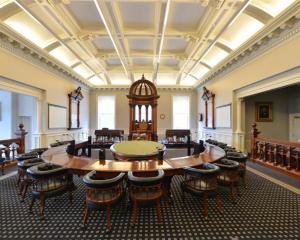


The front-page ODT news of July 31 was a revelation of momentous proportions. "$8m annual DCC shortfall" announces Mayor Dave Cull.
He proceeds to accuse Cr Paul Hudson, who is also chairman of Dunedin City Holdings Ltd (DCHL) of being less than forthcoming about the council companies' financial situation, and is clearly pushing for him to end his time on the board of directors.
Not so, protests Cr Hudson, in turn, accusing the mayor of not keeping up with company finances. Since then, one could become quite confused by the heady fumes of "injured innocence".
Is this the big day of reckoning or just a political storm in a teacup? Personally, I would opt for the former.
It had to come, and the only question is why it took so long. More importantly, what can, or should be done?So what is the problem?
In a nutshell, the Dunedin City Council has, in the past decade, spent up all its available treasure, mortgaged the citizens' future and come within an ace of bankrupting DCHL, its group of trading companies. Hence the mayor's urgency.
So how did the city get into this position? It didn't happen overnight. In fact, I believe it has taken 10 years to gestate.
It started with the advent of our former chief executive, who upon assuming office proceeded to inculcate among staff a culture of entitlement, encouraging "visionary" attitudes of grandeur, with nothing being considered for the city as impossible.
The senior management was restructured and five new heads of departments were appointed. The engineering department was sold and faith was placed in paid consultants to provide all the expertise. Never mind that these people were first and foremost working for fees, thus not as cost-conscious as one would hope.
Worse, with no in-house engineering expertise, there was no checks-and-balances assessment of the projects undertaken.
Then there was the enthusiastic embracing of these philosophies by successive mayors and some councillors. One in particular, on assuming the chair of the economic development committee, set out to lavish the city's treasure upon all manner of businesses and property developments by way of financial grants, rate reliefs and financial incentive payments.
This was in the thought that it would consolidate and grow the business/industrial base of Dunedin. The most graphic example of this would be the massive rate reliefs and financial offers to Fisher and Paykel Ltd, last known address Mexico.
It was forecasted in January 2005 that Dunedin's population would rise to 127,000 to 130,000 by 2021, up from 119,000 at the last census. Between 10,000 and 12,500 additional full-time equivalent jobs would be created, spread across all sectors.
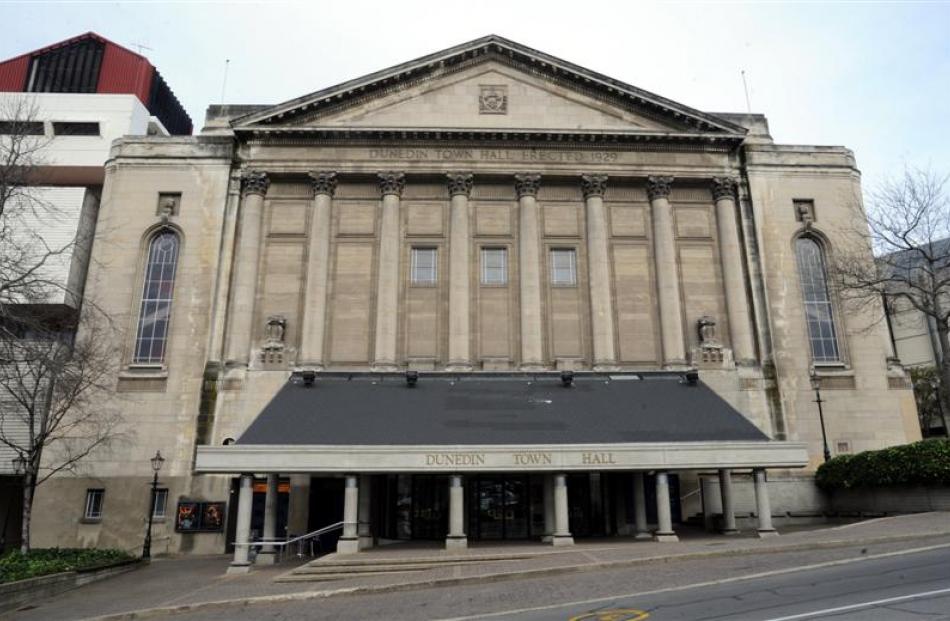
Then there are the grand projects, which have been well documented: the Stadium, Town Hall/conference centre, Chinese Garden, Otago Settlers Museum, the harbourside dream, Tahuna sewage treatment upgrade (necessary), Logan Park cricket complex, Wall Street Mall, etc.
All are mega-cost projects, and all were financed by debt. Never did the council pause to ask, "Can we afford this? Is it necessary; do we really need it?"
The effect of all this? In the 2001-02 draft annual plan, the DCC's net debt was shown to peak in 2004-05 about $86 million, then reducing to $32 million in 2010-11.
In the latest annual plan, the debt in 2010-11 is $327.487 million, lowering to $269.756 million (because of about $147 million being transferred to DVL) in 2013-14. It is still at $159.397 million in 2020-21.
Meanwhile, DCHL's long-term borrowings have increased from $212.485 million for the year ending June 30, 2005 to $445.355 million at December 31, 2009. In 2005, the DCC demanded a special "one-off" dividend of $10 million, on top of $9 million already allocated.
This was to reduce what was to have been a 12.5% rate increase down to 5.7%. This was made possible by DCHL's revaluing its assets and borrowing against that increase.
That has been a common practice since. All this, of course, had to be approved by the DCHL directorate, of which Paul Hudson is chairman. So to put on the air of injured innocence is spurious, to say the least.
This brings us to the duties of directors. I believe their function is to oversee the governance of the trading group in the best interests of the viability of that group and, by extension, the interests of the shareholders.
In turn, they have a fiduciary obligation to see that the company is protected from the ravages of the shareholders. There ought not be any conflict of interests among directors. It seems wrong in principle to have any elected councillors as directors, as that poses an immediate conflict of interest.
Then there are the other conflicts, whereby monies have been voted to the DCC for the financing of the stadium, while among the directors was the chairman of the Otago Highlanders rugby franchise, a vitally interested party in those funds.
Then there are the appointments to ex officio bodies such as the Carisbrook Stadium Trust, where the appointed chairman had a serious conflict of interest, being an ex-chairman of the Highlanders, again with a vested interest in seeing the stadium proceed.
The DCHL board should all resign, followed by an independent inquiry into the structure.
What to do? First off, there should be an inventory of all strategic and non-strategic property held in the DCC property department portfolio. All non-strategic should be placed on the market, the proceeds to pay down the relevant debts and all surplus to pay down the remaining debt.
There are the several parking buildings in Dunedin, Wall Street Mall, some Christchurch commercial buildings and the Bunnings Warehouse in Wellington, as well.
Then there are numerous parcels of property around Dunedin, not least of which is Carisbrook. The city can no longer afford the luxury of these baubles; we are in deep trouble and difficult decisions need to be made.
The worry is, do we have the necessary nous around the council table to do the right things? We will see.