Oh, wait a minute ... This just in! Nobody died in the Three-Mile Island calamity, 28 plant workers were killed and 15 other people subsequently died of thyroid cancer in the Chernobyl holocaust, and nobody died in the Fukushima catastrophe. In fact, northern Japan has not been evacuated after all. But never mind all that. They really are shutting their nuclear plants down.
They have already shut them down in Japan. All of the country's 50 nuclear reactors were closed for safety checks after the tsunami damaged the Fukushima plant, and only two have reopened so far. The Government, which was previously planning to increase nuclear's share of the national energy mix to half by 2030, has now promised to close every nuclear power plant in Japan permanently by 2040.
The new Japanese plan says that the country will replace the missing nuclear energy with an eightfold increase in renewable energy (wind, solar, etc), and "the development of sustainable ways to use fossil fuels". But going from 4% to 30% renewables in the energy mix will take decades, and nobody has yet found an economically sustainable way to sequester the greenhouse gas emissions from burning fossil fuels.
The truth is that as the Arctic sea ice melts and grain harvests are devastated by heat waves and drought, the world's third largest user of nuclear energy has decided to go back to emitting lots and lots of carbon dioxide.
In Germany, where the Greens have been campaigning against nuclear power for decades, Chancellor Angela Merkel has done a U-turn and promised to close all the country's nuclear reactors by 2022. She also promised to replace them with renewable power sources, of course, but the reality there will also be that the country burns more fossil fuels. Belgium is also shutting down its nuclear plants, and Italy has abandoned its plans to build some.
Even France, which has taken 80% of its power from nuclear power plants for decades without the slightest problem, is joining the panic. President Francois Hollande's new Government has promised to lower the country's dependence on nuclear energy to 50% of the national energy mix.
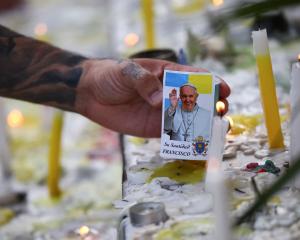
But you can see why he and his colleagues had to do it. After all, nuclear energy is a kind of witchcraft, and the public is frightened.
The Greens prattle about replacing nuclear power with renewables, which might come to pass in some distant future.
But the brutal truth for now is that closing down the nuclear plants will lead to a sharp rise in greenhouse gas emissions, in precisely the period when the race to cut emissions and avoid a rise in average global temperature of more than 2degC will be won or lost.
Fortunately, their superstitious fears are largely absent in more sophisticated parts of the world. Only four new nuclear reactors are under construction in the European Union, and only one in the United States, but there are 61 being built elsewhere. Over two-thirds of them are being built in the BRICs (Brazil, Russia, India and China), where economies are growing fast and governments are increasingly concerned about both pollution and climate change.
But it's not enough to outweigh the closure of so many nuclear plants in the developed world, at least in the short run.
India may be aiming at getting 50% of its energy from nuclear power by 2050, for example, but the fact is that only 3.7% of its electricity is nuclear right now.
So the price of nuclear fuel has collapsed in the past four years, and uranium mine openings and expansions have been cancelled.
More people die from coal pollution each day than have been killed by 50 years of nuclear power operations - and that's just from lung disease. If you include future deaths from global warming due to burning fossil fuels, closing down nuclear power stations is sheer madness.
Welcome to the Middle Ages.
• Gwynne Dyer is an independent London journalist.