It's not going to stop any time soon, but you can only say that so many times before people get bored and move on. Except for the people who actually live near Syria's borders, the audience for ''news'' about Syria has already moved on.
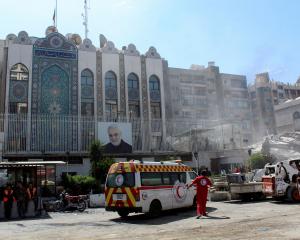
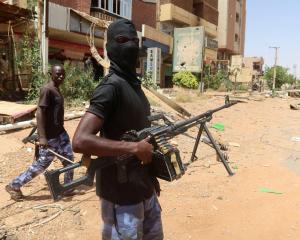
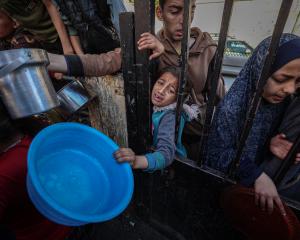
Consider the recent exhaustive study by the United Nations Human Rights Commission concluding that 60,000 Syrians have been killed in the civil war since March, 2011. That's considerably higher than the previous estimates of deaths in the war, which were running around 40,000, and the UNHRC hoped that this new number would finally galvanise the rest of the world into action, but it changed nothing.
Last month's ''news'' was that the Russians were on the brink of abandoning their Syrian ally, President Bashar al-Assad, which would surely bring about his rapid downfall.
''One must look the facts in the face,'' said Mikhail Bogdanov, Russia's deputy foreign minister and Middle Eastern envoy.
''Unfortunately, the victory of the Syrian opposition cannot be ruled out.''
However, Mr Bogdanov did not actually say that a rebel victory was desirable. On the contrary, he said that it would not happen for a long time, if ever, and that such a victory would ruin Syria. Then the spokesman of the Russian foreign ministry, Alexander Lukashevich, announced that the media had simply misunderstood Mr Bogdanov: ''We have not changed our position, and we will not change it.''
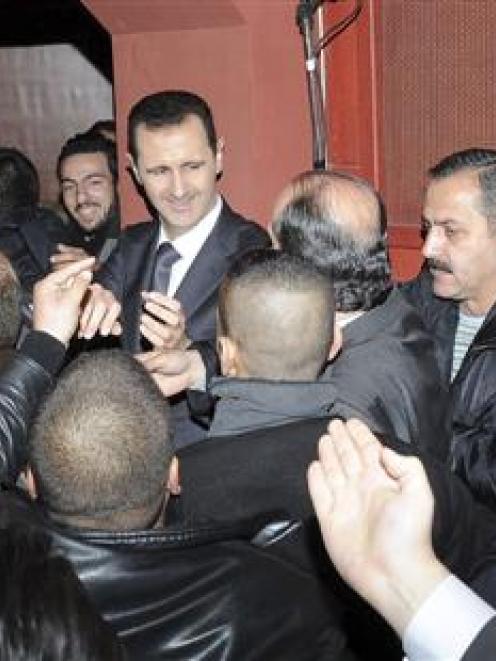
And so to the recent piece of theatre: a widely touted speech in Damascus in which Assad would propose a way to end the conflict peacefully. He did no such thing, of course, instead declaring his eternal refusal to negotiate with the ''terrorists'' who are fighting his army.
He will only talk to the ''puppet-masters'' (an unholy alliance, he claims, between Israel, Western governments and al Qaeda), not to the puppets.
Well, what did you expect? He and his Alawite sect are convinced that they must go on ruling Syria or face destruction. He's not actually losing the war, either. Syrians are deeply divided by sect and ethnicity and class, and enough of those groups are on Assad's side that he can probably hold out for a very long time. By the time he finally loses (or wins), perhaps years from now, Syria will indeed be ruined.
So why doesn't everybody else ''do something about it''? Because what ''everybody else'' really means is ''somebody else, but not me''. No government is going to order its soldiers to risk their lives in a military intervention abroad unless it has reasonable confidence that their sacrifice will not be futile. That assurance is simply not available to governments that might contemplate intervention in Syria.
It's a quarter-century since the first dictatorial regimes were overthrown by non-violent revolutions, and the remaining ones have all had time to study the phenomenon.
They have unanimously and quite correctly concluded that their best chance of survival is to push the protesters into violence. In a civil war, everybody is in the wrong, and the side with the greatest ability to inflict violence (the regime) may win.
Some regimes, like the communists in eastern Europe or the apartheid regime in South Africa, decided that they would not impose a civil war on the country even if the alternative was losing power.
Others, like the Egyptian regime two years ago, could not trust the army to fight a civil war on their behalf. But the senior commanders of the Syrian army are almost all Alawites, and they were actually willing to fight a civil war rather than surrender power.
Now they have their war, and it will go on for a long time. By the end, there may not even be a unified Syrian state any more. And no outside force is going to stop it.
Gwynne Dyer is an independent London journalist.