The media frenzy surrounding the welfare of pig farming in New Zealand has never been as intense as it is right now it seems, although there have been other occasions when it has flared up.
Sue Kedgley occupied a sow crate, covertly obtained footage from pig farms has been released to the media before, and so on.
Usually these incidents occur around the time of revision of the code of welfare for New Zealand pig farming.
This is a familiar phenomenon, which has preceded the revision of other welfare codes - you might remember similar focus on battery cage farming of chickens, for example.
Now the Government has called for an urgent review of the code of welfare for pig farming by the National Animal Welfare Advisory Committee.
What is unfortunate about this pattern is that there is little time for members of the public to consider the issues carefully and clearly, and arrive at a reasoned judgement.
Why is this? The aim of those involved is to gain public support in terms of votes, viewership or consumers.
The quickest way to do this is to appeal to the sympathies of the public, and things proceed much like an exercise in advertising.
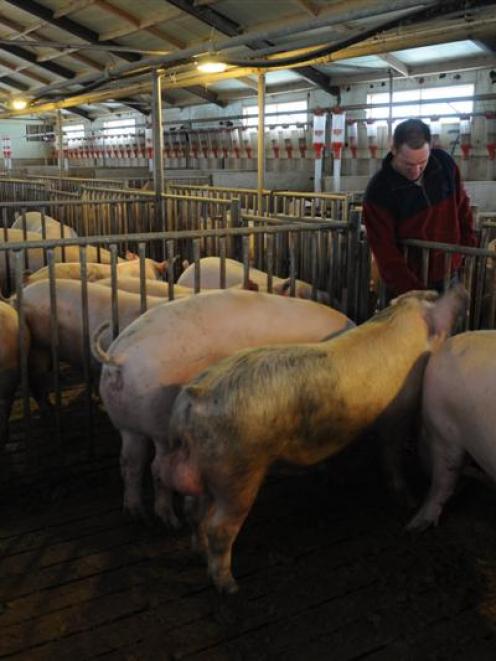
Indoor-housed pigs are presented as variously suffering, mad, depressed, unclean, unhealthy, or dead; outdoor pigs are presented as variously happy, perky, well-balanced, healthy, and alive.
The pork industry (its board and farmers) are presented as defensive, uncaring, insensitive, and profiteering; comedian Mike King and Safe are presented as quite the opposite.
It's like the public is in a cartoon with a little devil on one shoulder and an angel on the other.
We've all seen those cartoons - when is the devil ever right?So, if the angel is right, the New Zealand public should want animal exploitation to stop.
After all, this is what Safe is all about - saving animals from exploitation.
If there's one thing we can be sure about, it is that intensive pig farmers exploit animals.
That's a fact.
But so does the most loving and conscientious pet owner.
When we exploit something, we use it.
Much-loved pets are exploited for companionship, exercise, security, and so on.
And these pets exploit their owners right back, for exactly the same things, plus food.
I have never been more exploited than I am by my cats.
Animals and humans live in a mutually exploitative relationship.
Everybody wins, and who'd want it any other way? Long live exploitation, right?But exploitation has a darker meaning - to use something selfishly.
This is when only one side benefits from the deal.
This may encapsulate what makes indoor farming of pigs seem wrong.
Farming used to be more like the mutual benefit just outlined.
The animals were given food, shelter and room to do what they normally do, and the farmers were provided with eggs, milk, wool and meat.
This was prudent for both parties: if farmers didn't provide the right environment for animals, they wouldn't flourish and be productive; if animals didn't hang around with farmers and be productive they wouldn't get easy access to such a nice environment to live in.
But, in intensive farming perhaps the bargain has lost its fairness.
Farmers and consumers benefit financially, but what do the pigs get out of confinement - poor hygiene and barren environments? Unfortunately it's not this simple.
We might agree on some idea of fairness in our dealings with animals (no easy thing in itself), but there is no guarantee that this will divide the pig industry into the unfair intensive farmers and the fair outdoor farmers.
Each of these has their own welfare advantages and disadvantages and a well-managed indoor farm may be preferable to a poorly-managed outdoor one.
There is also no guarantee that it will fall in favour of Safe and Mike King as the angels of animal fairness.
Safe is not in favour of the farming of animals for food at all, which means they do not support the farming of pigs for food in free range systems either.
They clearly prefer it to indoor farming, but for them it seems this is a change from wrong to less wrong, not wrong to right.
After all, even in the best outdoor, free-range farm, pigs are managed to optimise productivity.
This means lots of pigs born, weaned early, and fattened quickly on high-nutrient-density diets, then slaughtered, hopefully with low backfat levels to appeal to health-minded consumers.
Mike King appears to be happy with this, as shown by his cooking and eating pork during the recent media coverage, indicating that his common ground with Safe only goes so far.
So where does this leave the debate?
Unfortunately, the debate is complex.
What is good is that these issues are being raised in the mind of the public, however divisively.
Hopefully people all over the country are debating what constitutes fair treatment of animals.
This should continue, allowing the complexities of our dealings with animals to be understood, some agreement on fairness in these dealings established, and changes made where they are needed.
Presently, it is likely that what is agreed to be fair is unlikely to rule out the exploitation of animals altogether.
And given the benign and beneficial forms that exploitation can take, nor should it.
- Dr Mike King is based at the University of Otago. His research interests include ethical questions relating to human-animal interactions and he holds a PhD in Animal Science.