
PHOTO

A new garden installation has been created to trace the history of a prominent Lyttelton site.
The temporary United Friendly Medicinal Garden at 2 London St is bringing the area's history to life, reimagining aspects of the building that previously stood there.
The site was once home to the United Friendly Society Dispensary from 1886 to 1918, and provided healthcare services similar to those now in modern pharmacies and chemists.
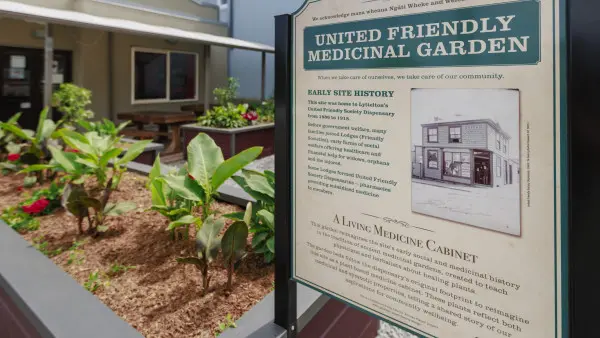
The garden beds trace the footprint of the dispensary building and reflects a community medicine cabinet.
The garden hosts traditional medicinal plants, created to teach physicians and herbalists about healing plants.
The beds feature a mix of native and introduced species, all locally grown and selected for their medicinal and symbolic properties.
Developed in collaboration with local creative designers and built by a local builder, the planter boxes recreate the look of the previous building’s cladding, and double as seating with views of the harbour.
Christchurch City Council head of planning and consents Mark Stevenson said the medicinal garden will bring life and activity to the corner site, which has remained empty post-quake.
“We’re pleased to see the site is already a drawcard and being used as a place where residents can connect with one another and learn more about the history of the area they live in,” Mr Stevenson says.
The project attracted support from Mitre10 Ferrymead, Project Lyttelton, Te Uaka Lyttelton Museum and community members, including a plant lore specialist. During construction, it also attracted spontaneous voluntary support from local passers-by.
Garden designer Sarah Amazinnia said: "Medicine takes many individual forms. Planting a garden is like casting a spell - the sum is infinitely greater than the parts.
"Carefully selecting and combining certain plants is an exercise in creativity and well-being."
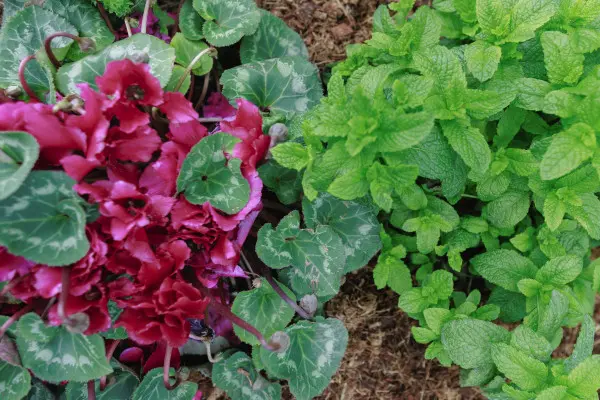
Plant species will change over the seasons, and currently include silver tree fern, star jasmine, Solomon’s seal, cyclamen, canna lily and butterfly pea.
Silver tree fern extract is an ingredient that acts as a natural skin barrier, providing anti-inflammatory and antiseptic properties.
Butterfly pea flower has been traditionally used in ancient Southeast Asian communities as a tea for its strong antioxidants and health benefits.
Interpretive signage has been installed to share the historical and botanical context of the gardens with visitors.