
PHOTO

A former New Zealand teacher accused of sexually abusing young boys has been found guilty on five out of 10 charges.
Benjamin Swann, 56, faced a retrial in the High Court at Auckland last week, accused of 10 charges of indecent acts on six boys.
The defence had argued that each of the boys lied while the Crown said their accounts were honest.
This morning, by way of majority verdict, a jury found him guilty of five charges and was unable to decide on the other charges.
Justice Simon Moore entered the convictions, issued a first strike warning and remanded him in custody until sentencing in September.
In opening the case, Crown prosecutor Chris Howard said when the first complainant confided in his mother it "triggered the police investigation" that identified five others.
Howard said there were common themes in the complaints, which was neither coincidence nor collusion.
"These allegations are similar because the defendant did similar things to all of these boys."
In his opening address, defence lawyer Sam Wimsett said the allegations were a "nightmare" that should only become Swann's reality if the charges were proved beyond reasonable doubt.
But the evidence logically and forensically fell short, Wimsett said, stressing Swann very clearly denied the allegations.
A jury consisting of six men and six women retired to consider their verdicts last Monday at midday.
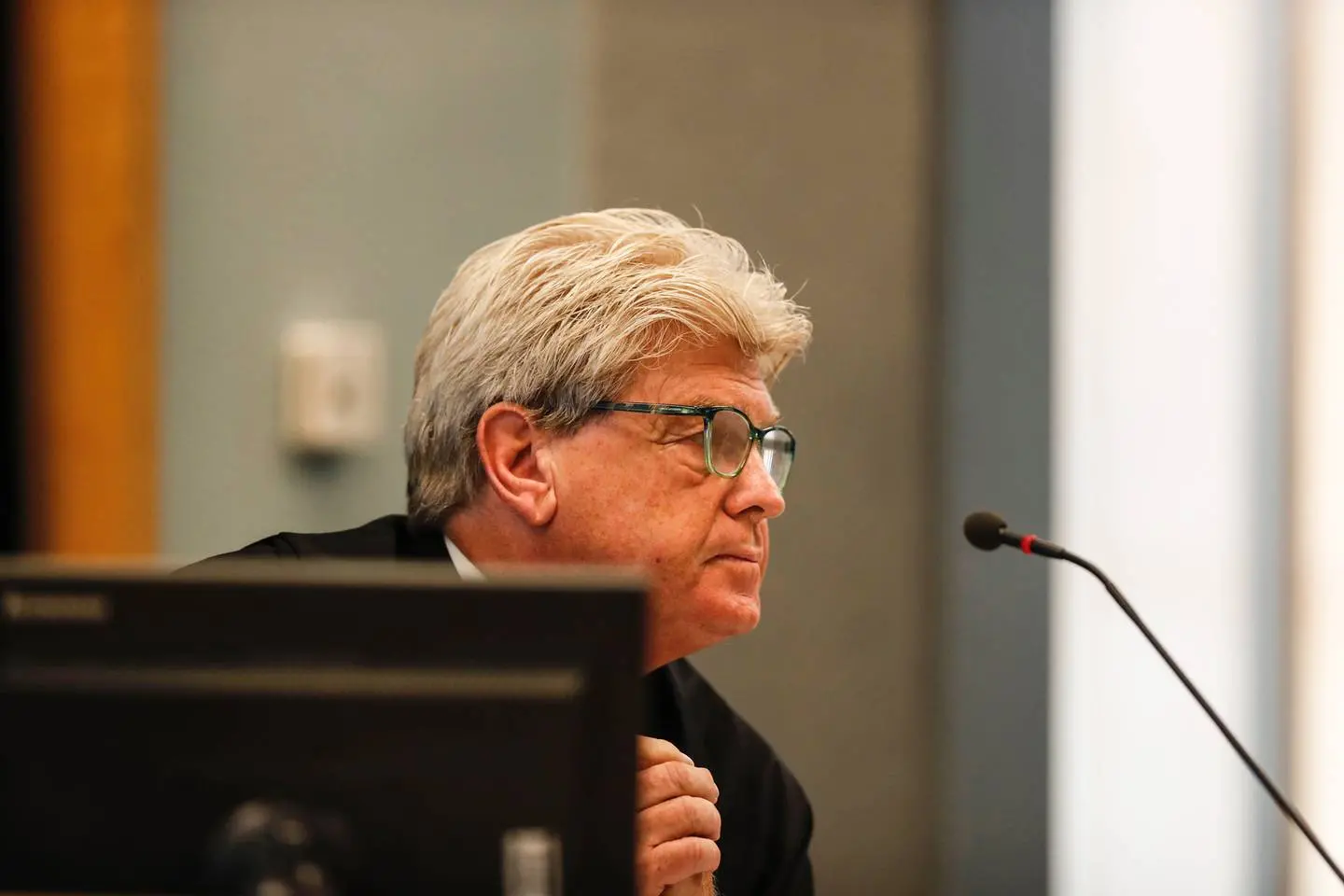
Shortly after 4pm the following day, Justice Simon Moore told the group they could go to a majority verdict if a unanimous decision was not probable.
Earlier he had told the jury that the reason this case was a retrial was "utterly irrelevant" and that retrials were not uncommon.
Justice Moore cautioned the jury against being influenced by prejudice or sympathy.
"As judges you must be fair and objective. You are a judge of the facts."
The burden of proof required the jurors to be sure "beyond reasonable doubt".
"It is a phrase you will all have heard before. It is a very high standard of proof."
Last year a jury was unable to reach verdicts on the case - despite deliberating for three days.
Swann's teaching career spanned more than three decades.
He had voluntarily agreed to stop teaching, according to the Teaching Council's register.