

- Fuel prices have skyrocketed in the wake of the US-Israel attack on Iran, reaching $4 a litre in some NZ locations.
- Government officials warn prices likely to stay high for another 100 days, even if the war ends today.
- A relief package is expected to be targeted and temporary.
- The government has to date insisted NZ still has enough fuel, with more on the way.
- NZ has not committed to helping secure the Strait of Hormuz, despite NATO suggesting it has.
- The Reserve Bank governor is warning of higher inflation and weaker economic growth.
People struggling with fuel costs will be eligible for an extra $50 a week - if they qualify for the in-work tax credit, the government says.
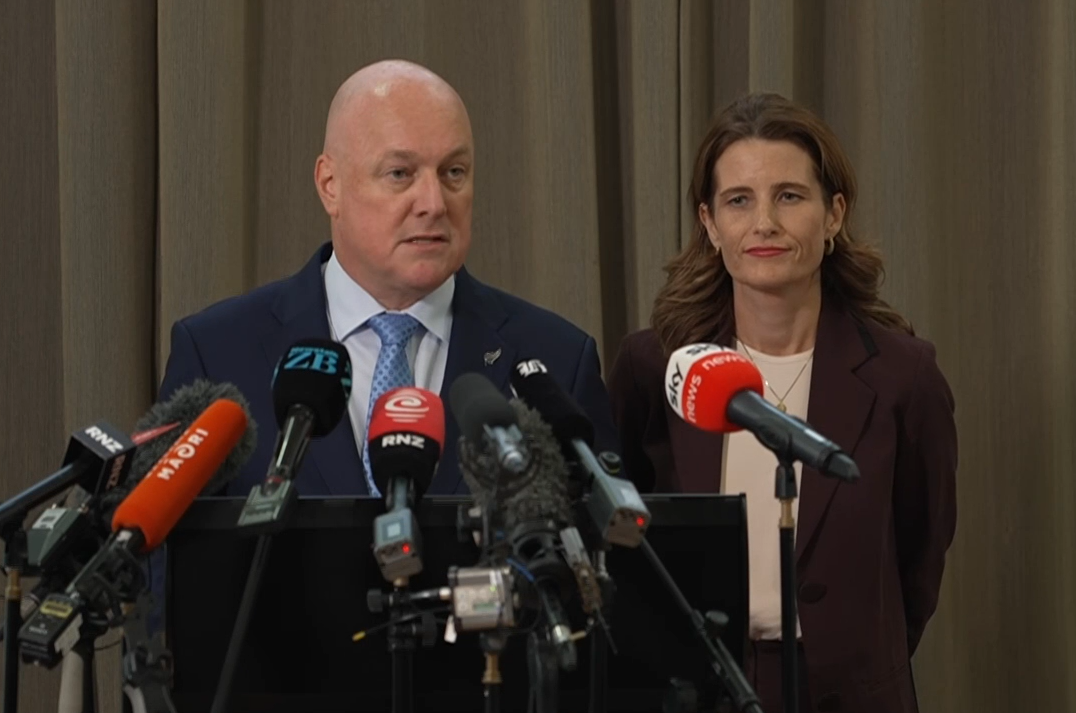
Prime Minister Christopher Luxon and Finance Minister Nicola Willis this afternoon revealed details of a support package aimed at helping New Zealanders through the fuel cost crisis.
The United States-Israel attack on Iran, which began on February 28 this year, has led to war in the Middle East, which has effectively closed vital shipping lane the Strait of Hormuz, meaning oil prices are volatile.
The latest data from the Ministry of Business, Innovation and Employment showed New Zealand stocks for about 47 days of fuel, including about 50 days worth of petrol, 46 days of diesel and 45 of jet fuel.
From April 7, about 143,000 working families with children would get an extra $50 a week through a boost to the in-work tax credit. It would also expand eligibility to about 14,000 additional working families, who will receive the tax credit at an abated rate.
The increase would be temporary - lasting for one year or until the price of 91 octane petrol drops below $3 a litre for four consecutive weeks.
“This temporary boost will deliver support to working families who are under significant cost-of-living pressure, without making inflation worse or further driving up government debt,” Willis said in a statement earlier.
“The policy is carefully targeted to families in the squeezed middle - parents who are working hard for a living, are not eligible for main benefits, and yet have modest household incomes with which to support their children. We know these families will be hit particularly hard by the global fuel-price shock. We are delivering them timely relief."
The government would introduce an Amendment Paper to the Taxation Bill currently before Parliament, so these changes can be enacted from April 1.
“Most eligible households will not need to do anything to receive the increase. It will be paid directly into their bank accounts, starting on 7 April if they are paid weekly, and 14 April if they are paid fortnightly", Willis said.
Luxon said the world was "facing the greatest disruption to fuel supply, I think, in a generation".
"New Zealand is in a good position with healthy stocks of fuel in the country and more on the way, and the market is operating as normal. But of course, we are actively planning for a scenario where obtaining future supply becomes more difficult.
"Hundreds of thousands of Kiwi jobs and incomes rely on fuel. Our entire economy relies on fuel. A shortage of fuel supply could affect thousands of livelihoods, so that is why we are continuing to ensure that we have sufficient supply, and that must be our first priority.
"At the same time, we are conscious that the increasing price at the pump is eating into household budgets."
Luxon said it had been a tough few years, with the Covid-19 pandemic, inflation, recession, tariffs and now a fuel crisis.
"Higher fuel prices are a direct result of the conflict in the Middle East, which New Zealand has no part of or control of. But because of those higher prices, many Kiwis are making sacrifices and changes to their household budgets in order to get through this period.
"Some people are choosing to take public transport instead of driving their car. Others are having to put off other purchases in order to prioritise getting petrol in the car so that they can get their kids to school.
"Good government means looking after your people, and that means two things. One is recognising when government support is required to help people when times are tough. And two is ensuring that we protect New Zealand's economic future so that our kids and our grandkids have higher incomes and better job opportunities and don't have to pay for mountains and mountains of government debt.
"So we're very conscious of bending the debt curve down and making spending decisions that are affordable for taxpayers now and also into the long term.
"It is a hard reality that we cannot alleviate the pressure of rising fuel costs for everyone. And as we have learned from the Covid response, seeking to do so would do more damage to our economy, which has just started growing again."
Singapore to keep sending fuel
Luxon said he spoke to Singapore Prime Minister Lawrence Wong overnight about maintaining fuel supplies and the two nations have an informal agreement.
He said that ensures that, in a crisis, Singapore would continue fuel and pharmaceutical shipments to New Zealand, while New Zealand would provide food to Singapore.
New Zealand gets 31% of its fuel from Singapore, he said.
Fuel prices to stay high for at least 100 days, Labour told
It will be 100 days of increased fuel prices at the pump even if the conflict in the Middle East was to end today, government officials have told the Opposition.
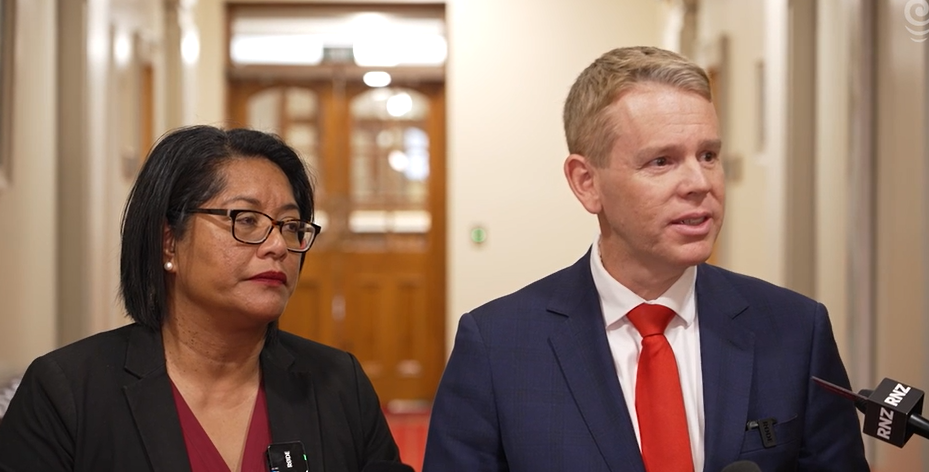
Labour leader Chris Hipkins and finance spokesperson Barbara Edmonds were briefed by officials from the Department of Prime Minister and Cabinet and the Ministry of Business, Innovation and Employment this morning.
"They indicated to us they're expecting, and the government is expecting ... that the escalated price in fuel is going to go on for months," Hipkins told media on his way to caucus.
The officials were asked to brief the Opposition and gave a number of 100 days when asked how long the pain at the pump would continue beyond the conflict ending.
Hipkins said there were a number of questions officials were unable to answer.
"They weren't able to tell us anything about the changes in fuel specifications that they agreed to yesterday, they couldn't tell us what that actually means in practice, they weren't able to tell us how much storage there might be available, they weren't able to tell us what might trigger an increase in the government's alert level framework. We're very much relying on publicly available information."
Hipkins used that as his defence for not having an alternative plan for what Labour would do to help New Zealanders feeling the pinch, if it were in government. He ruled out any wage subsidy support for employees but has indicated Labour would go further than the government in other support. However, when pressed on what that means he was unwilling to give details.
- RNZ and Allied Media


