
PHOTO

Deep beneath the surface of Whakaraupō Lyttelton Harbour, tiny invertebrates are offering vital clues about the marine environment’s health.
Earth and marine scientist Joyce Yager knows this better than most. She is passionate about studying the invertebrates that call Lyttelton Harbour home and sharing her findings with the wider community.
Yager has created multi-platform “marine hotels” made from ceramic tiles, stainless steel, and rope.
Suspended at different points around the harbour, the structures have become popular hangout spots for a wide variety of invertebrates.
Together with a small team of volunteers, Yager monitors the marine hotels by periodically removing them from the water.
They record which invertebrates have settled in, providing insights into the overall health of the harbour and its diverse ecosystem.
Yager said she wants the harbour to be safe for both sea creatures and humans for many years to come.
“We think a lot about how we’re impacting birds and marine mammals in Lyttelton, but maybe not so much the smaller organisms.
“What I hope is people start thinking about animals they’ve probably never heard of in the harbour and how what we’re doing on land impacts some of these other marine animals,” she said.
Marine hotel residents have included polychaete worms, bryozoans, sea squirts, gastropods, bivalves, fish, decorator crabs, and a variety of other crustaceans.
The monitoring process is detailed. Tiles are removed, placed in trays with seawater, and photographed on top and bottom, noting the “floor” of the hotel.
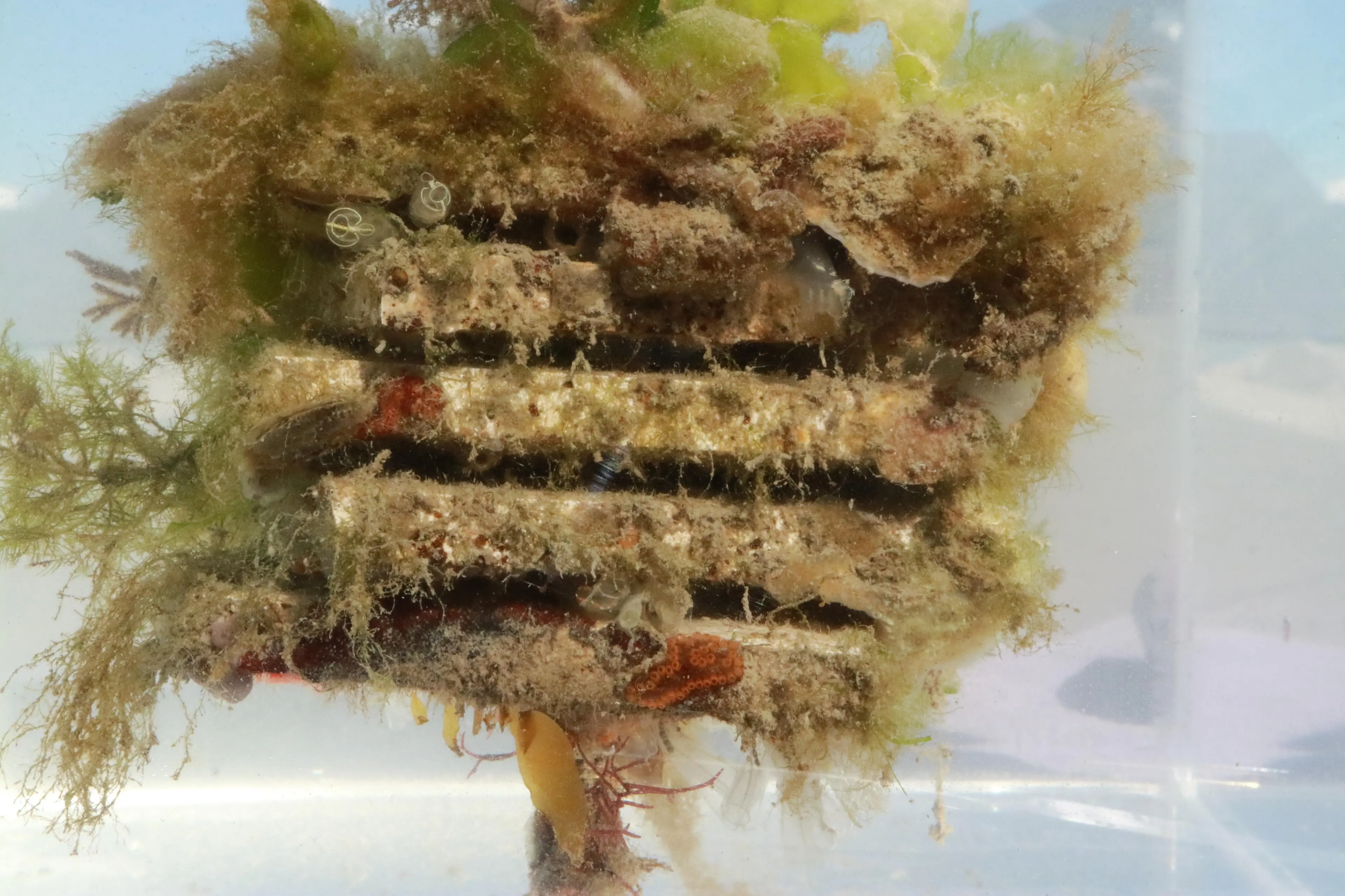
Using observation sheets, volunteers record dominant species, estimate coverage percentages, and track the presence of common organisms.
From there, data can be processed for diversity metrics, including what proportion of the hotel’s population is native, endemic, introduced or invasive.
Data is collected over time, including if sea creature communities in marine hotels change seasonally, what happens if the water heats up suddenly, if the same organisms dominate at each hotel site, and do the same organisms dominate all year long.
Individual organisms are photographed and uploaded to iNaturalist, making the observations publicly accessible.
Occasionally, the project has led to the discovery of species not previously recorded in the harbour.
Local schools are also involved, adopting their own marine hotels as part of curriculum-integrated learning.
For example, Governors Bay School pupils carried out an inquiry into conservation and habitats through a ki uta ki tai (mountains-to-the-sea) perspective.
They explored local sites such as Living Springs, learned about restoration projects, conducted water quality sampling, and monitored the coastal foreshore.
During these activities, pupils made connections between land use, historical practices, and the health of the harbour.
Schools participate in the marine hotel programme through the national Enviroschools initiative, linking hands-on science with environmental education.