
PHOTO
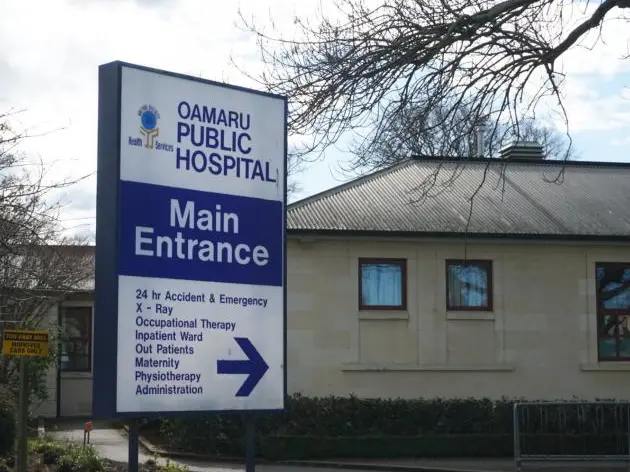
An elderly woman was given 10 times the prescribed saline solution in the hours before her death in Oamaru Hospital.
Waitaki District Health Services have been told to apologise to the family of the 93-year-old by the Health and Disability Commissioner.
The doctor responsible for accidentally over-prescribing the solution told the commissioner while he considers the woman succumbed to severe pneumonia, the solution should have been administered more judiciously and much more slowly, with closer monitoring of her electrolytes.
In the 28-page decision, the commissioner also noted the doctor - Dr C in the report - accepted he was unfamiliar with prescribing hypertonic solution.
‘‘He did not take time to assess his prescribing decision comprehensively and had no guidelines to refer to, which led to poor decision-making that fell short of his own clinical standards.
‘‘He also accepts that even though it was busy, he missed the opportunity to look up guidelines from other online sources and to seek guidance from hospital specialists in Dunedin.’’
The commissioner’s decision laid out a timeline of the events up to the woman’s death.
It began after the 93-year-old was referred by her GP to the Oamaru Hospital’s emergency department in November 2023 due to an abnormally low concentration of sodium in the blood, along with a ‘‘chesty cough’’.
The duty doctor ‘‘B’’ prescribed the 93-year-old a bolus of 100ml of 3% saline at a rate of 200ml per hour with a further check scheduled at 9pm.
Doctor B’s shift finished at 7pm, and they handed over the woman’s care to Doctor C.
A few hours later, the nurses told the doctor the saline course had finished.
The situation appears to have been caused by a registered nurse picking up a 1000ml bag of saline solution instead of a 100ml bag.
No-one on duty paid attention to the discrepancy at the time.
At the start of the evening and early morning shift at 11.15pm, the 93-year-old was observed by the nursing staff as awake and her breathing making ‘‘an audible cracking sound’’.
About 90 minutes later the 93-year-old’s infusion pump began to beep and, as the first 1000ml bag was finished, the duty nurse replaced it with another 1000ml 3% saline bag to run at 100ml/hour, which had been charted by doctor C.
Dr C said with no hospital guidelines or policies for reference, he prescribed a 3% saline 1000ml bag to run over 10 hours.
Her blood pressure and urine output were measured as high, and the doctor was informed, but there was no change to the treatment plan.
Shortly before the morning handover, Doctor C noticed the woman’s sodium levels had risen rapidly, so he ordered her fluids stopped.
The woman ‘‘appeared alert and eating but remained short of breath’’, which he attributed to pneumonia.
He asked Dr B to review her first.
When Dr B arrived at 8am, he saw the sodium was still high and found two 3% saline bags at the bedside — one empty and one partly empty.
The prescription chart showed that 1000ml had been administered instead of the 100ml he had originally prescribed.
Dr B began a sodium-reduction process, but eventually noted the woman was now too frail for such aggressive treatment.
The woman was provided with comfort care and died shortly afterwards.
The commissioner has asked Waitaki District Health services to write an apology to the family.
The commissioner’s independent adviser stated that appropriate guidelines were in place at Oamaru Hospital, but he advised the workload (shift numbers and complexity volumes) at the time of the 93-year-old’s admission was ‘‘at the limit of what can be considered safe’’.
‘‘Despite this, the requirement remains to prioritise patient care adequately and to be aware of red flags in patients who need further consideration,’’ the commissioner said.
The commissioner advised Health New Zealand Te Whatu Ora Southern provide training for staff in emergency departments and rural hospitals on the management of hyponatraemia ‘‘with reference to this case’’.