

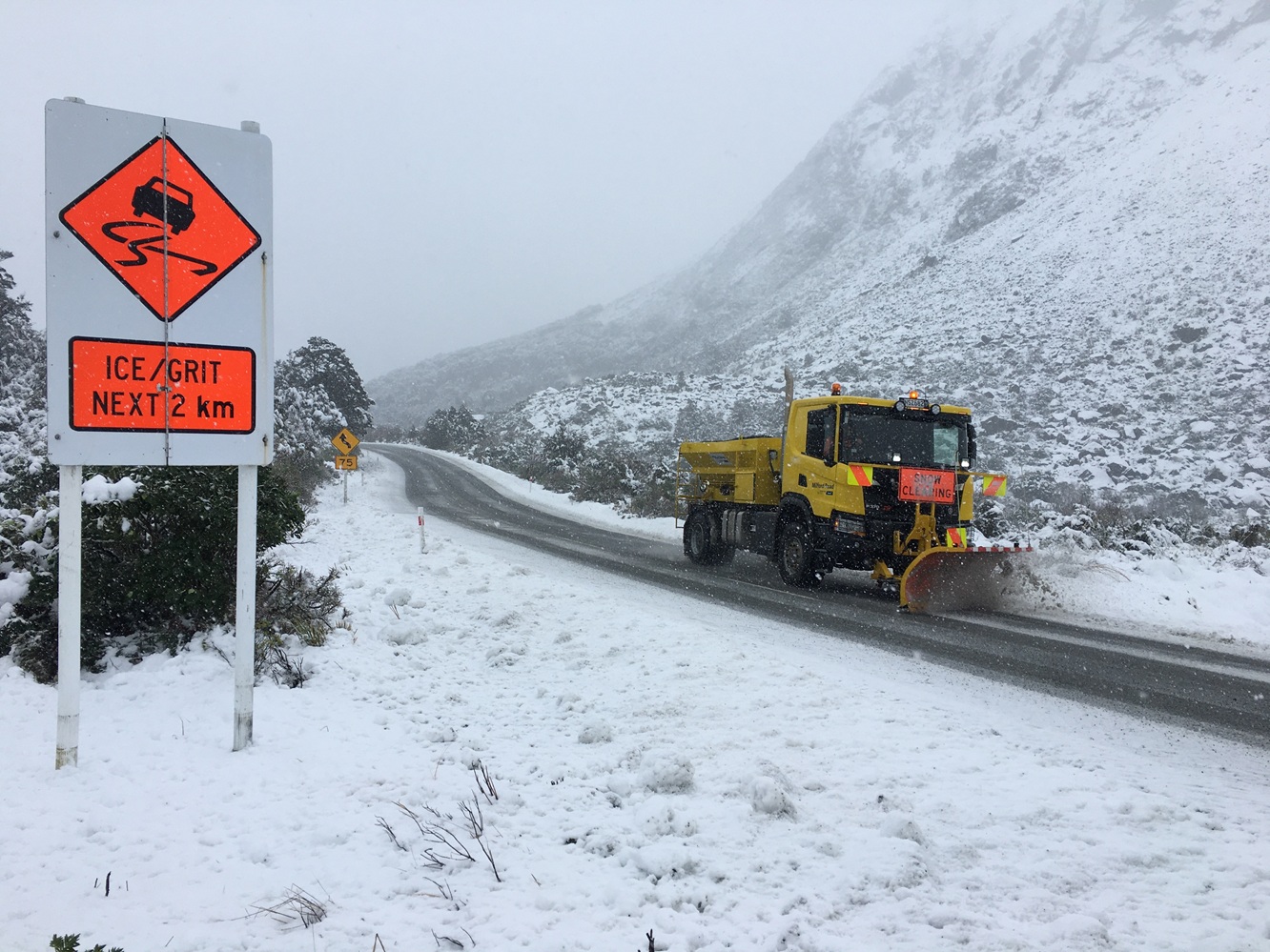
A high-pressure system has brough days of settled weather to the country, but in inland Otago and parts of Canterbury that has meant days of freezing fog, frosts and treacherous road surfaces.
Temperatures have dropped as low as -7degC in the last few days, and in places such as Alexandra the daytime highs have struggled to get above 3degC.
State Highway 8 near Lake Pukaki was closed for a time this morning owing to a crash which occurred in heavy fog.
NZ Transport Agency Waka Kotahi (NZTA) says black ice has been reported at sites in Otago and Canterbury, alongside ice and fog warnings in the Mackenzie District and the Lindis Valley, over the last few days.
NZTA said they would be using a range of tactics to keep people safe on South Island highways, "but road users are being encouraged to do their bit too".
“People living in the central and lower South Island will have been experiencing the chilly mornings that signal winter is close, and it’s also a reminder that winter roading conditions will be increasingly common,” NZTA journey manager for Otago-Southland, Nicole Felts said.
“NZTA’s contractors will be out around the clock on the state highways through the winter months, monitoring the conditions and taking pre-emptive action to keep the roads safe and accessible.”
She said this could include closing roads to clear snow and ice and enable any stranded vehicles to be removed, "or we may impose other restrictions such as temporary speed limits for people’s safety".
She said contractors used different treatments on the roads when snow and ice were present, the main ones being:
CMA (Calcium Magnesium Acetate): A non-corrosive, biodegradable liquid or granular substance. It lowers the freezing point of water and is applied before frosts form.
Grit: Fine gravel spread over roads and icy patches to improve tire grip in harsh conditions.
“If we’ve spread grit, we ask people to drive on it where possible, and not in a wheel track – this makes the grit more effective,” Felts said.
“If you see one of our maintenance vehicles treating the road, please stay a safe distance behind it. When you’ve passed the maintenance vehicle, take care – the road treatment won’t have been applied ahead of it.”
She said anyone travelling in snow and ice conditions should aim to travel by day where possible, and to be prepared for road closures or delays.
“This includes carrying warm clothes, water and food in case you get stuck or need to stop and wait for weather to pass. Check you have enough battery range or at least half a tank of petrol in case there are detours and diversions.”
“When road closures are in place, remember it is illegal to drive on that road, even if you are local and are familiar with the conditions. Breaching a road closure not only puts you and others at risk, it can also extend the closure if you get stuck, and this affects many other road users including emergency services’ vehicles.”
- Allied Media


