
PHOTO

Eighteen months ago, Henri Kerr went to the doctor. He had been tired and was suffering from ongoing headaches.
He put it down to the ordinary stresses of life. The doctor agreed.
About a month later, he was in bed about 8.30pm when something triggered a reaction in his brain, he went completely heavy down his right side, began losing his ability to speak and was contorting slightly.
Very worried, wife Anna Sheehan drove him to Christchurch Hospital, where he was examined in the emergency department.
A doctor thought the episode was stress-related – Kerr, a builder, had been working long hours on top of renovating their own kitchen, and the couple had a young child, Noa. But the doctor decided to order a CT scan to be certain.
While they were waiting for the results, Kerr and Sheehan chatted about how they could ease the stress. They thought about taking an overseas holiday and working less.
But about 11.30pm, their world was shattered: The CT scan revealed a large tumour on his left parietal lobe. They sat in stunned silence.
“We were just so shocked, a large tumour was the last thing I thought, it felt like being hit by a bus,” said Sheehan.
Kerr, 34, said it is hard to explain how it felt to receive the diagnosis.
“They (doctors) said it’s awful luck, there’s nothing Henri’s done that would’ve caused it,” she said.
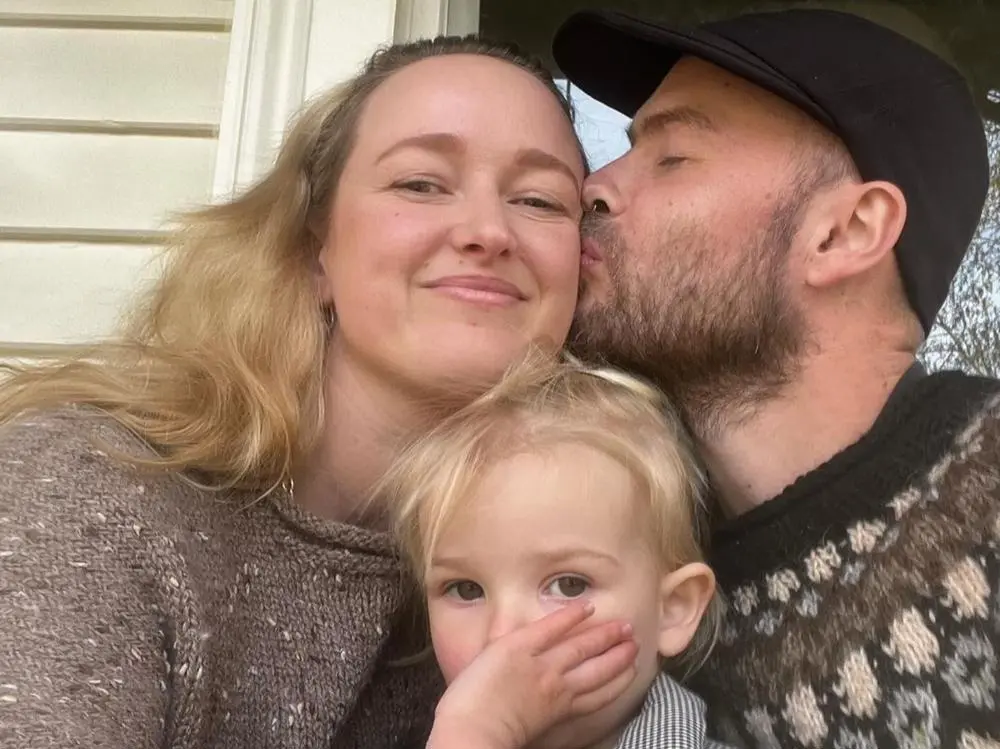
They were not given an exact prognosis and were told Kerr would be monitored and see how he goes.
“We know through our own research that the prognosis for anyone with high-grade brain cancer is not good,” Sheehan said.
“We're just hopeful that with time, something will have like a really good effect.”
Two days later, the tumour was removed and further tests revealed it to be grade four astrocytoma, a highly aggressive and fast-growing primary brain tumour.
He was kept in hospital for three more days, which the couple spent informing friends and family of Kerr’s illness.
He then had six weeks of radiation and 10 months on chemotherapy pills called temozolomide.
He required surgery in November last year after an MRI scan showed another tumour and radionecrosis from the radiation therapy.
They removed a large amount of radionecrosis and a small tumour.
He has developed aphasia since the surgery as well, he said the severity comes in waves.
After the surgery, the doctors then recommended a new type of chemotherapy.
One is called lomustine and the other is bevacizumab, which is currently unfunded in New Zealand for brain cancer.
The drug is funded for other forms of cancer and is available for free in Australia, but costs the couple $2682 every three weeks.

Kerr started on it at the beginning of the year and couple has paid for the first three rounds of treatment themselves. The treatment has already improved his quality of life.
Their family and friends set up a Givealittle page last week to fundraise towards Henri continuing on the drug, which can help slow down tumour progression and allows him to come off a steroid called dexamethasone.
The campaign had already raised $27,865 on Wednesday, more than half the final goal and enough to cover the next six months.
“I think it shows how many people Henri’s impacted and how much people want to support,” said Sheehan.
“People are so kind and generous and just want to help.”
Kerr was born and raised in Heathcote Valley and has lived there most of his life.
He has a love for the outdoors, walking and biking up the Port Hills and spear fishing around Banks Peninsula. They are things which he is no longer able to do due to a lack of strength on his right side.
“It’s quite tough because I’m normally pretty active,” he said.
Kerr and Sheehan met briefly through mutual friends in Wellington in 2012 and reconnected eight years later. They got engaged one month before Kerr’s diagnosis.
“I remember in hospital. You (Kerr) were like ‘I wanna get married',” said Sheehan.
“We just did it, organised it so quickly and it was so awesome, I loved it, but it was not your usual wedding, it was pretty casual and fun.”
Their daughter Noa is three and has a vague understanding of her father’s health.
“I have explained to her that dad has something called cancer and he’s got a really amazing team of specialists who are doing everything they can to make him feel better and to make him feel healthier,” she said.
Noa wants to be a doctor and uses bandages from their first aid kit to wrap around her toys.
Sheehan continues to work full-time as a mortgage broker and will put part of her income towards the treatment so the Givealittle money lasts longer.
Along with a mortgage and regular expenses, Sheehan estimated they have spent $10,000 to $15,000 on medical bills.
Their friends have also organised a pub quiz and a concert at The Loons at the end of March, fundraising for Kerr’s treatment.
His mother Bjorg holds a stall outside her house on Bridle Path Rd every Saturday, supported by friends’ baking and sewing to raise money for her son.
“I didn’t think it was going to be gaining as much momentum or been as amazing as it has been. It’s been pretty incredible for us,” Sheehan said.