
PHOTO
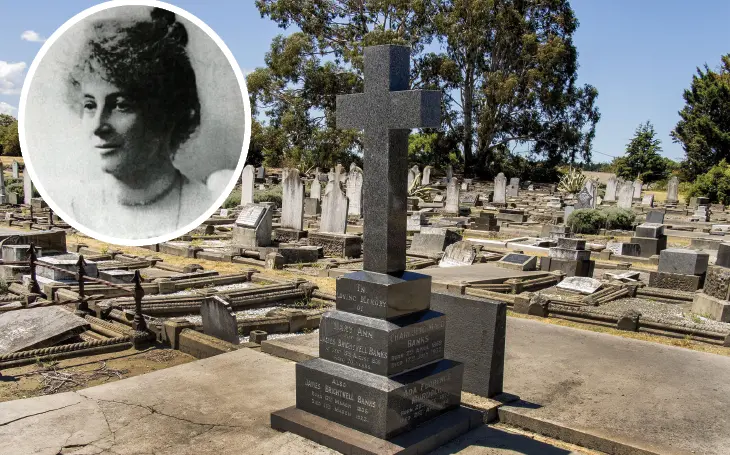
A long-neglected grave in Linwood Cemetery with a little-known link to one of history’s most infamous maritime disasters has been brought back to life.
It belongs to Christchurch teacher Ada Florence Murdoch (née Banks), who married William McMaster Murdoch, the first officer aboard the Titanic when it sank, later the subject of controversy and debate surrounding his final actions and death.
In 1912, the state-of-the-art ocean liner was on its maiden voyage from Southampton to New York when it struck an iceberg and sank, claiming more than 1500 lives.
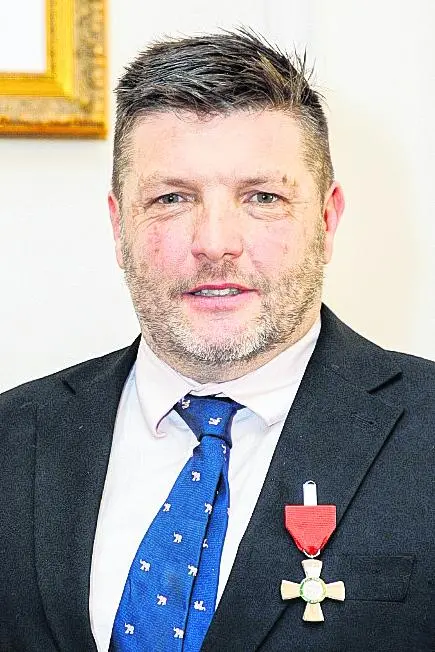
“It’s a tragedy that still fascinates people to this day,” said New Zealand Remembrance Army founder Simon Strombom, who organised the gravestone’s restoration.
The retired New Zealand Army major and decorated Afghanistan veteran leads a group of volunteers dedicated to preserving neglected graves and memorials of military service personnel across the country.
Strombom said while Ada Murdoch did not serve in the armed forces, her grave was internationally significant.
“Our charity obviously focuses on restoring service graves, but this story was just so exceptional, we felt we needed to do the right thing by her and recognise (Murdoch’s) service by putting her grave back together. It is something that should be protected.”
The NZRA was alerted to the historic significance of the earthquake-damaged grave by the NZ Returned and Services’ Association’s London-based official historian Dr Andrew Macdonald.
“We almost fell over backwards when we realised who and what it was.”
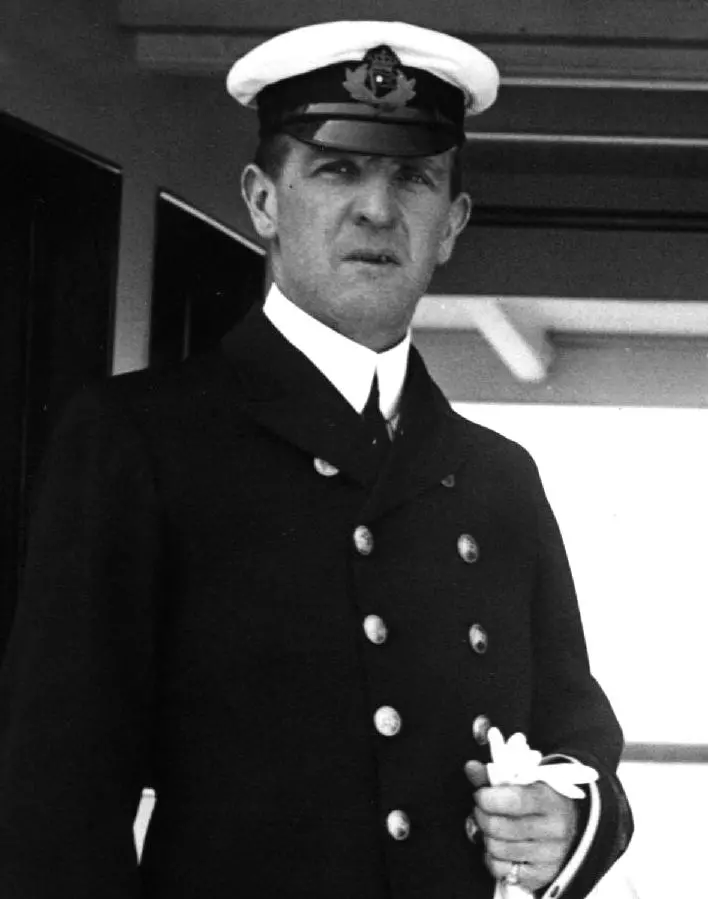
Strombom said their research showed Ada’s husband, William Murdoch held the rank of lieutenant in the Royal Naval Reserve, and served on ships operating between New Zealand, Australia and the UK.
“So there was a really strong connection.”
Ada Florence Banks was born in Christchurch in 1873, growing up in a politically progressive family.
She, along with her mother and older sisters, signed the petition for women’s suffrage in 1892.
William McMaster Murdoch was born in Scotland in 1873.
Like his father and grandfather before him, he went to sea.
A member of the Royal Naval Reserve, he joined the White Star Line in 1900 after serving on a number of naval ships.
Ada, then a 29-year-old teacher, met Murdoch aboard the Runic, a White Star liner travelling from Sydney to England in 1903.
Ada’s family was originally from Scotland, and she was on her way to live there after taking up a hospitality role with a shipping line.
The pair hit it off and began a long-distance correspondence.
They married in Southampton in 1907, when Banks was 33.
In 1912, Ada paid a visit to her husband on his latest ship, marvelling at the size and grandeur of the RMS Titanic.
It was just six days before the ship departed on its ill-fated voyage on April 10.
Murdoch had originally been appointed chief officer for the maiden voyage, but a last-minute reshuffle after Captain Edward Smith took command saw him demoted to first officer.
Strombom said controversy surrounded Murdoch’s role on the night of the disaster, as he was the officer in charge of the bridge when the Titanic hit an iceberg at 11.40pm on April 14.
“In the movie Titanic, he was portrayed as panicking when he was loading the lifeboats. The movie portrayed him as a bit of a hothead and firing a pistol,” he said.
“Someone did fire a pistol in the air, but that has never been attributed to him.”
As passengers were being loaded into lifeboats, Strombom said Murdoch’s side of the ship keeled over and he was swept into the water, where he is believed to have drowned. His body was never recovered.
He is credited with overseeing the launch of about 10 lifeboats, saving many of the survivors.
“From all accounts from the survivors, he did his job really well,” Strombom said.
Second officer Charles Herbert Lightoller, who survived after diving into the water, later wrote to Ada, co-signing a letter with the other surviving officers expressing their “deep sympathy in this, your awful loss”.
Lightoller said the letter also served to “refute the reports that were spread in the newspapers”.
English newspapers had published conflicting and unverified reports of a shooting and possible suicide by an officer during the evacuation.
The letter stated Murdoch was “working hard, personally assisting, overhauling the forward boat’s fall”, and Lightoller insisted “other reports as to the ending are absolutely false. Mr Murdoch died like a man, doing his duty.”
The negative portrayal of Murdoch in director James Cameron’s Oscar-winning 1997 movie caused significant distress for Murdoch’s family and sparked public backlash in his hometown of Dalbeattie, Scotland, where he is remembered as a hero.
Film executives later travelled to the town in 1998 to formally apologise for the depiction.
Because Ada’s husband had been the officer in charge of the Titanic that night, Strombom said a great deal of media attention fell on her.
In 1917, she moved back to New Zealand to live with her father and two sisters in Christchurch.
“She never remarried and lived a quiet life out of the spotlight,” Strombom said.
Ada was said to have told her family her only disappointment in the marriage was that she and William never had children.
Ada Murdoch died on April 21, 1941 aged 65 and was buried in the Banks family plot in Linwood Cemetery.
As part of their restoration process, Strombom said the NZRA makes every effort to contact relatives.
“We didn’t have much luck. I suspect they’re probably in Scotland, but there might still be some New Zealand connections.”
Though Ada Murdoch lived a quiet life in Christchurch, the Titanic connection ensures her story remains part of maritime history.