
PHOTO
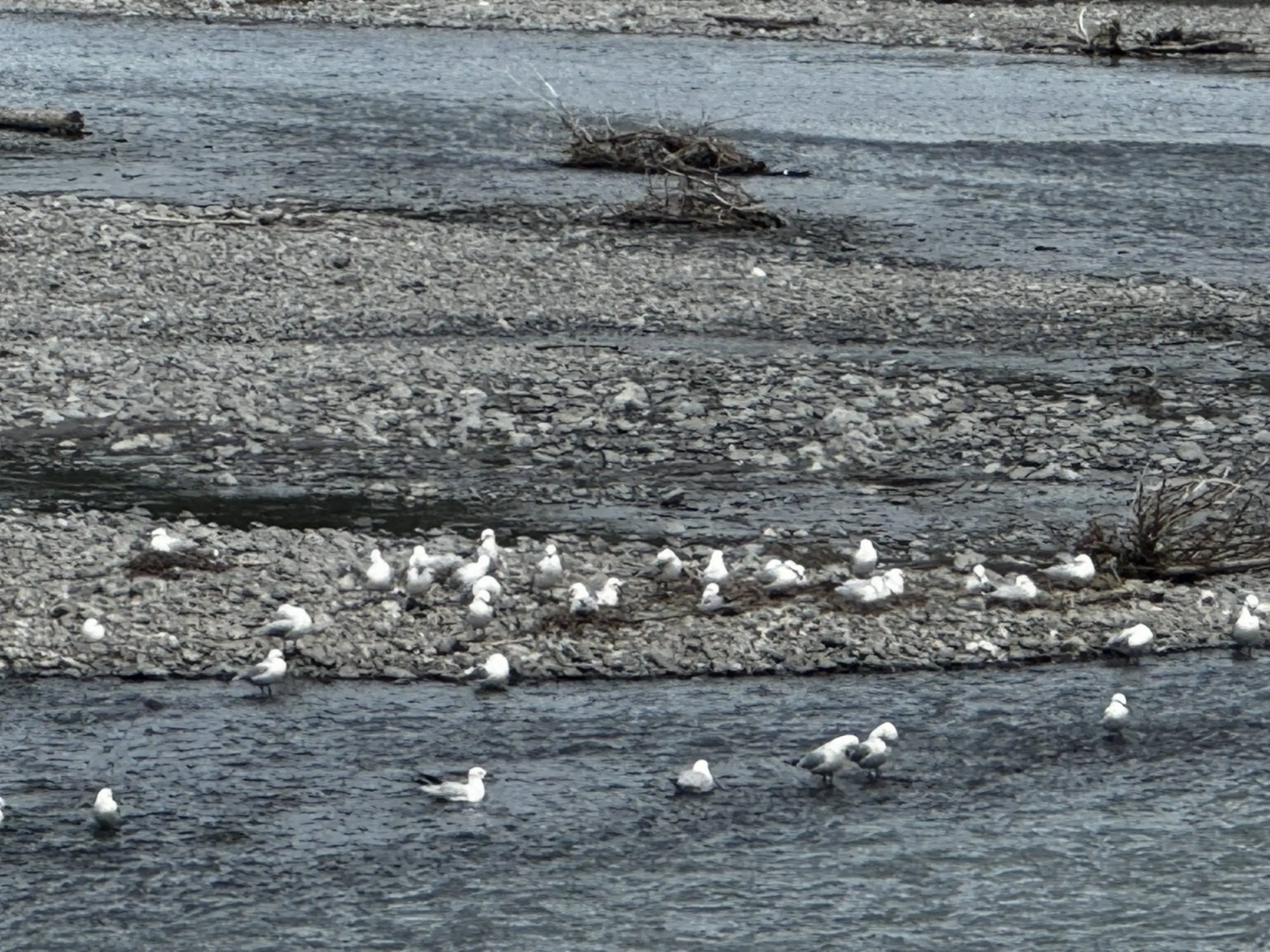
A breeding colony of about 40 tarapuka/black-billed gulls has settled in the Ashburton River near the State Highway 1 bridge.
It is much less than last year’s colony of about 4000 at the site, but good news nonetheless for nature lovers looking to see when the threatened species might return.
Environment Canterbury has appealed to anyone who has noticed a colony of the birds to let it know, as they seem to be missing from the region this year. The Department of Conservation says black-billed gulls' conservation status is "at risk - declining".
This group of birds are in a precarious location for the small colony. They are close to the water, which can easily rise and wash their nests out. Other threats to the colony included predation and habitat disturbance.
Ashburton Forest & Bird committee member Don Geddes said, while the SH1 site has been a successful nesting site for the birds in years gone by, much of the shingle island area is now flat and near the water.
It was the nature of braided rivers to change.
"It’s very low-lying, so it’s not going to take a very big fresh to take all those nests out," Geddes said.
Other threatened braided river birds nesting along the river include wrybill, black fronted terns, banded dotterels and black fronted dotterels.
Cantabrians are being asked to avoid driving on riverbeds during the nesting season through to the end of February and keep dogs on a leash.
Disturbing protected birds and destroying nests is an offence under the Wildlife Act 1953 and can result in imprisonment and/or a fine of up to $100,000.
Know your gulls
The tarāpuka is one of three gulls native to New Zealand. The karoro/black-backed gull is the most abundant and known to cause problems for picnickers and other bird species. Less common is the red-billed gull – you’ll see them in urban areas, they are quite noisy, and they nest along the coast.
You can see the rare tarāpuka, with their black-tipped wings, dark legs and beaks, nesting along the stony islands in the Ashburton River when crossing the SH1 bridge.
Noisy island home
Tarāpuka are nesting on a river island by the bridge to stay safe from predators like cats, stoats and ferrets, and even the karoro who are known to eat their eggs and chicks. Karoro don’t like the noise from the bridge so generally stay away.
Because these birds are nesting so close to town, people disturbing their habitat can be a threat – especially dog walkers and four-wheel drivers (4WD).
Help these endangered birds out during the breeding season (Aug-Feb) by:
- Avoiding the area with your 4WD, stick to 4WD parks or tracks elsewhere
- Keeping your dog on a leash and avoiding the riverbed
- Avoiding bird colonies, and if you do accidentally disturb birds, move on quickly and quietly.
Breeding on a riverbed is a risky business. Many eggs and chicks do not survive. Riverbed birds have adapted to cope with floods and are able to renest if eggs or chicks are lost.
Birds with good nesting sites are more likely to raise chicks successfully. The best nest sites have:
- Islands surrounded by a moat of water for protection from predators
- High points which are less flood prone
- Little or no vegetation for all round visibility
- A good food supply close at hand
- Little or no disturbance.
Predators
Swamp harriers/kāhu and black-backed gulls/karoro are natural predators of braided river birds. These avian predators have taken advantage of changes made by humans and their numbers have increased dramatically.
Braided river birds have good camouflage and use distraction to cope with avian predators. Wrybills, oystercatchers and dotterels often pretend to have a broken wing to lead predators away. Terns, gulls and oystercatchers may dive-bomb and call loudly.
However, these defences against avian predators are little use against introduced predators such as cats, stoats, ferrets, rats and hedgehogs. These are the main threats.
Ensuring the survival of the birds' natural open habitat is important in combating predation.
Source: ECan/DOC