
PHOTO
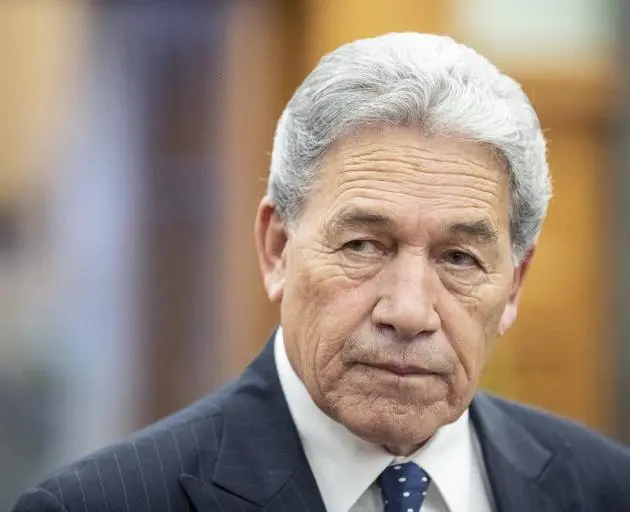
Foreign Minister Winston Peters has made the government's first statement following the US military action against Venezuela, saying New Zealand is "concerned".
On Saturday, the US attacked the Venezuelan capital Caracas and captured the South American nation's president Nicolas Maduro, 63, and his wife, Cilia Flores, citing alleged drug offences.
United States President Donald Trump said in the meantime, the US would "run" the country, which has some of the world's largest oil reserves.
"New Zealand is concerned by and actively monitoring developments in Venezuela and expects all parties to act in accordance with international law," Peters said in a post on X (formerly Twitter), using the official Minister of Foreign Affairs account.
"New Zealand stands with the Venezuelan people in their pursuit of a fair, democratic and prosperous future.
"We continue to advise that New Zealanders do not travel to Venezuela. New Zealanders requiring urgent consular assistance can contact the 24/7consular emergency line on +64 99 20 20 20."
The military action comes after months of accusations from the Trump administration that Venezuela has been shipping narcotics into the US, but Trump has made no secret of his desire to access Venezuela's natural reserves.
"We're going to have our very large United States oil companies, the biggest anywhere in the world, go in, spend billions of dollars, fix the badly broken infrastructure," he said.
"We'll be selling large amounts of oil."
The United Nations is set to have an emergency meeting tomorrow to discuss the action, which has receive praise and condemnation from world leaders.
Invasion unlawful - expert

International law expert Prof Alexander Gillespie, of the University of Waikato, said while it was "very good that Peters has called upon all countries to 'act in accordance with international law'", he was curious to know whether Peters believed the US action was lawful or not, or if Maduro had diplomatic immunity.
In theory, Gillespie said it appeared the US military action was unlawful.
"You can only attack another country in times of self-defence and that situation must be urgent, proportionate in action, and no alternative to the use of force," he told RNZ via email.
"Trump is not wrong to be concerned about the problem of illegal drugs and transnational criminal/terrorist groups, but the pretext of illegal drugs in this area is fanciful; where the 'war on drugs' has turned into something completely different.
"To say it is self-defence stretches the doctrine way beyond what it has previously been understood as."
But it was unlikely Trump would face any legal retaliation, as the US has a veto on the UN Security Council and would "just laugh" at the prospect of being taken to the International Court of Justice.
Gillespie said there was a risk the US arrest of another country's president would give others such as Russia, China and Iran "a green light to intervene in countries they disapprove of unilaterally - without going through the UN".
"It will be a small step for countries like China to take Taiwan on this precedent; or Russia to push even harder into Ukraine."
