
PHOTO
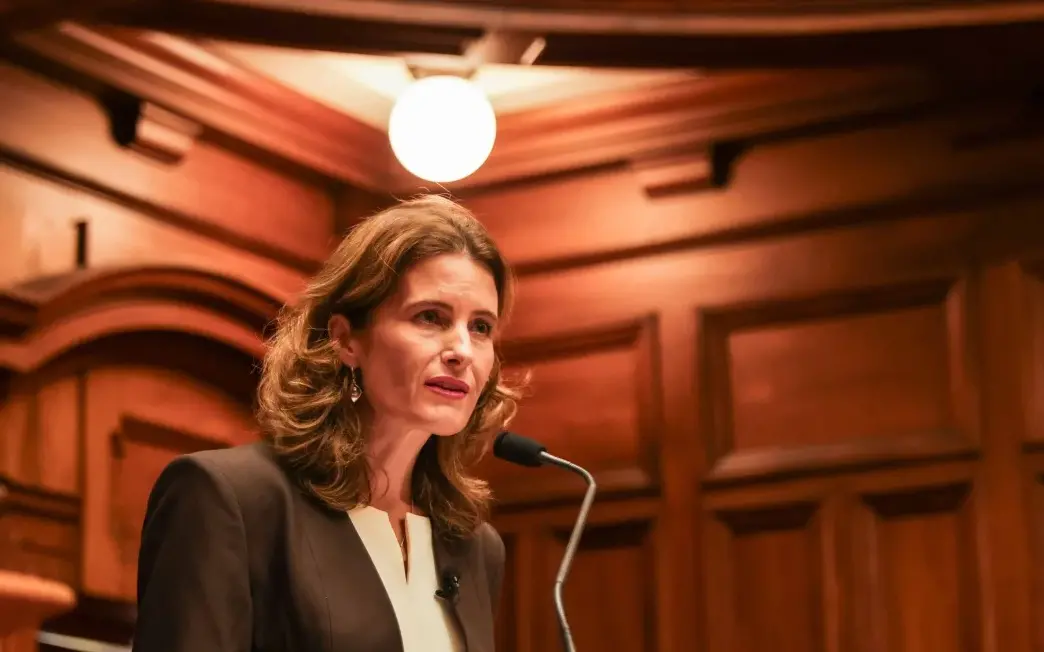
The government has fleshed out its National Fuel Plan, outlining rationing measures that would be taken if supplies start running dry.
Resembling the Covid alert levels, the plan has four 'phases'. New Zealand is at phase one.
Phase 2 would see homes, businesses and the public sector encouraged to conserve fuel.
The higher phases are still under consultation.
Phase 3 would see fuel prioritised for life-preserving services and phase 4 would see stricter intervention in fuel distribution.
Moving up or down levels is decided by a ministerial oversight group based on fuel stocks, restrictions and supply chain data.
"While there is currently no need for fuel restrictions, the public can be assured that the government is planning carefully, acting early and making sure New Zealand is well positioned to respond, whatever the global environment brings," Finance Minister Nicola Willis said.
"Ensuring New Zealand has the fuel we need to protect jobs, livelihoods and the wider economy is our first priority in managing the impact of global fuel disruption.
"The updates released today give practical effect to the National Fuel Plan established in 2024 and reflect the specific potential risks New Zealand could face as a result of major fuel disruption driven by the conflict in the Middle East."
Minister Shane Jones, responsible for fuel security, said the updates were developed alongside the fuel industry.
"This is critical because the plan relies on fuel companies cooperating and working constructively with government," he said.
"My expectation is that we continue to work together as the situation evolves. The industry will play a key role in providing advice to the Ministerial Oversight Group if and when we are required to consider a move between phases.
"New Zealand has sufficient fuel stocks, but we are planning for potential scenarios where obtaining future supply could become increasingly difficult."
The criteria for changing phases were:
- export restrictions - if any of New Zealand's source refineries introduce or relax export restrictions
- changes to New Zealand's fuel stock levels of plus or minus three days since the most recent published update
- a fuel company informs the government that they are unlikely or unable to fill future orders
- a breach, or a notification of an imminent breach, of the minimum storage obligations
- any significant policy changes in Australia or from the International Energy Agency
- a significant disruption to regional distribution.
"The plan is designed to keep fuel flowing where it matters most, relying on market settings wherever possible, and only stepping in further if supply is genuinely at risk," Willis said.
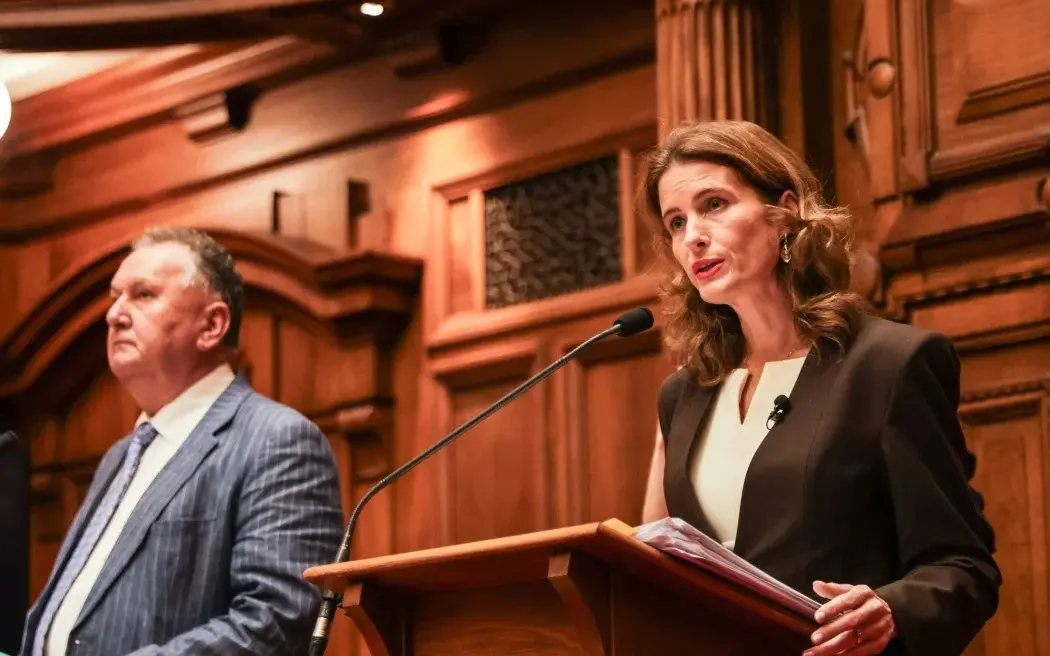
From Saturday, the Energy Efficiency & Conservation Authority will be running a campaign advising the public on how they can cut down on fuel use.
"The ads are based on the idea of stretching every tank by up to 20 percent," Willis said.
"They will give practical tips for how that can be achieved."
One example given was that switching off idling cars can save on fuel.
"Those ads will run over the coming days, and they are designed in the first instance to provide New Zealanders with information about how they can conserve their own fuel use," Willis explained.
"If we were to move to phase two, you would expect that this advertising campaign would step up another level, which is to say it would become more directive."
Willis said at level 2, there could be "some encouragement to employers to consider allowing their staff to work from home, where that makes sense" and "we might promote more use of public transport".
"We might promote carpooling as a mode of ensuring that reduced travel. We might suggest that taking discretionary road trips wasn't the best idea. There could be a range of measures, but I'm clear that with our officials that they need to be evidence-based. So any measures that were to be proposed need to be based on clear evidence that they would actually have a concrete effect. in reducing fuel use."
But maintaining children's access to in-class learning was "essential".
"There is one place we draw a line though. We do not want to see children outside of the classroom as occurred during Covid. We do not want to see children forced to learn from home. We think maintaining access to schools through all of these phases is essential, and the Ministry of Education are working actively on plans to ensure that.
"This generation have already had years of learning disrupted by the Covid experience that had a marked impact on their achievement, and we will be taking every step necessary to keep kids learning in the classroom."
Confidence in supply
Jones said he had confidence fuel importers could find new sources of supply, should the conflict drag on and tie up exports from the Middle East.
"These are large, sophisticated importers, they have vertically integrated businesses. But we are painfully aware that the Asian refineries have consistently drawn their feedstock from the Middle East.
"However, as Australia demonstrated over the last 72 hours, they are also capable of drawing product from the United States of America. At the moment, we get about 2 percent of our production from the United States of America. We get 7 percent from Japan. We get about 12 to 15 percent from Malaysia.
"So… we're confident, based on the quality of the information that we've had from the suppliers, the importers, that they have the capacity to change the sources to effect outcomes that keep them within the statutorily liable parameter that they work in."
Jones said he had not seen "one single report, either in the discussions that various ministers have had with the leaders of [countries New Zealand imports fuel from], that we are going to be either caught short".
"We are advised that there are ongoing problems with accessing feedstock, but none of the fuel companies have given us any cause for worry."
Willis said she was open to increasing funding for public transport.
"We already put hundreds of millions of dollars of investment into subsidies to public transport each year, and we fully acknowledge those may need to increase in the future, and that if we were to take a temporary, targeted, and timely approach, there may be some targeting that we take out to ensure that the public transport users get the targeted support they need."
As for moving to phase 3 or 4, Willis said she did not anticipate that would be necessary.
"This whole plan is based on the idea that no one around our cabinet table wants to be in a position where we have to be prioritizing fuel to New Zealanders as phase 3 envisages, so by acting appropriately in phase 1 and 2, we hope to prevent that, but we acknowledge there are things outside our control relating to global fuel distribution that mean we can't entirely rule it out. "
