
PHOTO

A pioneering Christchurch figure in women’s sport has been honoured on the one-year anniversary of her death.
Marise Chamberlain remains New Zealand’s only female Olympic track medallist, and for 34 years was the fastest woman in the country over 800m.
Her achievements helped pave the way for generations of female athletes – she led by example, mentored others and spoke publicly to inspire women and young athletes across the country.
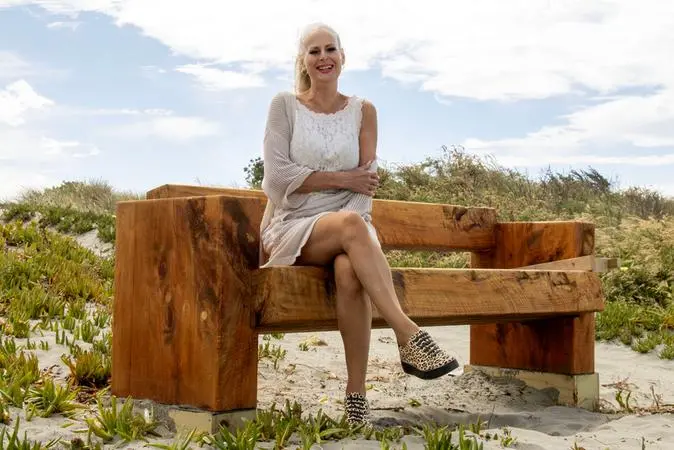
On Thursday, a memorial beach seat will be unveiled south of the South Brighton Surf Life Saving Club, followed by the opening of a beach access track named in her honour.
The event, organised by the city council, included a celebration of Chamberlain’s life at the surf club.
Chamberlain’s daughter, Marissa Stephen, said it was wonderful her mother was recognised for her contribution to South New Brighton and to women’s sport.
“She lived in South New Brighton most of her life and did a lot of her Olympic and Commonwealth Games stamina training on the sandhills,” she said.
Stephen said her grandfather, Len Chamberlain, had been involved in building the original South Brighton Surf Life Saving Club and encouraged her mother to run.
“My mother was very passionate about the South New Brighton area, she didn't want to live anywhere else.”
Chamberlain won the silver medal in the Empire Games half-mile in Perth in 1962 and an 800m bronze at the Tokyo Olympics two years later, recording a time of 2min 2.8sec.
Her personal best of 2min 01.4sec, set in 1962, stood for 34 years until it was broken by Toni Hodgkinson in 1996 with a time of 1min 58.25sec, the current New Zealand women’s 800m record.
Chamberlain would likely have won gold at the 1966 Kingston Empire Games in Jamaica but stumbled tragically near the finish line.
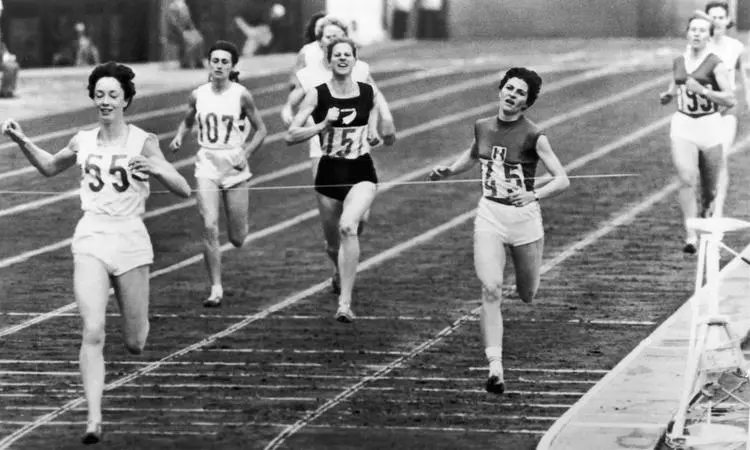
Despite carrying a leg injury and being advised not to run the final of the 880-yard event, she chose to compete.
“She told me that in all her years of running, she had never felt so good in a race and felt it was hers,” Stephen said.
Her mother led all the way and was well ahead when she pushed herself even harder to record a fast time.
However, just four metres from the finish, she collapsed with a strained Achilles tendon.
In excruciating pain, she dragged herself across the line in sixth, missing out on a medal.
“She was completely devastated and didn’t want to return to New Zealand as she felt she had let everybody down,” Stephen said.
Chamberlain’s path to success was far from easy. She worked full-time as a typist to support her running career and paid out of her own pocket for physio treatments three times a week.
"She had to duck out at lunchtime and make sure she returned back to work in time, as that was the only time she could fit it in before her after work training schedules,” Stephen said.
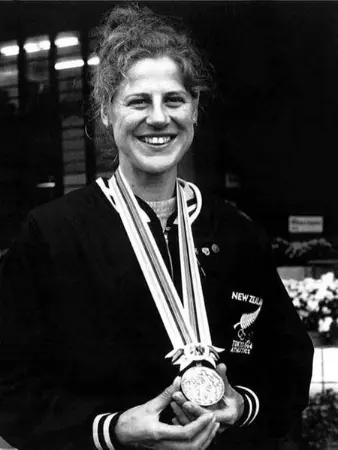
Training conditions were also challenging.
"She was running on uneven ground most of the time, as there weren't any specialist running tracks back then,” Stephen said.
Her mother biked to Rugby Park or the Ensors Rd, Opawa, grounds to find a better surface.
“She did have the help of a great Latvian coach, Valdemar Briedis who volunteered his time to help her.”
Stephen said women in the 1950s and 60s faced huge pressure to stay out of sport, which was seen as “unladylike”.
Her mother also faced stigma for not marrying or having children earlier in life.
“Her family were often asked if there was something wrong with her, as she was still living at home and hadn’t settled down yet.”
Back then, Stephen said, women “weren’t meant to have goals and dreams”.
“She used to say to me, she wanted to have the chance to reach her potential.”
Chamberlain never socialised or went to dances.
“She couldn't do that as she didn't have time. She had to make the sacrifice for her running career,” Stephen said.
After returning from the Tokyo Olympics, Chamberlain married Denis Stephen in 1965 and had two daughters, Marissa and Louise.
Denis, a Canterbury rugby and rugby league representative, was a known speedster on the wing and was under the guidance of Briedis for speed training at the Technical club.
“He had a motorbike and used to give mum a ride home as she only had a bike and it was dark by the time they finished training. That’s how their friendship developed,” Stephen said.
Her parents later divorced amicably. Denis Stephen, 67, was killed in his Spreydon home in 2004 following a dispute with a neighbour. The man was charged with manslaughter.
Across her career, Chamberlain won 17 national titles.
“They were pretty much all achieved while running solo as nobody in New Zealand could keep up,” Stephen said.
Chamberlain also enjoyed a fierce rivalry with Australian runner Dixie Willis, with the pair consistently ranked one and two in the world after the 1962 Empire Games.
“The Europeans used to say to my mum they would never train in the conditions she had to train in. They couldn't believe it,” Stephen said.
Overseas athletes had access to proper facilities and training camps – luxuries Chamberlain never enjoyed.
Stephen said her mother believed sport was a great leveller – regardless of background, sport could change lives.
“She was very much into the importance of sport as being able to empower people.”
She also believed strongly in the therapeutic benefits of the beach, both physically and mentally.
“She visited the beach every day for a walk, right up until a few days before her unexpected passing at the age of 88,” Stephen said.
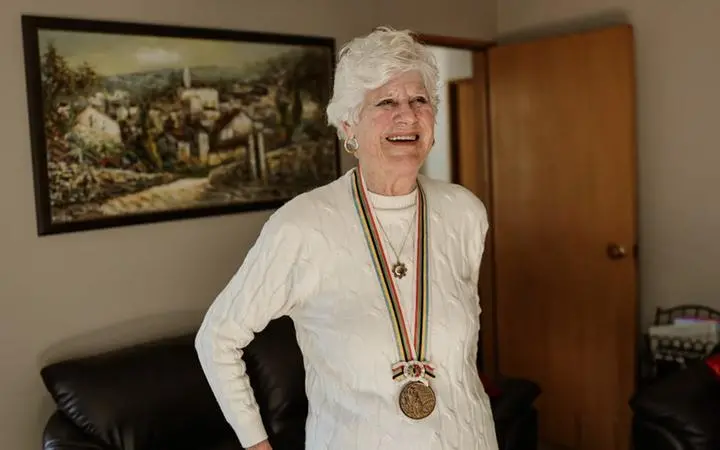
Chamberlain was inducted into the New Zealand Sports Hall of Fame in 1995 and appointed a Member of the New Zealand Order of Merit in 2003 for her services to athletics.
Stephen said the wooden beach seat dedicated to Chamberlain overlooks the sea, and feature a marble plaque listing all of her mother’s achievements.
“It’s very humbling and lovely that she is being recognised for her achievements,” she said.