

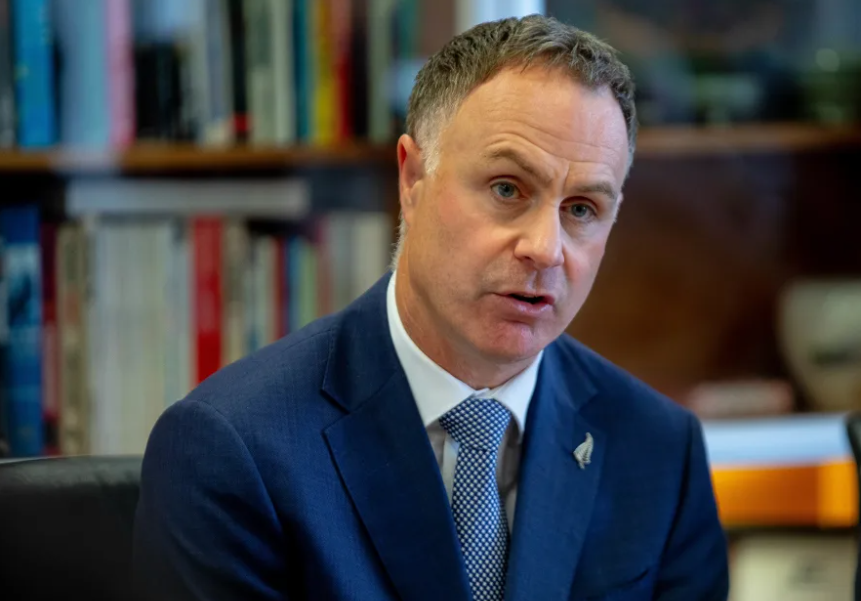
The government's long-awaited rates cap will be a variable target band and enforced by a new regulator.
Likely starting with minimum increases of 2% and a maximum of 4%, the cap would take effect from January 1 in 2027.
It was not clear from the initial written statement how often the target might change, or exactly how it would be calculated, only that this could include "indicators like inflation at the lower end and GDP [gross domestic product] growth at the higher end".
Local Government Minister Simon Watts said councils would need to seek permission from a new regulator to go above the maximum, and that permission would only be granted in "extreme" circumstances.
Water charges and other non-rates revenue would be exempt from the target range, but all general rates, targeted rates and uniform annual charges would be subject to the limits.
Watts indicated the ranges would likely start at between 2% and 4% per capita, per year, based on analysis.
"This means rates increases would be limited to a maximum of 4 percent," he said today.
Consultation on the changes announced at the post-Cabinet briefing today opened immediately and was set to close in February next year.
Legislation was expected to be passed by the end of 2026.
The target would begin from 2027 with the "full regulatory model" in place by July 1 in 2029.
The announcement follows last week's unveiling of the government's plan to abolish regional councillors, replacing them with panels of mayors from city and district councils.
In a statement, Watts said rates increases that recently had been in double digits was "unsustainable and is only adding to the cost of living for many Kiwis".
"Ratepayers deserve councils that live within their means, focus on the basics and are accountable to their community. The government's decision to introduce a cap on rates will support that ambition and protect local government's social license for the long term.
"A minimum increase is necessary so councils can continue to provide essential services like rubbish collection, council roads maintenance and the management of parks and libraries.
"From 2027, councils will be required to consider the impact of rates caps on their long-term plans and report on areas of financial performance, like the cost of wages and salaries, council rates as a percentage of local house prices and estimates of local infrastructure deficits.
"The full regulatory model will take effect by 2029. However, officials will be monitoring rates rises nationwide as soon as the legislation is enacted. Where councils propose increases beyond the proposed cap, this may present grounds for intervention under the Local Government Act."
Councils should not wait for the full enactment of the rates capping model before controlling rates increases for their constituents, Watts said.
Union: why the wait?
The Taxpayers’ Union welcomed the announcement of a future rates cap, describing it as a win for ratepayers, but said the government risked neutering the policy by pushing it years down the road.
“More than 30,000 Kiwis backed our call to Cap Rates Now, so today’s commitment is a big step in the right direction, union spokesperson Tory Relf said in a statement.
"Cumulatively, over the last three years, the average rates hike is an incredible 34.52 percent. Over the same timeframe, inflation has been just 13.7 percent. Rates capping will finally force councils to focus on essentials and give households certainty.
“But Minister Watts is leaving the door wide open for councils to jack up rates before the cap arrives. Asking councils to 'be responsible' before the cap is legally enforceable will not work. It invites a final spree of increases as they scramble to lock in a higher baseline.
“Stretching this out to 2029 means National would need to win not just one, but potentially two elections before the cap actually applies. That gives the Opposition years to campaign against it, and gives lobby groups like LGNZ [Local Government NZ] plenty of time, and ratepayers’ money, to run interference.
“Our question to the government is simple: why wait until 2029? Many councils are setting their Long Term Plans prior to June next year, so the cap should come into force within months, not years.”
- additional reporting Allied Media


