


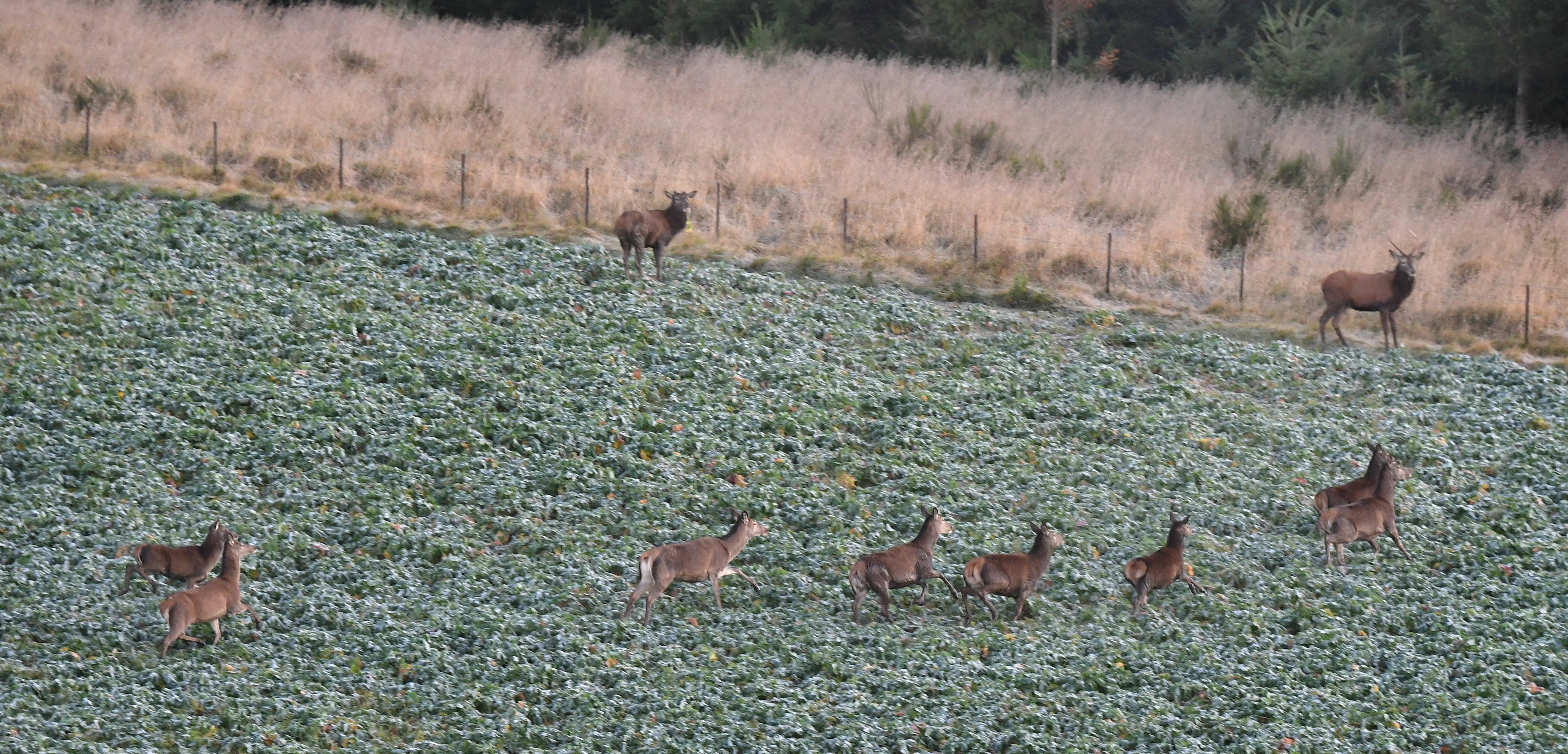
Kellog Scholar and Federated Farmers policy adviser Phil Holland has written a 70-page report on wild deer and their control and management since the animals were brought to the country by settlers in the late 1800s, and the path in the future.
The report outlined the difficulties and obstacles in wild deer management and how to frame a collective policy from all parties.
Deer had shifted from protected game species to pervasive pests, the report said.
"Although successive governments and agencies have undertaken control efforts, reinvasion, fragmented governance and inconsistent investment have allowed deer populations to persist or expand in many regions," the report said.
Many people objected to culls of the animals.
Some communities had an emotional and cultural connection with deer, while the fragmented statutory environment contributed to inconsistent and ineffective management across land types and jurisdictions. There were nine parliamentary Acts covering the management of wild deer, the report highlighted.
Deer now occupied more than 44% of New Zealand’s land area, spanning vast tracts of conservation, forestry and privately owned land.
The animals damaged infrastructure, including fences and water systems, feasted on crops and hindered farmer conservation.
They also damaged native eco-systems and the degradation had cascading effects on biodiversity.
"The window to prevent irreversible ecological collapse in some areas, especially where deer densities are high and native regeneration is slow, is closing. As climate change accelerates ecological stress, effective deer control becomes not just important but urgent."
But there appeared to be little agreement on the way forward.
"On one side are conservationists and ecologists arguing for rapid and uncompromising intervention. On the other are hunters, landowners and communities who view deer as a recreational or economic asset, or even as a part of their cultural landscape.
"This polarisation can lead to policy paralysis, implementation delays and eroded public trust."
The report said a colonial legacy continued to shape both the ecological and socio-political dimensions of wildlife management in New Zealand.
"The right to hunt was embraced as a democratic value and quickly became embedded in settler culture."
Principles such as fair chase, humane killing, environmental stewardship, social responsibility and legal compliance were emphasised.
But that conflicted when deer were seen as pests, the report said.
Public opposition to deer culling was often shaped by emotional responses rooted in what was known as the Bambi effect, where charismatic animals received more sympathy, influencing public attitudes and policy resistance.
Landscape amnesia, a gradual loss of awareness about ecological degradation, led people to accept heavily altered ecosystems as normal.
The "Animal Farm clause", referencing Orwell’s critique that "some animals are more equal than others", often led to animals such as deer, horses, or cats being protected or valued despite their ecological harm, while others such as possums were aggressively eradicated.
Deer management suffered from intermittent funding, reactive strategies and political reluctance to engage with controversial solutions.
Restoration efforts were constrained by the Humpty Dumpty effect, the idea that once ecosystems were broken, they could not be fully restored.
Many farmers supported deer control in principle but resisted centrally driven or bureaucratic approaches they perceived as impractical, inconsistent, or misaligned with rural realities.
Resistance arose when control programmes, especially aerial 1080 operations or commercial wild animal recovery operations which were perceived to undermine access, erode traditional ethics and diminish the role of hunting as a form of land stewardship.
Mr Holland said he could see and feel the tension between two sides.
"I support deer control. I have seen the devastation deer can cause in native forests. But I have also felt discomfort watching aerial culling footage and reading reports of poisoned carcasses. I have walked among recovering bush thick with saplings, remembering how easy it once was to walk across the forest floor, and I have both celebrated and mourned that change.
"They have also reinforced my conviction that deer control must be approached not only as a technical and ecological task but as a deeply human one, shaped by culture, emotion and contested moral visions."


