


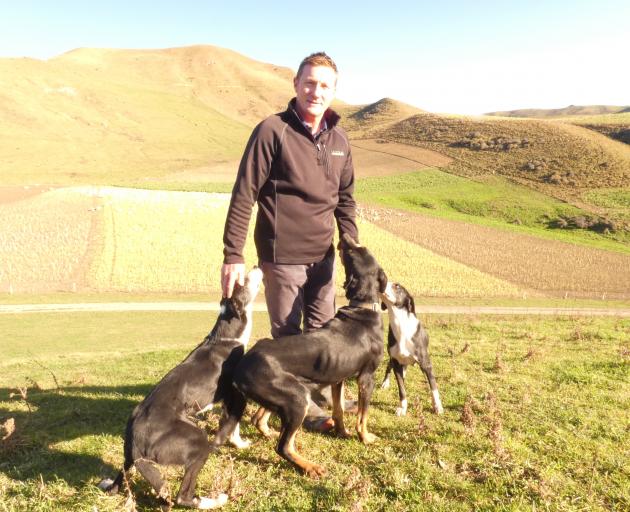

After studying at Lincoln University, he gained an honours degree in agricultural science, followed by a diploma in secondary teaching at the Christchurch College of Education.
Initially, that led to a job as a farm technician at AgResearch and other roles, including the Southland manager overseeing Economic Service duties at Meat and Wool New Zealand and farm director for South Otago’s Telford Rural Polytechnic.
At AgResearch, he enjoyed working alongside intelligent and knowledgeable researchers.
Equally satisfying for a restless mind was being able to get on farms and learn from inspiring farmers to question everything, not be afraid of making mistakes or break the mould and cover new ground.
A natural technical, scientific and environmental curiosity has given him the ability to look at farming often with a fresh, almost outsider’s perspective.
That was unable to be tested until Mr Knowles was knocking on 40, when the opportunity arose in 2015 to steadily buy the sheep and dairy support farm, Glenmark Springs, in North Canterbury’s Waipara, from a family trust.
The farm began as part of Mt Donald, bought by his parents in 2003 with 520ha, added on to by another 300ha when Pentland Downs was bought and a boundary adjustment made eight years later.
Today, the 822ha property is mainly a sheep breeding and finishing operation, getting about 30% of its income from dairy grazing.
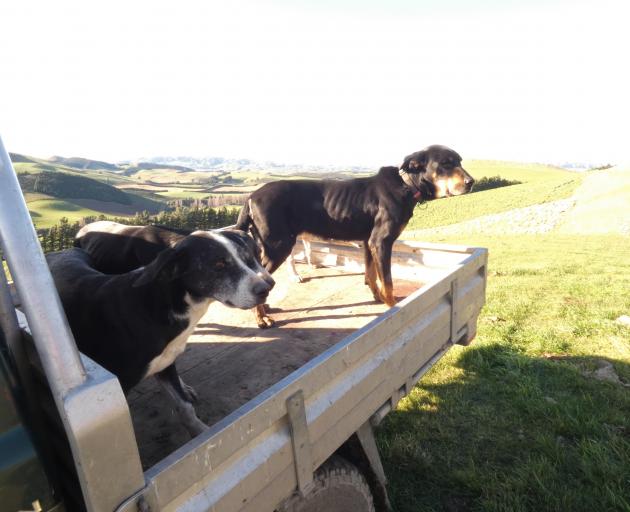
Aside from his father, Tony, who keeps on top of weeds and pests, Mr Knowles is the sole full-time staff member, bringing in casual workers when needed.
His low-cost business model is run on a high stocking rate and comes with a few idiosyncrasies.
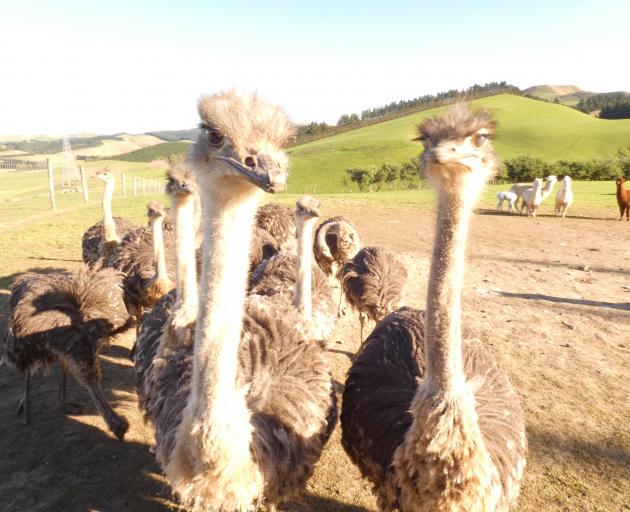
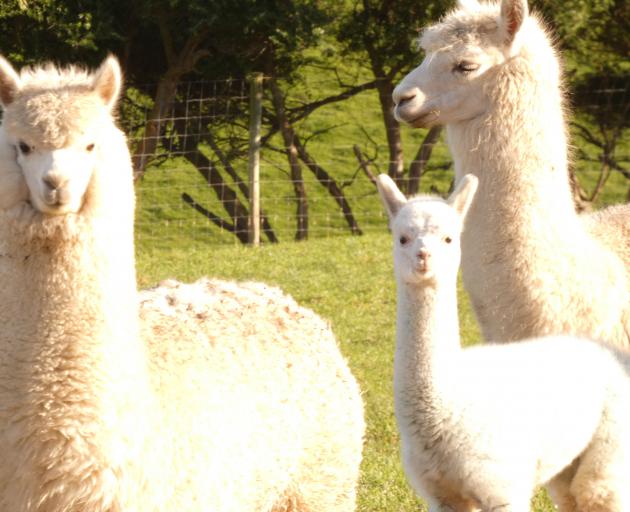
The 4000 composite ewes and 1000 hoggets, with 350 dairy cows, follows the boundaries of conventional stocking. Falling outside of accepted farming are the many alpacas, ostriches, peacocks, deer, turkeys, partridges and quails sharing space.
Ask him why he’s gone with zoo-type animals, and he replies simply, why not?
They bring him and visitors pleasure and that’s reason enough for him.
He wants to strike a balance between profitability and lifestyle, and goes about that by building data-sets to draw up strategies for the property, farming systems and stock to fit the farm business.
This scientific and inquiring approach to farming and care for the land has earned him the Canterbury Ballance Farm Environment Award.
"I’m trying to do what my gut feels is the right thing to do, but I don’t consider myself a greenie. I try hard not to go broke, so the focus really is on production and profitability, but at the same time, if I can do a better job managing resources, I will do that as well ... If you drive past something and your gut says that’s not right, I think you have to turn it into action and actually try to tidy it up."
In his mind, the farm can be split into three.
One third is southwest facing on later-country heavy clay downs. Another third is quite steep country on native pasture over a limestone ridge going through the middle, running east to west to Waikari.
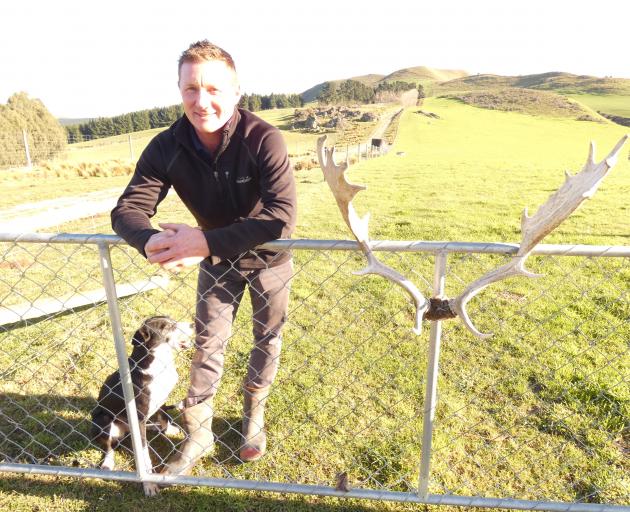
"Quite often we get too hot, sometimes it’s too cold," he says. "It can get too dry and occasionally it gets too wet, but most of the time it’s pretty perfect and I think we’re pretty lucky to have a temperate, quite coastal climate, so if we do get snow it’s only for a few days and then it’s gone. Certainly the most challenging aspect is the summer dry, which we haven’t seen the past few years, but no doubt it will be back."
He tries not to be a weather-basher and to develop systems matching the climate rather than fighting against it. That comes with challenges.
Glenmark Springs typically averages just under 600mm of rain each year, but this can vary widely. Over the past seven years, the rainfall has swung between 370mm to 900mm.
Buying the family farm began with a 10% share and he took over the livestock under a lease agreement in 2015.
The change of management was a baptism of fire, coinciding with drought.
Left with no alternative, Mr Knowles completely de-stocked the property, grazing the animals off-farm at a hefty cost.
"That 2015 was a bit of a shock. So I signed the lease and took over the stock gifted from Dad and by the next week the whole lot had been trucked out to go grazing. That first year was a pretty rough introduction to practical farming, but it sort of opened your eyes and I think when your arse is on fire it opens your mind. The reality is we had a couple of good seasons after that."
They were short-lived as he was tested again by drought in 2019, a painful period in the middle of the year bookmarked at the end by some good rain.
Deviating from his first response, half of the capital ewes were sold in autumn so he could finish all the prime lambs.
As soon as the paddocks were re-grassed, he bought outside ewes to return his capital flock back to earlier numbers.
That probably won’t be repeated next time around.
Mr Knowles says it was a different reaction as he had the stock, had developed the farm and paid off most of the debt.
"Managing the feed costs became the major priority. I thought if I sold some of the stock, I can reduce some of the feed I need to buy in, and we knew from previous experience when the drought breaks you have ample feed, so decided to put contracts in place and keep all our lambs through to slaughter — which is not what we normally do, but it worked that year because we were under-stocked."
A lesson learned from the two droughts is that the biggest decisions need to be made before and after an event.
When it does rain, the big decisions have to be made when a flush of parasites arrive, half the paddocks are gone and stock performance is average after going through dry feed for so long.
He accepts drought will return and is unsure how he will react next, only knowing that he’s learned from the past.
Droughts do remove unwelcome bugs and parasites and give the pasture a blank slate to start from again. Every mouthful of feed from rain after that is perfect quality, he says.
"But it can be pretty testing and trying, because it just drags on and you don’t know when the end is in sight.
"One of the huge advantages we have here is we have natural sub-clover populations, so when it does rain the ground just erupts with all these seedlings. If you manage it with a bit of luck and get it right, then you can create this huge bank of great quality feed that will be the envy of any dairy farmer in the country."
He’s dabbled with lucerne and fans will tell everybody it’s God’s plant, but in his book "God can keep it", he says, tongue in cheek.
"That summer feed isn’t really valuable for me because I’m on a sliding [lamb price] schedule, already destocked and I’ve got a real aversion to wrapping feed in plastic. So a lot of people make lucerne work with really sharp systems and great production and financials, but in my system it doesn’t work."
The way he sees it, putting feed in plastic and feeding out by tractor costs him 60c/kg compared with 20c/kg for growing feed.
The real silver bullet for him has been fodder beet, which he first grew in the 2015 drought.
"I didn’t know what I was doing and we got a 16-tonne crop [per hectare] which was about 14.5 tonnes better than anything else we grew that year. Since then we’ve sharpened up, and now 20 tonnes is a walk in the park and 25 tonnes pretty normal, and we can do better in the right conditions. It’s a real game-changer."
Virtually every animal on the farm goes on fodder beet for about an hour a day over winter and then back on the hill for a grass intake every two to three days to balance their diet and rest their gut.
Stock are stacked on the feed crop over 10ha-20ha so they can rest the main farm and take advantage of spring growth when it kicks in later.
Not one to rest on his laurels, he’s gone "cold turkey" on fodder beet this year to trial 30ha of a diverse winter mix of kale, turnips, swedes, ryecorn, prairie grass, plantain, sunflowers and radishes.
The idea is some of the species-mix will grow into spring with less trampled in the mud and so far it’s looking good, but the test will be at the other end.
His quick course of drought action on both counts proved to be the right call as he was able to fast-forward development of the farm to increase its efficiency and profitability.
Faced with no income in 2015 after leaving his job, he focused on what he could control. Grazing was relatively cheap at that stage and trucks were available to move stock.
As he was in a leasing arrangement, he wanted to kick into developing the farm to spend money in the front end so he could get later use of it, rather than waiting out the drought.
Debt was taken on and the development tailored to take into account the approaching challenges of labour and cost of production as well as his age and lifestyle, for someone starting farming later in life.
He figured starting early was the best approach, as the costs were only going to get more expensive and consents for water and digger and dozer work more difficult to get.
Stock access was number one for him so two fencing contractors started at either end of the farm and completed ring laneways and split yard pens in half. The result of 20km of fencing was 30% more paddocks with paddock size reduced by 40%.
The entire farm was soil tested, followed firstly by remedial top-ups and then capital fertiliser applied by truck and plane.
Soil fertility continues to be tracked closely, with samples taken from five monitor paddocks.
About 300ha was sprayed and direct drilled into short rotation grasses and legume mixes. Ten water tanks were introduced with more than 50 cattle troughs and the system powered by solar panels, while electric fencing was doubled.
Naturally, this work is guided by research and farm trials, resulting in big changes to the farm’s infrastructure, stocking rate and performance.
His focus is on increasing production while reducing the farm’s environmental footprint, by using simple systems to manage the farm efficiently.
He’s learnt to use tools to add value to his business and put effort into areas he can control, weather not being one of them, Mr Knowles says.
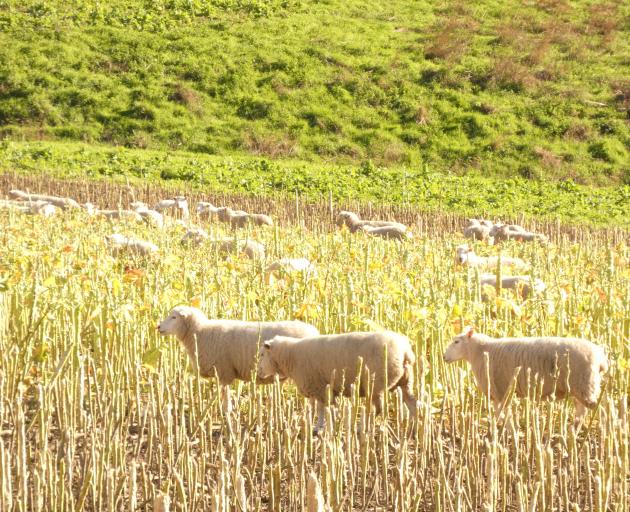
Alongside the flock of 3000 mixed-age composite ewes, 900 composite two-tooths and 1000 mated hoggets are up to 600 winter lambs. Half of the mixed-age ewes go to a maternal ram, with males sold under contract in mid-December, and the other half go to a terminal sire with their lambs sold at an on-farm sale in mid-November so they can manage the remaining stock.
Elite mobs start lambing in late July, the hoggets due in mid-September. Hogget lambs are usually kept for finishing.
The result is a top scanning this season of 189% for the two-tooths and 190%-plus for the rest.
This is up on the typical 160%-185%, translating to a 130%-135% lambing at weaning.
The hoggets scanned at 100%-125%, for 65%-70% lambing.
Mr Knowles is also breeding his own Poll Dorset and Suffolk cross rams for single use for the terminal flock, Texels for maternal replacements and Texels, Beltex and Charolais for hogget mating.
The cows come from a dairy farmer in a five-year relationship, arriving for grazing from January to June and leaving for calving from July to September the next year, spending 11-18 months at Glenmark Springs.
Between 300 to 600 cows, including carry-over cows which didn’t get in calf, spend their first winter on the hills and the next on fodder-beet before going back to the dairy farm.
This concentration of cows on the winter feed on a small part of the farm helps lambing covers build up.
Mr Knowles welcomes researchers on to the farm for trial work, ranging widely for ewe bearings, fertilisers, sheep genetics, perennial and annual forages as well as winter crops, reduced spraying, early lamb weaning, cultivation options and regenerative agriculture.
Despite some reservations about the payback from technology, he’s a big user. His paperwork extends to measuring liveweights, growth weights and crop yields.
Budgets are modelled and he’s been known to spreadsheet every paddock cover to work out his feed wedge and crunch numbers.
Software programmes are used for regulatory compliance, farm forecasts, finances and budgets, remote monitoring of water tanks and electric fences, soil testing and variable rate applications of fertilisers.
Over the past five years, through drought and better times, Glenmark Spring’s gross income has fluctuated from about $550,000 over the 2019 drought to just over $1million, with working expenses ranging from $345,000 to $460,000.
Earnings before interest, tax, rent and manager's wage work out to be $582/ha from gross revenue of $1058/ha. That leaves him with food on the table and money to pay off debt, he says.
His paperwork goes into more detail, such as tracking liveweight gains of about 297 grams a day from birth to slaughter for the sheep.
Like many farmers, he’s planted many trees for stock shade, shelter, biodiversity and carbon sequestration.
Unlike many farmers, he’s planted a fruit orchard with about 15 different varieties and another 30 types of nut trees to make the most of the property’s micro-climate.
Vegetables are grown in glasshouses and large beds, and surplus bounty is shared among friends and villagers in the Waipara township.
To reduce hill erosion, more than 3000 poplar poles have been put in, with 35ha of this registered under the Emissions Trading Scheme.
About 2.5km of double-row shelterbelts are in the ground, comprising pines combined with rows of native species and winter-flowering trees for wildlife corridors.
Restrictions are in place for cattle grazing to protect critical water sources and swamps, there is more riparian planting under way and a battle is being waged against animal pests.
An existing 4ha block protected under the QEII National Trust and an iwi-covenanted area is respected.
Mr Knowles sees the farm as a special place and enjoys sharing its space and produce with visitors and friends alike, regularly hosting walking groups or dog training on a Friday.
His attention to detail was among the reasons why judges backed him as the region’s farm environment winner.
Judging co-ordinator Wendy Main says his enthusiasm and ability to think "outside of the box" impressed the judges.
He looks for opportunities with a proactive scientific and curious approach and analytic mind, to push the boundaries on a dryland hill country farm as a good steward of the land, she says.
This was reinforced with the judges being greeted with arm-loads of manuals, information reports and data-sets on a well-presented farm.
"Ian’s technical information and data-driven decision-making was another stand-out, and this showed in his long-term planning and encouraged early adoption of new ideas."


