PHOTO
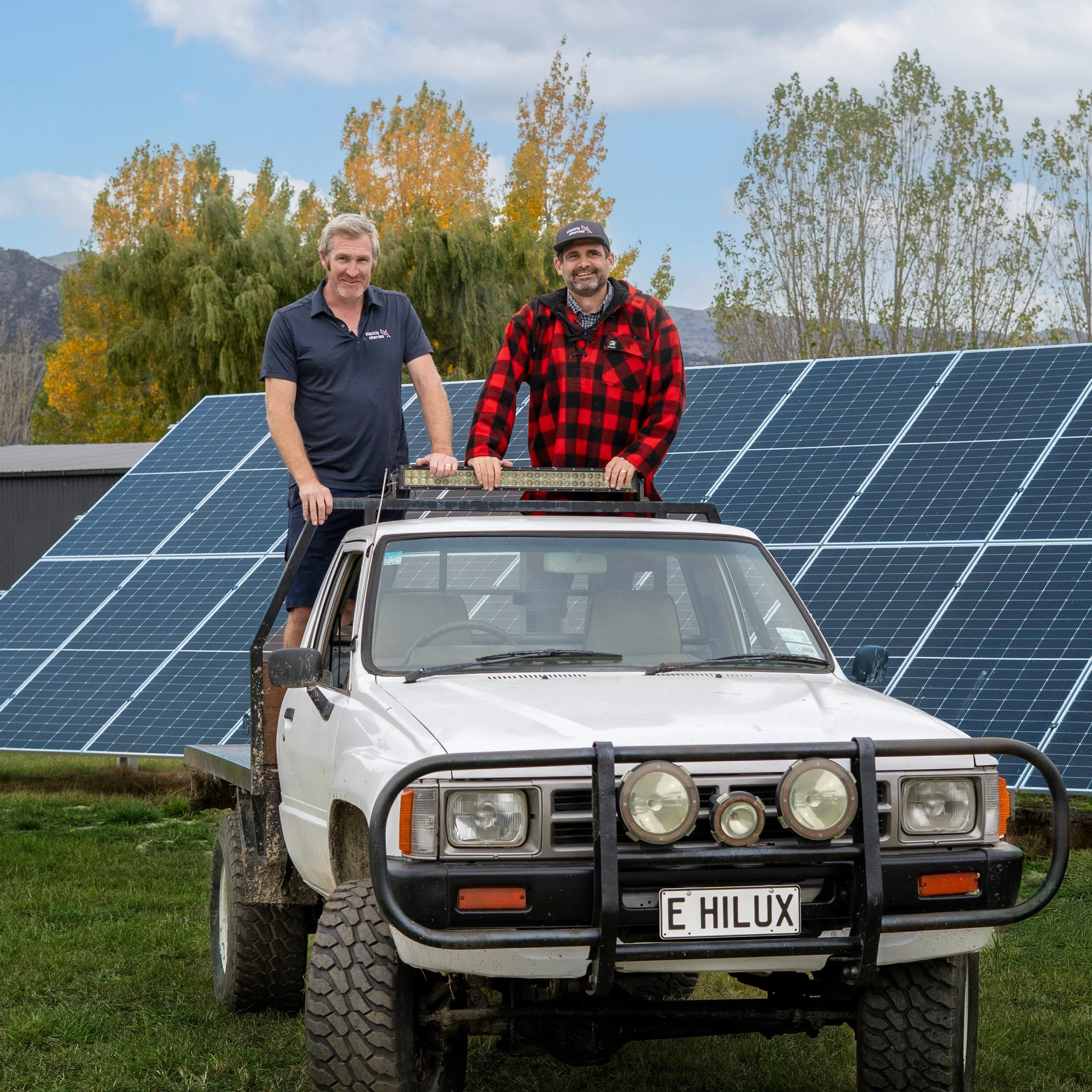
Central Otago cherry grower Mike Casey has 21 electric vehicles on his solar-powered orchard but that is not enough.
The orchard owner is on a campaign to convince every farmer to add another income stream to their operations by putting in solar energy.
He is calling on energy regulators to remove multiple connections on farms and smooth the way for selling surplus power to other users.
The entrepreneur spoke to more than 400 sheep and beef farmers and professionals attending the Out The Gate conference by Beef + Lamb NZ at Christchurch.
‘‘We need to get our whole country on the right track when it comes to energy and the NZ energy system is failing New Zealanders and I firmly believe it is us farmers who will fix it.’’
After a stint in ‘‘start-up world’’ in Queenstown, he entered the primary sector in 2019 and runs a brand of cherries called Electric Cherries.
‘‘It’s a bit of a funny name, but the reason is simple, because I run my farm on 21 electric machines and there is not a single drop of gas or diesel and absolutely everything on our farm is electric and 92% of the energy I use on the farm I generate myself.’’
If he ran the orchard on diesel he estimates it would cost him about $53,000 a year.
Unlike diesel, electricity could easily be generated on farms and after putting in a large solar system his farm made about $25,000 in additional revenue, he said.
‘‘That’s super exciting because after last season’s cherry season we realise just how important it is to diversify what it is we do on farms.’’
In the past five years about 20,000 people have come to his farm to learn about electrification.
‘‘We are starting to farm differently . . . because of this access to cheap abundant renewable energy right there on our farm.’’
The 21 EVs cost $400,000 for a 13-year payback, but he started this in 2020 and the machines are cheaper now and running costs much lower.
He generates energy for 7 cents a kilowatt hour compared with running diesel at about $2kw/hr for a generator while oil prices rise rapidly during the Iran conflict.
The business case stood up for batteries which provided insurance for farmers during a power cut, but their value was not being realised because of flaws in the energy system, he said.
‘‘It has made me realise I want to go one step further and I want too figure out how to electrify all of NZ because the economic prosperity opportunity is so huge.’’
Mr Casey estimates the technology is available for electrifying about 8.5 million machines in New Zealand with another one million almost ready and 700,000 higher-powered machines unable at this stage to be electrified. This would need twice as much energy as currently generated.
‘‘And why do we do it? Because fossil fuels are bloody expensive. $55 million a day is what you and me spend on fossil fuels. So $29m a day is what our two million households will save by simply electrifying.’’
Electrifying 8.5m vehicles is expected to save $100m by 2040.
Mr Casey said solar panels and batteries were coming down while energy prices were going up.
The energy system for generating, transmitting, distribution, retailing and metering resulted in households paying about 40c/kw/hr.
‘‘You finance solar on your rooftop by 5.5% so not even one of those fancy green loans, it’s 11c/kw/hr, a quarter of the price of grid electricity. On farm we can get that down to about 7c/kw/hr with a bit more scale.’’
Farm and home solar with batteries was the cheapest infrastructure. If 80% of homes had rooftop solar the savings would pay for capital and interest repayments and still give a family an additional $1000 a year and give the energy system 40% more renewable energy generation.
‘‘But our real superpower isn’t our homes, it’s our farmers. If 50,000 of us all did what I did on my farm that is 60% more renewable energy generation for NZ’s energy system.’’
Often farmers used less energy in winter, and this could be generated, stored and pushed back into the electricity system.
He said batteries would smooth out loads increasing in the morning and evening in the winter, but the problem was householders and farmers were not being rewarded for that.
‘‘We need to unlock Wellington and make them understand just how much of a role farmers are going to play in the future electricity system in NZ.’’
Farmers were not being paid fairly for what they exported back to the grid, he said.
Farms often had multiple connection points and might export at 10c/kw/kr yet import energy at 30c/kw/hr. Grouping connections together would make the return on investing in solar better so it could go on more unproductive land.
‘‘And we must allow farmers the ability to sell power to other people though a multiple trading relationship. A perfect example would be a dairy farmer with surplus solar should be able to sell that to Fonterra. It’s a great circular opportunity where the industry can back up the industry, but right now we are not allowed to do it.’’
During his speech he appealed to Minister of Agriculture Todd McClay and agriculture spokespersons from three parties — due to speak in a panel next — to fix this problem.