


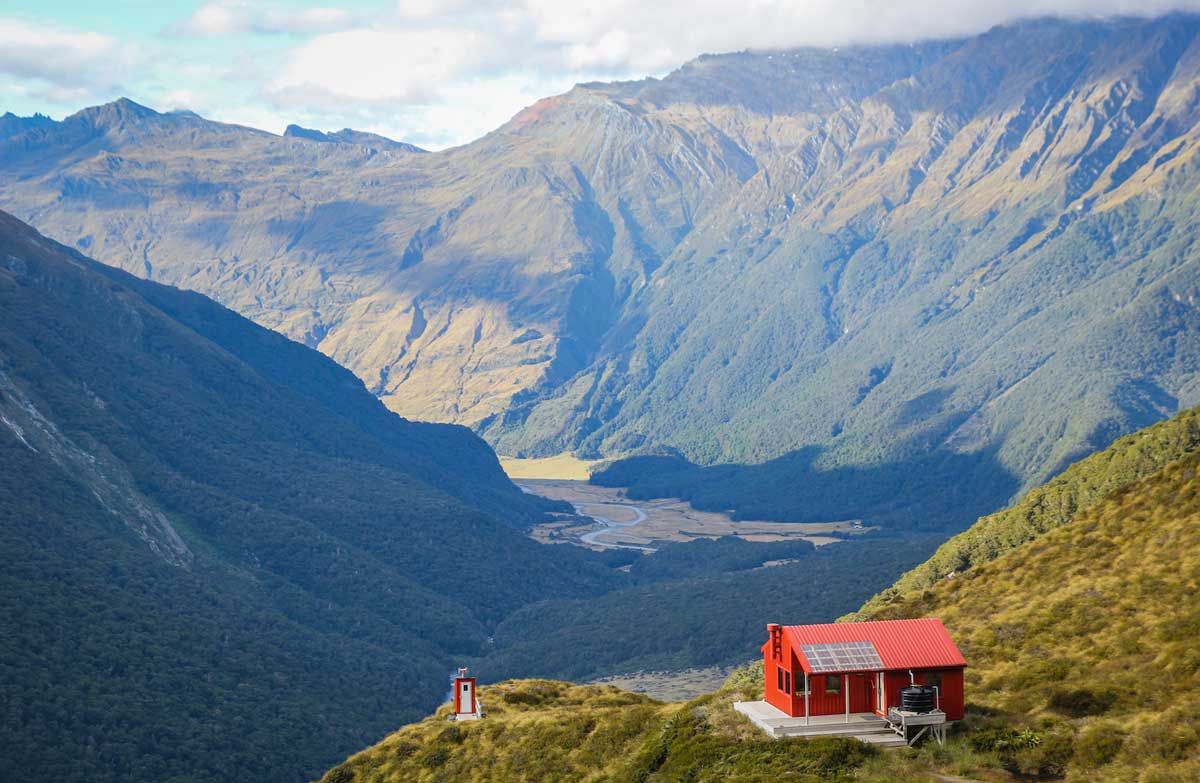
Mr Aspinall is a fourth-generation farmer on Mt Aspiring Station, a 2300ha property near Wanaka, with his wife Allison.
The property is a gateway into Mt Aspiring National Park and it is estimated more than 100,000 people — climbers, trampers, walkers and tourists — come on to the property each year.
Speaking at the New Zealand Grassland Association conference in Twizel last week, Mr Aspinall said he had many enjoyable interactions with those visitors but also some challenges because of the numbers of people travelling through the station. Many were related to the logistical issues of shifting stock, although he had grown up seeing growing numbers of visitors so was "fairly pragmatic" about delays he could encounter.

He said the Aspinall family also had strong relationships with staff at the local Department of Conservation office. However, it was very difficult to manage "ignorant or stupid behaviour", which included visitors ignoring three-week closures of access to lambing blocks despite signs.
They had lambs turn up at the homestead in cars "because their mothers ran away", young men chasing sheep, vehicles stuck in fords and other issues to deal with.
Another growing concern was the intersection between environmental issues, social media and "public righteousness", he said.
Mt Aspiring Station was in a high rainfall belt with annual rainfall ranging from 2000mm to 3000mm a year across the farm. The property had a large number of significant creeks and waterways running through it, and the family was trying to be proactive about environmental impact.
Given general media coverage and Fonterra’s publicity about how its farmers have fenced off more than 98% of significant waterways on their farms, he could understand why people were confused when they saw stock in waterways.
But he had never had a single visitor approach him on the farm saying they were concerned about cattle in the river. Instead, they had gone to the media — even the Prime Minister — to "demonstrate their outrage".
He described this behaviour as no better than "schoolyard bullying".
While there was support from Doc and the regional council, such occurrences still took a mental toll, he said.
Mr Aspinall warned a storm was looming with the sheer numbers of visitors forecast for the future. Those numbers were also a major strain on infrastructure such as roads, toilets and tracks.
A cynical view was that tourism was a national treasure but the associated issues were not seen as a national problem, he said.
The Tiaki Promise — an initiative to encourage travellers, both domestic and international, to respect New Zealand’s environment and travel safely — looked to be a great blueprint for encouraging positive visitor behaviour.
But he believed that also needed to be complemented by a national discussion "about where we are heading with tourism".
Mr Aspinall said he loved farming and felt "extremely lucky" to live in such a beautiful place. It was understandable more people wanted to visit.He believed the couple needed to change their own business to take advantage of the opportunities those visitors brought.
That was not something that came naturally to the couple but it was something they needed to expand.
In his keynote address to the conference, Parliamentary Commissioner for the Environment Simon Upton said tourism’s environmental impacts required just as much scrutiny as the agricultural sector.
Last year, New Zealand had 3.7 million visitors and the Government was predicting about 5million by 2024, compared with just 1 million in 1990. That was "huge growth" in a very short space of time.
Mr Upton said the Government was investigating the environmental impacts of that projected growth and was meeting people in the Mackenzie region to discuss some of those impacts.


