
PHOTO
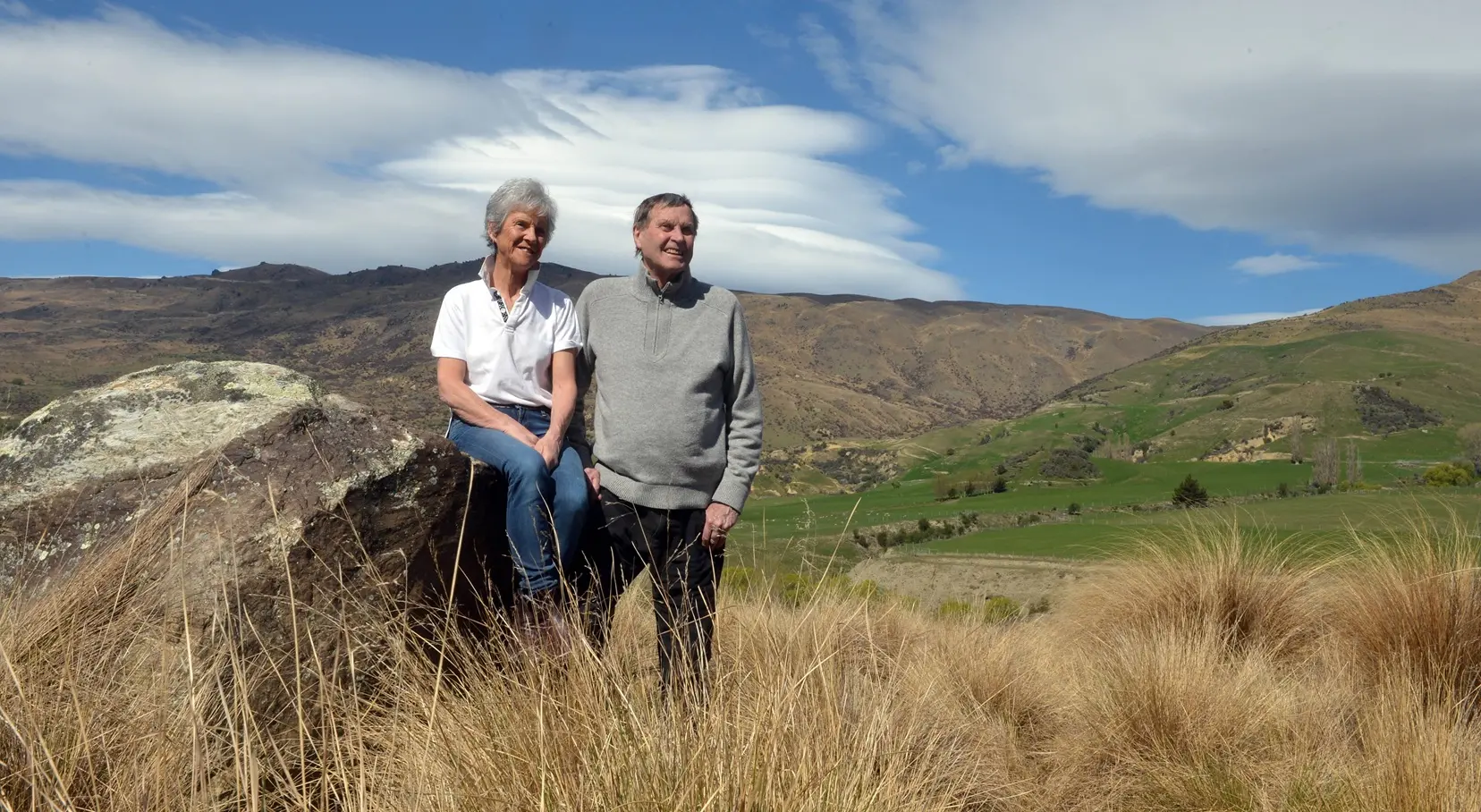
He was a schemer, a dreamer and a persistently cheerful thorn in the side of regulatory authorities.
John Lee pushed boundaries to the limit and moved mountains — literally — to create a sustainable future for his beloved Cardrona Valley.
On the mountains above the valley, John — supported by his wife Mary and good friends and business partners — enabled the Cardrona Alpine Resort, the southern hemisphere Proving Grounds and the Snow Farm cross-country skifield to happen. That led not only to the revitalisation of the valley but the growth of the wider Wānaka area.
Cardrona put New Zealand on the international skiing map and spurred the development of Wānaka from sleepy hamlet to thriving tourist town.
Known for his catch-cry "it’s easier to beg for forgiveness than it is to ask for permission", John once said his two greatest pleasures in life were seeing things happen and seeing people happy.
But the pathway to creating improved fortunes for his valley were littered with obstructions, court cases and hearings too numerous to count.
John died on December 21 last year, aged 89, and while the Lee family lost a cherished husband, father and family man, the wider community lost a visionary; someone who turned snow from the curse of the high country farmer into white gold.
"John didn’t just change the landscape, he changed the future," his brother-in-law Trevor Norman said.
But none of it would have been possible without the enduring love, loyalty and support of Mary who backed her husband every snowy step.
In 2016, John became a Companion of the New Zealand Order of Merit for services to business and tourism and appropriately, in 2024, his wife received the same honour for her services to snow sports and tourism.
John Allandale Lee was born on March 10, 1936, the third of Bob and Daisy Lee’s five sons. He struggled with being sent from the family farm Waiorau in the Cardrona Valley to school in Oamaru and would fill a bottle with water from Meg Creek to take back to school to savour a taste of home.
Daisy and the boys lived in Oamaru, leaving Bob at home to farm, though he travelled between Cardrona and Oamaru as often as possible.
Rationing during World War 2 affected the family on several levels. For John, it meant lollies were scarce and marbles were hard to get hold of. For his father, it was the more serious issue of petrol rationing.
Eager to help out, John and his brother Ray mixed their urine with rusty water until it was the same colour as petrol, and filled his tank. Bob made it as far as Palmerston.
John struggled academically and, on his worst day at school, was given 18 whacks with a leather strap. Midway through his fourth-form year at Waitaki Boys’ High School, his father pulled him out.
Bob made it clear that working full-time on Waiorau was not an option until he had learned a little about the outside world. Working on farms, mustering, studies at Lincoln and shearing followed.
A flirtation with academia came in 1960 at the insistence of John’s old friend Dr Alexander Elmslie who recognised his insatiable curiosity and encouraged him to think of the ministry.
John turned up at Knox College in a little Austin van accompanied by his sheep dog Storm whom he would train on the ducks in the Dunedin Botanic Garden.
He failed all his examinations. Undeterred, he went back for a second year and managed a pass in economics but it was clear academic life held no future for him and he returned to Cardrona.
Longtime friend Pat Frengley, who met him at Knox College, soon realised John had a brilliant brain and a prodigious memory but limited spelling and word composition ability.
It was the days before recognition of neurodiversity and John felt he was treated as a "dimwit" at school, not trying hard enough, but knew he was both smart and diligent.
After days on the land, John would read Winston Churchill’s A History of the English-Speaking Peoples in the evening.
"When he revealed this at Knox College, I knew he was someone very special," Dr Frengley said.
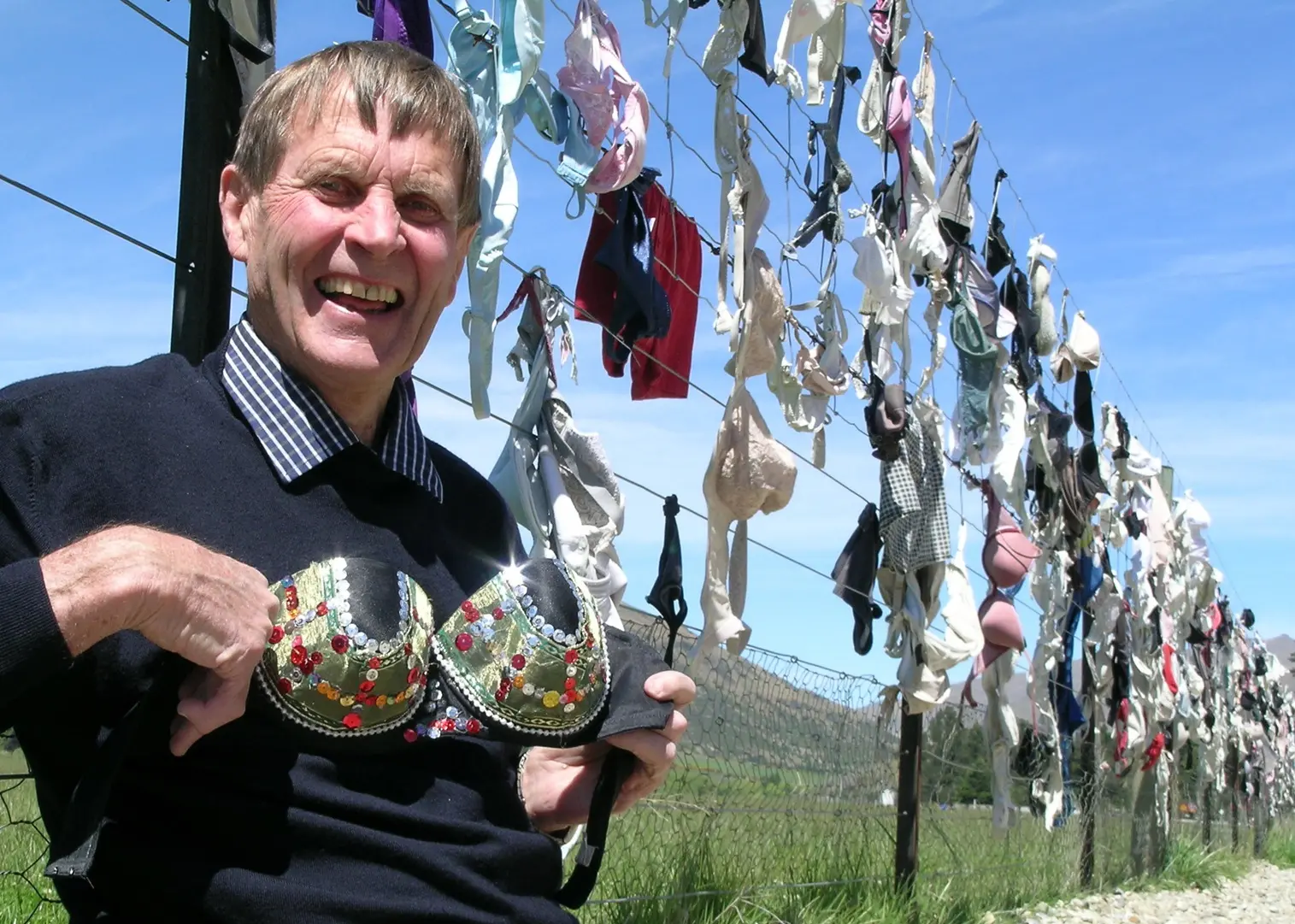
John had what is now known as classical dysgraphia, a learning difficulty that affects a person’s ability to write. Because of his so-called educational failures, he had a brilliant brain unconstrained by conventional education and with a feature of lateral thinking.
At 28, upon the retirement of his parents, John bought Waiorau, fulfilling his childhood dream. He was active in the community; he ran a youth group which was not conventional — they went pig hunting and did all sorts of interesting activities — and he was a Scout master. He was also involved with the local rugby club, and was a member of Young Farmers.
To inject some social life into the area, John invited women’s social rugby teams to play and stay. He introduced himself to his future bride Mary Atley, who was part of a visiting team of physiotherapists, at the bottom of a scrum on the floor of the Hillend woolshed.
The couple married in 1969, marking the beginning of a remarkable and formidable partnership, and had three children — Rachael, Joanna and Sam.
But John’s valley was in decline; the population was dwindling, making it difficult to maintain essential community services.
In 1970, John and Mary bought Mt Cardrona Station across the valley from Waiorau. With automation bringing more leisure time, recreation seemed logical to ensure long-term sustainability.
The property had been put on the market by an owner who considered it too cold and uneconomic to continue farming.
John was not particularly fond of snow. He had experienced the difficulties of rescuing sheep caught in heavy snowfalls.
He was not a skier, nor an engineer. Nor did he have wads of cash.
But he was blessed with a steely determination and tenacity, a farmer’s practical common sense, an unyielding work ethic and a belief that nothing was impossible.
In 1978, a small, 200m-long rope tow was carried by helicopter and installed in a large basin on Mt Cardrona with the intent of investigating the feasibility of developing a skifield to commercial standards.
While a rough existing farm track provided access to the mountain, a better road was needed for a commercial venture. John took a gamble and started to build a "high quality" farm road, surveying it himself.
It was only when it was constructed that he approached the council, seeking permission to put another use on the existing road.
The Cardrona Ski Area was officially opened to the public in 1980 and the skifield’s first fully commercial year was 1982.
Fourteen years after John and Mary’s purchase of Mt Cardrona, Cardrona Ski Area was profitable. But John was getting itchy feet.
He was keen to put in a road to the top of the Pisa Range to establish a cross-country skiing facility and decided to move out of the Cardrona business.
Secretly, John had always looked on the downhill Cardrona Ski Area as a stepping stone to developing a cross-country venture.
But bringing the first such operation to New Zealand was no stroll in the snow. From submitting an application for a recreational permit from the Crown, it took 19 years before official permission was granted for the project which included an adjacent vehicle and tyre-testing operation.
Even then, this was only achieved by forging ahead with his dream and following a familiar pattern — starting operations illegally.
He was taken to the High Court facing eviction from his lease, on the grounds he was an unsuitable pastoral tenant, given the extensive unauthorised earthworks already undertaken on Waiorau.
Such a drastic move had only ever happened twice before in New Zealand history and even the usually unruffled John was a little frightened about the prospect of eviction.
A Queen’s Counsel in Wellington visited the Cardrona Valley and told John he was 80% sure he could keep him out of prison. Seeing that as pretty good odds, John pushed ahead rapidly with the earthworks.
Eventually the situation was resolved and John and Mary were able to freehold 2700ha of their better farming country and the cross-country skiing and proving-ground areas in return for relinquishing 4000ha to the New Zealand public.
In 2012, the ski area was placed in community ownership with the land vested in the Queenstown Lakes District Council to be held in perpetuity as a recreational reserve.
The proving ground dated back to 1984 when John received a call from Dunlop New Zealand, on behalf of Japanese company Sumitomo which was after a suitable site for testing tyres in the snow.
It snowballed, with John determined to provide whatever the test teams asked for no matter how strange the request seemed.
As the ground’s profitability increased, it became a saviour for the ski area, supporting its infrastructure with road maintenance and trail development.
In 2005, the business was sold. It continues to be a world leader in winter testing facilities for automotive, component and tyre manufacturers, injecting millions of dollars into the local economy.
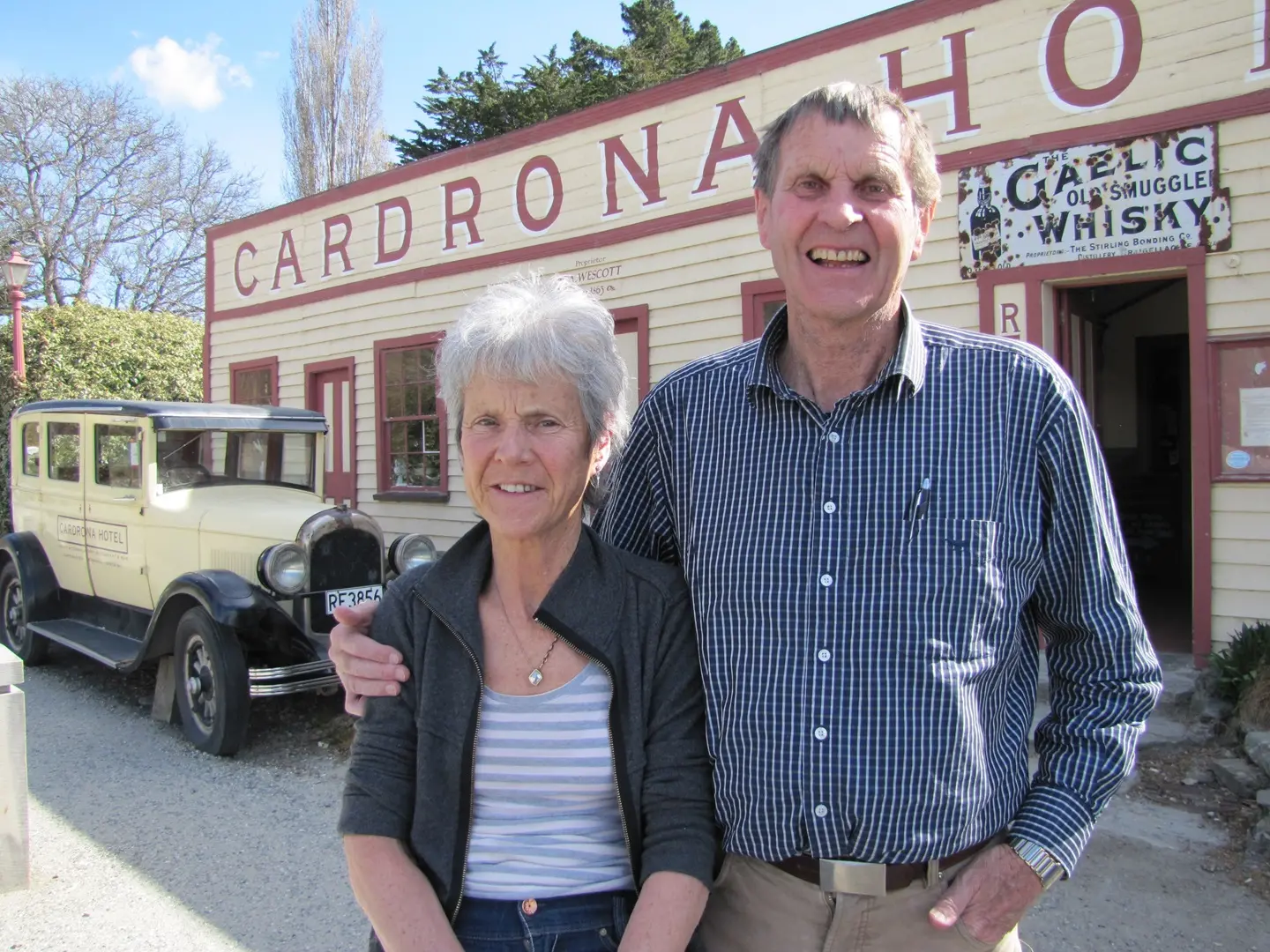
John and Mary played a key role in saving the Cardrona Hotel. It was turning into a derelict wreck before the couple bought it in 1970 in the hope of preserving it.
But it was never going to be John that did the restoration work; his only successful building assignment was some bookshelves for his office that he built on the driveway and then backed the car over by mistake.
The hotel spent a few years sitting dormant but safe from any further vandalism before they met Eddie and Rosemarie Jones who bought and restored the building.
When being interviewed for a Country Calendar episode and asked what he loved most about being a farmer, John responded that it allowed him to work and to do that work with his family.
Sam Lee — who recalled a childhood that was "anything but ordinary" — said his father strongly believed in having his children alongside him.
When he was developing the Snow Farm access road, he took Sam with him to watch the blasting.
The tractor they were using had no brakes; instead the bucket acted as a brake.
On the way down the hill, the tractor jammed between first and second gear and picked up some speed. The bucket brake was engaged and the tractor stopped abruptly.
Sam landed upside down waiting for the rear wheels to return to the ground, during what he described as "just another day with John."
"John had a strong ‘she’ll be right’ attitude and it served him right in business. Had he waited for every box to be ticked, I’m not sure any of his businesses would exist today or the jobs, relationships and communities they created.
"He was bold. John believed in what he was building. He believed entrepreneurship could change the fortunes of this valley and he was willing to put everything on the line to make that happen and, remarkably, it worked."
John and Mary supported Sam in the development of freestyle skiing and snowboarding mecca, Snow Park, in the early 2000s.
"John had to learn ‘sick’ wasn’t a bad thing, quite the opposite. He took great pride in the fact we created something very sick."
John loved entertaining people and the family home was very much an extension of everything he did, his charm and positivity drawing people in.
Trevor Norman recalled John’s famed cherry plum wine which was kept under the house where bottles could be heard exploding.
When more bottles were required, John would don a motorcycle crash helmet and ski goggles and descend through a man-hole in the laundry.
Speaking at a celebration of John’s life at the Cardrona Distillery, Sam thanked his mother for her extraordinary care and selflessness in John’s final years, her quiet strength and deep love meaning he could stay at home in Wānaka.
Dr Frengley described his old friend as the quintessential entrepreneur who was seemingly free from worry.
A kind and humble man, he was proud of his family, warm in his welcome and unimpressed by status. He was not driven by achievement of wealth, but by the improvement of the social fabric of the community in which he lived.
John Lee was once asked what he would like to be remembered for. His response?
"I’d just like to be thought of that I loved challenges. Positive about life — you’ve got to be positive about life. I would like, once I’ve moved on, if future generations say, ‘We’re glad he passed this way’."
John is survived by wife Mary, children Rachael, Joanna and Sam, and their families.