
PHOTO
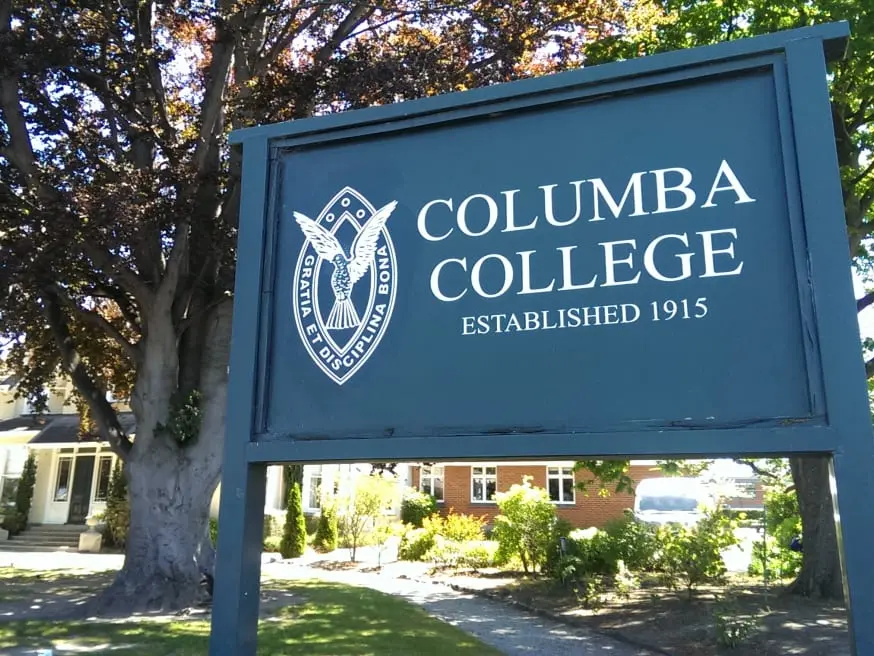
Documents show staff at Dunedin's Columba College complained to education officials multiple times accusing the school's board of bullying and interfering in the day to day running of the school.
In response, the college would later say the Ministry of Education's apparent concerns were "not made out on the evidence" that it was "at risk of overstepping" and even that the board was concerned those involved at the ministry "may not be impartial".
In a statement to RNZ this week the school said its relationship with the ministry was "highly collaborative and positive" and that information provided by the Official Information Act (OIA) process was a "valuable opportunity for transparency and reflection on previous issues".
In October, the school announced its principal Charissa Nicol would not be returning.
Nicol, who had been in the role since June 2023, had been on leave since 30 July. The school earlier declined to say why she was on leave.
RNZ requested under the Official Information Act the total number of complaints made to the Ministry of Education regarding Columba College in the past two years, a summary of the complaints, and a copy of all correspondence between the school and the ministry regarding the complaints last year.
The OIA reveals the ministry received 19 complaints regarding the school last year.

In April the Ministry of Education Dunedin/South Otago manager of integrated services Judith Forbes emailed the presiding member of Columba College Board Graeme Riley and Nicol asking for a meeting.
"The Ministry of Education has received some complaints about the Columba College Board, and our first step in any situation like this would always be to discuss with the Presiding Member and the Principal the concerns that have been raised with us.
"I acknowledge that it may be unsettling to hear that the Ministry has received such correspondence."
Ahead of the meeting, Forbes sent a summary of the complaints to Riley and Nicol as well as the president of the Board of Governors Amy Columb.
"Complaints have come from a number of staff [redacted] relating to the actions/behaviour of the Columba College Board. Summary statement from one complainant is that the board is 'overreaching and interfering with the day to day running of the school, as well as not following policies/procedures - either by demanding certain things do or do not happen or by attempting to circumvent the limits of their reach to enforce what they wish to happen'."
There were several examples given including the process for investigating and decision-making around a complaint against a teacher raised by more than one complainant as a breach of policy, applying additional scrutiny to departments and writing new policies to enforce decisions which would normally be made by management.
"We were particularly concerned to note that complainants stated that they were afraid to raise their concerns because of the perceived risk that they would then be targeted by past and current members of the board, with one stating that 'targeting of complainants has unfortunately occurred in the past'."
'This seems like an escalation already'
In response, Riley said the board thought the usual process would have been to refer the complaints back to them in the first instance, or that any staff concerns would first have been raised with the board through Nicol.
"So this seems like an escalation already, and we are concerned that the Ministry seems to have made decisions about an appropriate process without the benefit of hearing the Board's views or establishing the facts."
Riley said the summary of concerns was "markedly similar" to concerns that had previously been expressed and were already being addressed by both the Board of Governors and the Board of Trustees.
He added the school had engaged education consultant Cleave Hay to work with it as a "specialist governance advisor".
On 23 April, Forbes sent an email following the meeting.
"As discussed, the Ministry is concerned to have received complaints from staff regarding the way that the boards have been operating. These complaints have a common theme: that the boards may have, over time, developed an unusual degree of involvement in the day-to-day management of the school, and that this may be having a negative impact on the smooth operation of the school and on the wellbeing of its staff."
Forbes said the ministry was "pleased" that Hay had been contracted to support the boards, and it was "reassuring" that both Columb and Riley were "perturbed" to hear staff did not feel safe raising their concerns more directly.
She said some school boards had, in such situations, done a staff wellbeing survey with "the protection of anonymity for all respondents".
"It would be helpful to hear back from you what plan of action the school board is thinking of putting in place to address the concerns raised, so that the Ministry can determine whether or not any further action from us is warranted and/or necessary."
Ministry concerned about 'ongoing operation of the school'
On 9 May Forbes received an email from Anderson Lloyd partner John Farrow who said the school's boards had asked for advice on her email from 23 April.
He said the boards were concerned she seemed to be "forming opinions about the College without providing the information on which those opinions are apparently based, and without properly explaining the apparent concerns".
Farrow said the boards had taken the complaints "seriously" and were taking steps to address them, in consultation with Nicol and Hay.
"In those circumstances your follow-up email, and the indication that you were still considering 'further action' is cause for concern. We do not see how any Ministry action could be considered at all appropriate or necessary."
On 23 June, the ministry's Otago central manager of integrated services Chris Bryant sent an email regarding a meeting they had the day prior referring to several matters that had been discussed.
This included that the ministry had heard from a few sources, that there was a "significant break down in the relationship between the Governance and Management. This raises concerns for the Ministry about the ongoing operation of the school".
'The Ministry is at risk of overstepping'
On 11 July, Farrow emailed David Tapp, the director of education for Otago and Southland on behalf of the school board and Board of Governors regarding a meeting requested by Bryant.
"Mr Bryant's email records an option the Ministry has is to consider using its legislative powers to compel such a meeting."
Farrow said the boards considered the ministry's apparent concerns were "not made out on the evidence; the Ministry is at risk of overstepping; and it is too early for Ministry intervention."
The board said the ministry may be "taking into account irrelevant considerations, including complaints made with specific agendas unrelated to concerns about the governance and effective operation of the school".
He also said the board was "concerned those involved at the Ministry may not be impartial".
Farrow said it was "premature" for the ministry to require a meeting with the whole school board and "almost certainly too soon for the Ministry to formally intervene".
In response, Bryant said the purpose of the meeting was for the ministry to gain assurance that Columba College could "continue to operate effectively".
"This is not an intervention…"
The ministry still wanted to meet with the boards.
A meeting took place in October between the Ministry of Education, Riley, Columb, Hay as well as Farrow and Fiona McMillan from Anderson Law. Following the meeting Tapp sent an email to those who attended.
Most of the email was redacted.
In a subheading titled 'complaints process', the email said the ministry had received 11 complaints to date. Where the complainants had included their name and email addresses, the ministry had referred them back to the school's complaints process.
A "fear of retribution" was the common theme among the complaints.
"We positively note that the actions in Cleave's report show that the Board is reviewing its complaints and [Professional Learning and Development].
"We are keen to see your progress on this and importantly to see how you intend to have a well-functioning complaints process which is free from the perception of fear of retribution."
'We have seen improvement'
In a statement to RNZ, Tapp said the ministry was in "regular contact" with the school and continued to meet with school representatives to support both the board and the leadership team.
"Last year we identified concerns about governance and leadership at the school. Columba has taken positive steps since then. We consider progress needs to occur more quickly. Several key governance matters remain unresolved, and the school is clear about the performance expectations that must be met.
"We have seen improvement. The Boards of Governors and Trustees engaged an independent governance adviser, and a working group involving staff and union representatives was established and is meeting regularly. These actions show constructive movement to resolving the governance issues identified, and we are confident the school is heading in the right direction."
Tapp said the school continued to "operate effectively" for students on a day-to-day basis.
"At this time, further intervention is not being considered."
In response to questions from RNZ the school's acting principal Aaron Everett and Riley released a statement they said had been reviewed and "endorsed by staff" and was supported by both boards and the principal.
The statement said there had been changes within the school board, with seven new members joining since the board election in September last year.
The boards and staff were "working in close, positive collaboration" the statement said including formalising a dedicated working group comprising board and staff members to "ensure a unified approach and a commitment to open communication".
They were also working together to review procedures related to the management of concerns or complaints.
"We view the information provided via the OIA process as a valuable opportunity for transparency and reflection on previous issues. It allows us to gain visibility of feedback and provides the opportunity to address these historical concerns and issues."
The statement said the school's relationship with the ministry was "highly collaborative and positive".
"We welcome their partnership as we strive to provide the best possible environment for our students, staff and wider community."
They were "encouraged" by the ministry's confidence in the school's current direction and its confirmation that intervention was not required.
Asked about the concerns raised about impartiality from the ministry, the statement said any "historical queries" regarding impartiality had been "fully addressed".
"Both Boards have complete confidence in the MOE's impartiality and look forward to our continued partnership."
