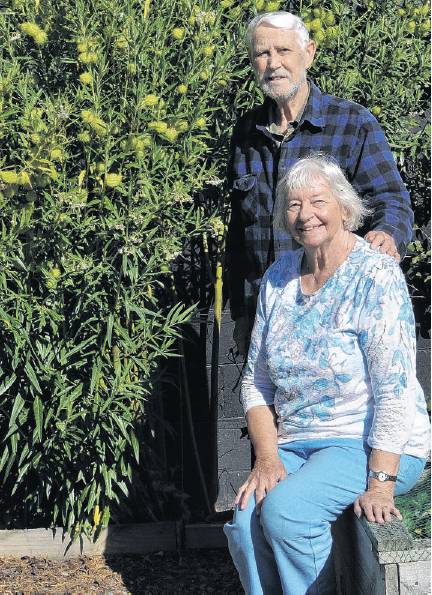
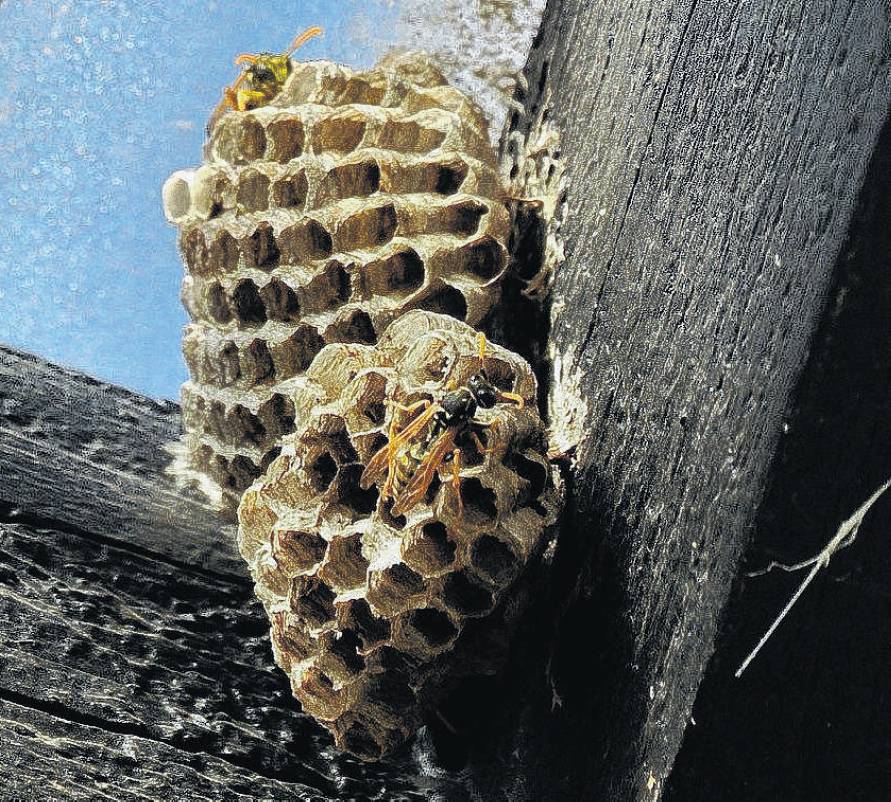
Monarch enthusiasts Dean and Lois Farrow have noted the decrease and say it is due to an increase in predatory paper wasps, which prey on monarch caterpillars to provide protein for their young.
Lois and Dean say people interested in supporting monarch butterflies in their gardens should include swan plants for the adults to lay their eggs on and nectar-rich plants for them to feed on.
The Farrows have a row of swan plants along one of their garden walls, and a monarch breeding nursery installed on their dining room table.
They have also written a picture book called Magnificent Monarch, depicting the life cycle of monarchs and created a public butterfly garden, which includes a garden seat and a painting of a monarch by Rangiora artist Ivan Button.
The small haven for butterflies is near Rangiora’s Hope Community Garden in East Belt and shows what can be created in domestic gardens.
Long-term data collected in Nelson by Moths and Butterflies of New Zealand Trust member, Chrissie Ward, who has walked the same route weekly from October to March, recording butterfly numbers since 2009, has also revealed a decline in the numbers of monarchs and other butterflies.
Ward's data shows a ‘‘clear long-term decline’’ in the once strong transect (pathway through a natural landscape) with only partial recovery in some years.
‘‘Of course, some fluctuation is expected, but all species have shown a decline in numbers,’’ she says.
Moths and Butterflies of New Zealand Trust secretary and founding trustee, Jacqui Knight, says the ‘‘most likely drivers’’ of the decline in butterfly numbers is environmental pressures, particularly introduced paper wasps.
Two Facebook surveys done among community groups last February also delivered an ‘‘overwhelming consensus" that wasps are the primary cause.
Ninety percent of the people who text, message, email or phone Knight are concerned about the lack of monarch butterflies.
‘‘We are concerned that other species are in decline as well, but the monarchs are much larger and used to grace our gardens every summer so their absence is much more noticeable,’’ she says.
‘‘We believe that wasps are the main issue and of course habitat loss, pesticide use and general unawareness is not helping.
This is a concern because ‘‘if people don’t know what butterflies exist in New Zealand, they won't notice when they disappear’’, she says.
Ward's work, and significant anecdotal reports from around New Zealand, have raised fears within the trust that all butterfly numbers are also in decline nationwide.
This has prompted the trust to call for volunteers to familiarise themselves with New Zealand’s butterflies online at the trust’s website (nzbutterflies.org.nz) and follow Chrissie’s lead by conducting transect surveys in their own home districts to help establish a clearer pattern.
The trust is also calling on the Government to take the impact of introduced wasps more seriously after a survey they did last year showed wasps, which can sting multiple times and often nest in sheltered areas around homes, "are killing native insects like wētā and even young birds, and limiting people’s ability to work and enjoy the outdoors".
People interested in supporting the initiatives or finding out how to identify paper wasps, their nests and how to safely remove them can contact Moths and Butterflies of New Zealand at www.nzbutterflies.org.nz
Morarch butterfly facts
Probably the best-known butterfly in New Zealand, the monarch (Danaus plexippus or Kakahu) are originally from North America and were first recorded here in the mid-1800s. It is believed they flew/blew to NZ and were therefore self-introduced.
Family: Nymphalidae
Biostatus: Self-introduced (flew/blew from N. America)
Host Plant: Milkweed, e.g. swan plant (Gomphocarpus fruticosus), giant swan plant (G. physocarpus), and tropical milkweed (Asclepias curassavica)
Egg: Creamy and ridged, usually on underside of new growth.Takes about five days to hatch.
Larva: Yellow/black/white stripes, five instars. Average of 14 days before pupation.
Pupa: Bright green. About ten days, depending on temperature/season, before it ecloses.
Adult/Imago: Orange, black and white. Male has two scent glands on hindwings, and thinner veins than female.
Wingspan: About 100 mm.
Overwinters: As adults in conifer trees.
Range: Naturally as far south as 45 degrees.
Host Plants: https://www.nzpcn.org.nz/flora/species/gomphocarpus-fruticosus/
Distribution