
PHOTO
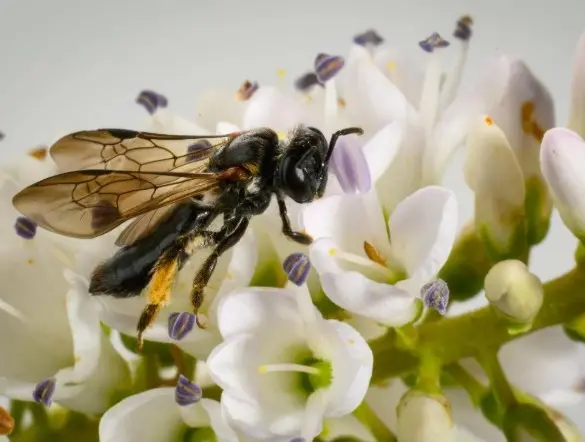
Christchurch is buzzing with an Australian visitor that has been missing for 65 years, but may prove an asset in local gardens and farms.
A bee species from across the Tasman - Leioproctus launcestonensis - has been rediscovered in the garden city after decades.
More than a dozen of the bees have been formally identified after being collected from community gardens as part of a wider study.
It is not considered a biosecurity risk and other bees from the same species are known to be excellent crop pollinators.
University of Canterbury PHD candidate Ava Taylor-Johnson was key in discovering the bee and told Checkpoint this bee was first seen 65 years ago in Christchurch.
"But it hasn't been seen since and it was formerly thought that the bee hadn't actually spread around, but now we've found it across the city and even down into Lincoln, so we think they are probably established populations."
She said a lot of the native bees in that same genus were "really important crop pollinators".
"I think people often think of honey bees and bumble bees when you think pollination, but really there is a whole host of native wild bees that are doing really similar amounts of works."
The bee is small - about six to eight millimetres long - and mostly black with some white hairs.

Taylor-Johnson said the bees also had a distinctive feature
"They have a little shoulder pad that goes over their wing that is a sort of orange/red colour and it differentiates their look from other native bees."
She said it was easy to misidentify them because of their size and speed. When Taylor-Johnson first found her specimens, she had to take them into to the lab at the Bioeconomy Science Institute, where a DNA test was needed to confirm what it was.
"Citizen scientists" were also able to help by upload images of any species they see to a special app, and they could go through old posts and see where people has logged them, dating back to 2021.
Taylor-Johnson's overall PhD project is looking at how cities can be places for bees and other pollinators, and looking at the benefits of more diverse green spaces, and she said it was still surprising what she was dining in the city's community gardens.
"You just don't know until you start searching for them."
