


There is nothing Stephen Papps enjoys more than irony or satire — except writing it.
“I enjoy the writing aspect of it because I enjoy creating satire, a good satirical story, me and Damon [Andrews].’’
Their latest collaboration, Social Animal, is a story about an actor who loses his career, marriage and reputation, then has a stray ex-racing greyhound follow him home.
“It’s not just about performance. It’s also about creating a story.’’
That urge to create a story has also led to his latest venture, writing short stories.
Papps has just finished a writing course at the Creative Hub in Auckland.
“It has been a lot of fun.’’
While it is quite different from writing plays, Papps says he enjoys being able to articulate the sensory experiences of characters and give away little tell-tale things about characters by the way they do things.
“They might say something inwards without explaining it. They call that, showing, not telling. I find it very satisfying.”
To combat the solitary nature of his new pastime — Papps describes himself as an extrovert — he visits a cafe for a few hours in the morning.
“I like to have a few people around.’’

“We get to sort of bolster each other and keep each other company in that way.’’
But the writing will go on hold this month as he hits the road with Andrews, who is directing, on a South Island tour.
Papps, who has been acting professionally since 1989, has not toured since his last solo show Blowing It back in 2000.
“I thoroughly enjoyed that, but this is actually different because it’s just one night in each place. So that’s going to be a challenge and I just have to keep my powder dry, take it easy.”
He enjoys the solo roles and this latest one, Joe Quigley, is a very flawed character whose identity is dependent on getting work as an actor.
“He’s egotistical and doesn’t cope that well. It took us a while to really sort of nail down exactly who he was and who he should be. But it really helps comedy if you’ve got a really deeply flawed character who can behave quite inappropriately.’’
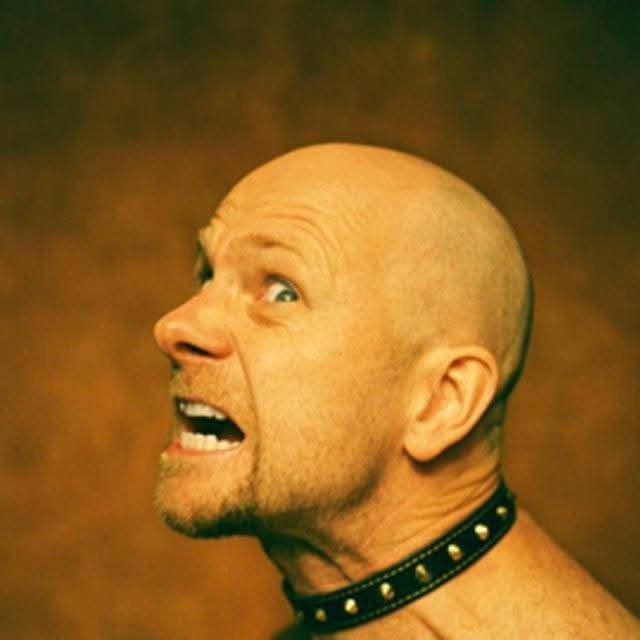
“We pointed out the contradictions of being in that situation that we got comedy out of as well as drama. Whereas this character is more transparently comedic. He's entitled and doesn’t go down without a fight. Which is fun.”
Being a two-man operation gives them the artistic licence to “run free’’ and say what they like, he says.
“We don’t pull any punches. We don’t try and soften things because we want things to be satirical in that way. It’s fun to show people things and have them badly behaving.’’

“We’ve got the whole greyhound racing industry [closure] coming up which means a lot of dogs are going to be displaced and a lot of the show is about displacements. It’s a big theme in the show.’’
Papps has house sat a greyhound in Melbourne, taking him for daily walks with strict instructions not to let him off the leash as they can disappear very quickly.
“If I was to be a dog of any kind, I would probably be a greyhound, being sort of long and lean, because they’re quite docile creatures, really. But then they can often run away.’’
His experience dog walking has also fed into the play with a lot of it being set in a dog walking park with other dog walkers and dogs.
Papps plays about 12 parts in the show including dogs and a cameo from a little boy.

“It’s very important to clearly define the differences between each one and to be able to do it within a snap so you don't hold up the action in the story, so you can just go with one simple move and now you're that character. The audience can see you’re that character straight away even before you start talking.’’
Acting is something he has never been able to give up. He did contemplate it earlier in his career when the work dried up.
“I was sitting on my porch and I was thinking, ‘what am I going to do?’ You know, going to go back and work in an office and I thought, ‘no, I don’t want to do that’.”
So he thought he would write his own solo show, which is how Blowing It came about.
“So, needs must and a friend of mine wanted to tell his stories about when he was an undercover cop and so I decided I’d make it about that and make it based around his experiences.’’
He has also tried his hand at many different roles, doing voiceovers, film work, television, radio and even medical role play to help train doctors or audiologists.
Stand-out roles for him include as a drainlayer in Kathryn Burnett and Nick Ward’s Mike and Virginia (2011).
“He’s a particularly dry comic sort of character. There’s a character that Nick also created for a TV series called Fresh Eggs where I play the local vet who was a nasty, well he wasn’t nasty, he was just a p***k. And that was a lot of fun, quite frankly.”
Comedy always seems to feature in his roles ever since he got his “big break’’ as Firpo in Ian Mune’s 1991 film of Bruce Mason’s play End of the Golden Weather.
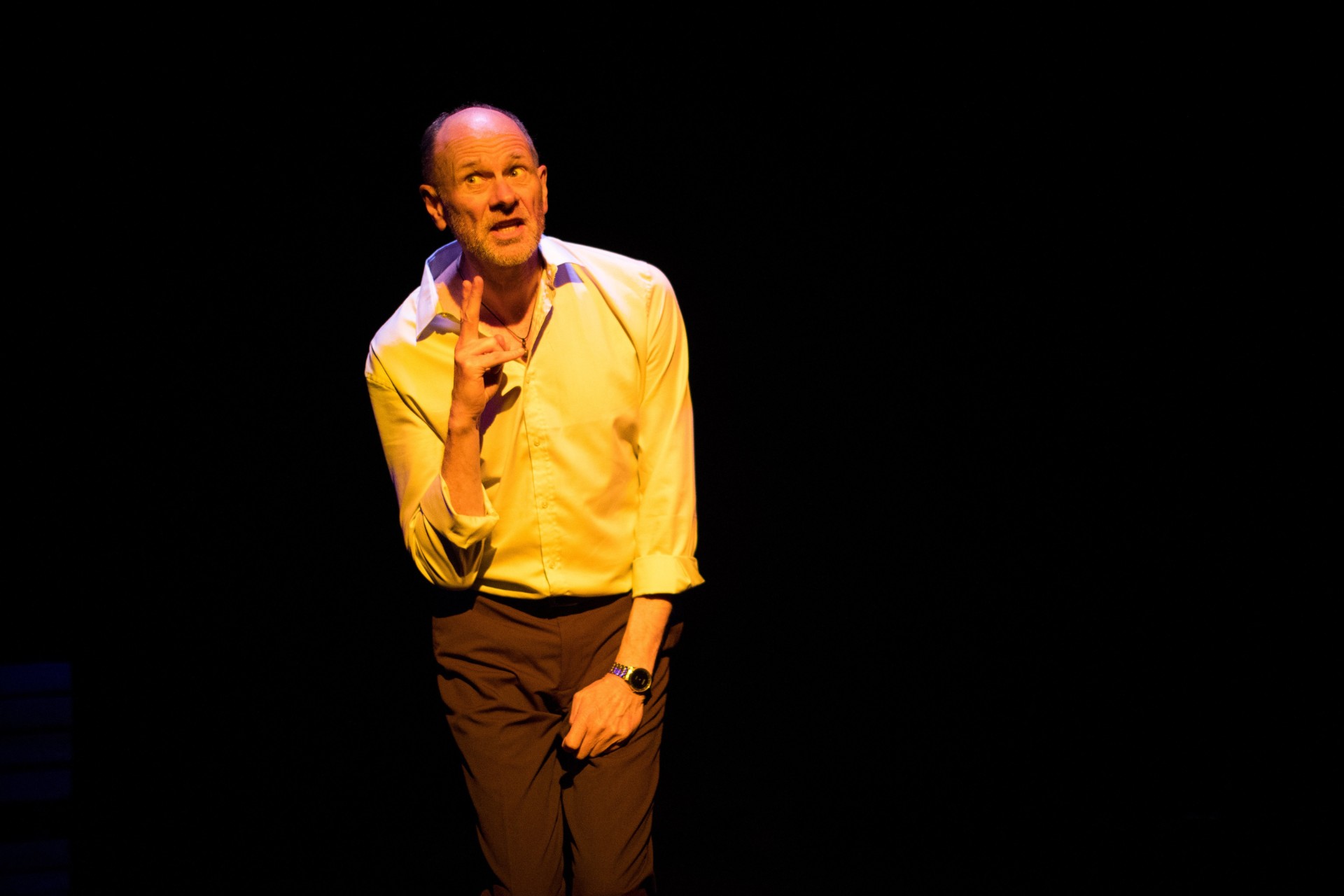
He likes comedy as it makes people look at life in a way that releases them from it.
“It’s very satisfying creatively. I think it’s a great art form, all sorts of comedy. I think all of life, even Shakespeare’s tragedies also have comic moments and comic characters as well. Life is a load. It shows a bit of humanity.’’
Papps finds film and television to be more piecemeal and not as satisfying as theatre but it is also “not as scary as theatre’’.
“I’m more relaxed with it as I’ve gotten older. I’m more relaxed with everything as I’ve gotten older. So, you know, it doesn’t take on such import as it used to when I was younger and more ambitious about things. Which I think makes me better as an actor. And hopefully a human being as well.”
To see
Social Animal
• Oamaru, June 17, 7pm, Inkbox Theatre, Oamaru Opera House
• Dunedin, June 18, 7pm, Clarkson Studio - Regent Theatre
• Queenstown, June 19, Arrowtown Athenaeum Hall
• Te Anau, June 20, 7.30pm, Fiordland Events Centre
• Cromwell, June 21, 7.30 pm, Coronation Hall, Bannockburn


