

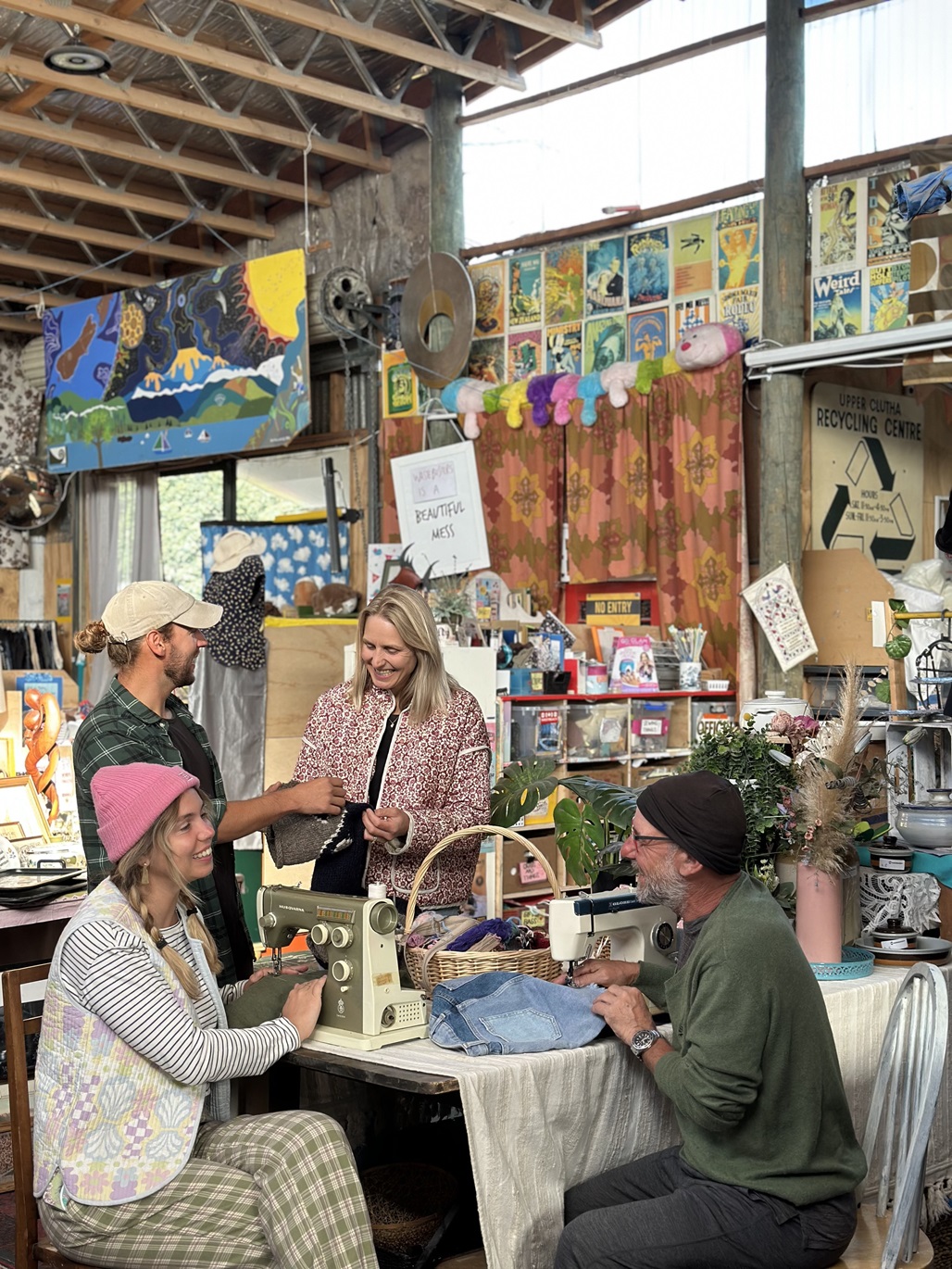
Now in its seventh year, Wastebusters Slow Fashion Month is an antidote to endless fashion circles and poorly constructed clothing that was never made to find a second life. It’s been seven fun years of proving that a wardrobe curated on quality, care and good eye for individual style will far outlive and outlast transient trends.
It’s a month celebrating the re-wearing, repairing and caring for our clothes. A month of jumping off the fast fashion treadmill and choosing differently. Choosing quality, buying less, and opting for secondhand first, with all the bonuses from unique finds to beautiful bargains.

Wrap, the global environmental action NGO behind the UK’s textiles 2030 programme, has quantified exactly what happens when we choose reuse over new. Through their research, spanning 7000 customers of some of the biggest online secondhand sales platforms in Europe, they have worked out the proportion of secondhand purchases that genuinely replace something a person would have bought new. They call it the displacement rate, and the odds are solidly in favour of reuse displacing buying new. Wrap found 64.6% of secondhand purchases displace a new buy entirely, and for repair the figure jumps to 82.2%. That’s more than three in five items for those who chose reuse, and more than four in five items when choosing to mend, or get something mended, that were not replaced with something new.
Closer to home, Wastebusters has been working with local not for profit research centre, The Planetary Accounting Network (Pan), to get similarly robust data on the environmental benefits of our reuse mahi. Their groundbreaking pilot project, supported by Love Wānaka, uses their Planetary Facts framework to give a holistic picture of environmental health and wellbeing.
The findings back up what we’ve often felt here at Wastebusters. Choosing a pair of pre-loved jeans from Wastebusters Reuse Shop over a new pair can drastically reduce your personal environmental footprint. Using the framework, a system similar to nutritional labels on food, the product’s impact against the earth’s sustainable recommended daily limits can be measured.
The limit is essentially an environmental budget for your lifestyle, setting out how much of the earth’s resources you could spend each day for the planet to remain stable and healthy.
The environmental tag is split into three categories: air, water and land, looking into the impact in global warming and local air pollution, the amount of water and pollutants used, and the amount of forest or natural habitat cleared to make a product, plus the broader impact on biodiversity. Together, it gives a clear picture of what a purchase actually means in environmental costs.
A new pair of jeans consumes 5.4% of your daily environmental limit largely due to the intensive water and land use involved in growing cotton at industrial scale. A pair of jeans from Wastebusters is just 0.03%. Meaning the environmental cost of buying new is about 50 times higher than choosing second-hand.
This massive difference exists because Wastebusters operates within a circular economy, a model designed to keep items in use for as long as possible rather than discarding them. When you buy second-hand, you sidestep the environmental impacts of mining the raw material, manufacturing, and international shipping entirely. The garment already exists. It just needed somebody to want it again.
At Wastebusters, we love clothes, and we love finding new homes for items that come through our Reuse Shop. Our Slow Fashion Month, supported by the Queenstown Lakes District Council’s Zero Waste District Programme, recognises our clothing has history, the garments hold the stories of the hands that made them, the places they have been, the care we have shown them. It reminds us that the most sustainable garment is the one already hanging in your wardrobe (or the one waiting to be repaired).
Next week, our Refashion Show in Wānaka showcases sustainable designers and secondhand style, inspiring, invigorating and proving that fashion doesn’t need to be new to be powerful, beautiful and deeply personal. From hobbyist to professional designers, newbie models to seasoned runway veterans, the energy is high and the whooping from the audience is constant.
As the month comes to a close, we’re continuing your slow fashion journey by showing our clothes some love at our mending club. A relaxed evening, the mending club is for anyone with a repair pile in the corner of a room, who enjoys fixing their own things or has a repair project they’d like to finish with a bit of friendly support. Dig out your holey jumpers, loose-seamed shirts and patch-worthy pants, and round out your Slow Fashion Month by connecting with others who care about their stuff. It’s a free event, but registration is appreciated through wastebusters.co.nz.
Ruth Blunt is communications manager at Wastebusters. Each week in this column writers address issues of sustainability.


